


Nissan sees intense movement at its dealerships in Japão after the official launch of the new version of the Serena minivan. The model, whose details were revealed at the end of last year and went on sale in February, aroused immediate interest from consumers, generating a significant volume of orders and inquiries. The automaker’s strategy focuses on renewing one of its most traditional products to face fierce competition in the family vehicle segment, offering aesthetic and functional updates that aim to maintain the vehicle’s attractiveness.
The minivan market in the Japão is historically dominated by a technological and comfort dispute between large manufacturers. With the arrival of this update, the Serena seeks to recover and expand its market share against strong rivals such as the Toyota Noah and the Voxy, in addition to the Honda Stepwgn. Consumers have responded positively to the changes, indicating that the combination of competitive pricing and new driver assistance technologies are decisive factors when purchasing, overcoming loyalty to competing brands in many cases.
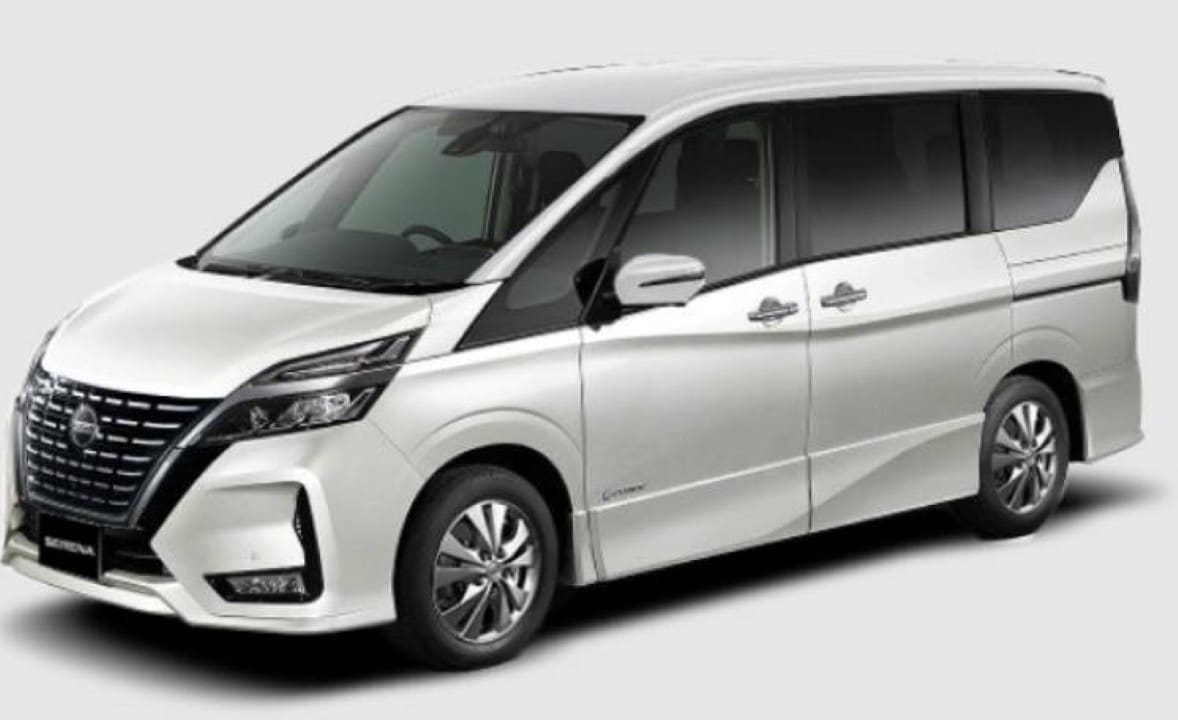
Aggressive pricing is one of the pillars of this new phase. With starting prices of around 2.78 million yen, the model is strategically positioned, offering an attractive cost-benefit ratio when compared to the long delivery times and high prices of other vehicles in the same category. Immediate availability and visual renewal have been strong arguments to attract families looking for modernity without compromising their household budget.
Aesthetic renovation and visual identity
The main visual change in the new line focuses on the front grille, which adopts an evolution of the brand’s design language. Nas top versions, such as the Highway Star V and Luxion, the grille presents a more dynamic and asymmetrical interpretation, abandoning the traditional chrome pattern in favor of a finish that conveys greater sophistication and presence on the streets. Essa change is not just aesthetic, but serves to differentiate the versions and create a unique identity for the top-of-the-line model.
The optical assembly also received special attention from the designers. The new LED headlights have been redesigned to harmoniously integrate with the new grille, providing a modern and technological visual signature. The front bumper has been resculpted to offer a more robust and aerodynamic appearance, while the sides maintain the electric sliding doors, essential for practical family use, now complemented by new wheel options that vary depending on the version chosen.
The vehicle’s dimensions remain generous, maintaining the versatility that has established the model since its first generation in 1991. With a total length that favors internal space without compromising maneuverability in urban centers, the minivan continues to be a reference in space utilization. The Nissan managed to balance the need for a spacious vehicle for up to eight passengers with the agility necessary for traffic in large Japanese cities.
Advances in connectivity and motorization
Inside, the big news is the deep integration with digital technologies. The NissanConnect system now has integrated Google services, offering native navigation and voice assistants that make it easier to operate the vehicle without distracting the driver. The interface has been improved to be more intuitive, and the 360-degree camera system uses new high-resolution lenses, ensuring safer and more precise maneuvers in any lighting condition.
Active security has received considerable reinforcements. The driver assistance package now includes enhanced ProPILOT features, enabling smoother semi-autonomous driving on roads and in traffic jams. The system is capable of performing automatic emergency braking with greater precision and offers more intelligent lane change alerts, reducing the driver’s cognitive load on long journeys and increasing the safety of all occupants.
Under the hood, the versatility of mechanical options continues to be a highlight. Consumers can opt for the 2.0-liter gasoline engine, available with front- or all-wheel drive, or the acclaimed second-generation e-POWER hybrid system. Este last uses a 1.4 liter engine exclusively as a power generator, while traction is provided by a 163 horsepower electric motor, providing the driving experience of an electric vehicle, with instant torque and silence on board, without the need for external recharging.
Dynamic performance and comfort
The e-4ORCE technology, the brand’s electric all-wheel drive system, is an important differentiator in the hybrid versions. By independently controlling the force on each of the four wheels, the system minimizes body roll, which results in a much more comfortable trip and reduces the incidence of motion sickness in passengers, something common in tall vehicles. Essa technology also significantly improves grip on slippery surfaces, essential for safety on rainy or snowy days.
The focus on acoustic comfort has also been increased. The e-POWER system’s energy management has been recalibrated so that the combustion engine activates in moments of less auditory perception or at cruising speeds, keeping the cabin silent most of the time. The lithium-ion battery ensures that urban accelerations are mostly carried out in electric mode, reinforcing the model’s characteristic smoothness.
With the celebration of 35 years of history scheduled for this year, the Serena reaffirms its fundamental role in the manufacturer’s portfolio. The combination of a legacy of trust with innovations relevant to the current mobility scenario places the model in a privileged position to lead sales in the segment throughout 2026, meeting both the demands of large families and customers looking for a versatile vehicle for leisure.



