
Apple allows video playback on the dashboard of parked vehicles after system update


The technology giant has implemented a historic change to its automotive integration system, allowing drivers to view video content directly on the car’s dashboard screen for the first time. The functionality, which arrives with the iOS 26 update, marks the end of a restriction that lasted more than a decade and transformed vehicle central consoles into strictly audio and navigation devices. The new feature was designed to work exclusively when the vehicle is completely immobilized, aiming to maintain road safety standards.
This change represents a significant evolution in the way the company’s ecosystem interacts with modern automobile hardware. Até At the moment, any attempt to play videos from the cell phone to the car screen resulted in blocking or only audio transmission. With the new guideline, the system uses the AirPlay protocol to mirror visual content, but requires deep communication with the vehicle’s sensors to ensure the car is effectively parked before releasing the image.
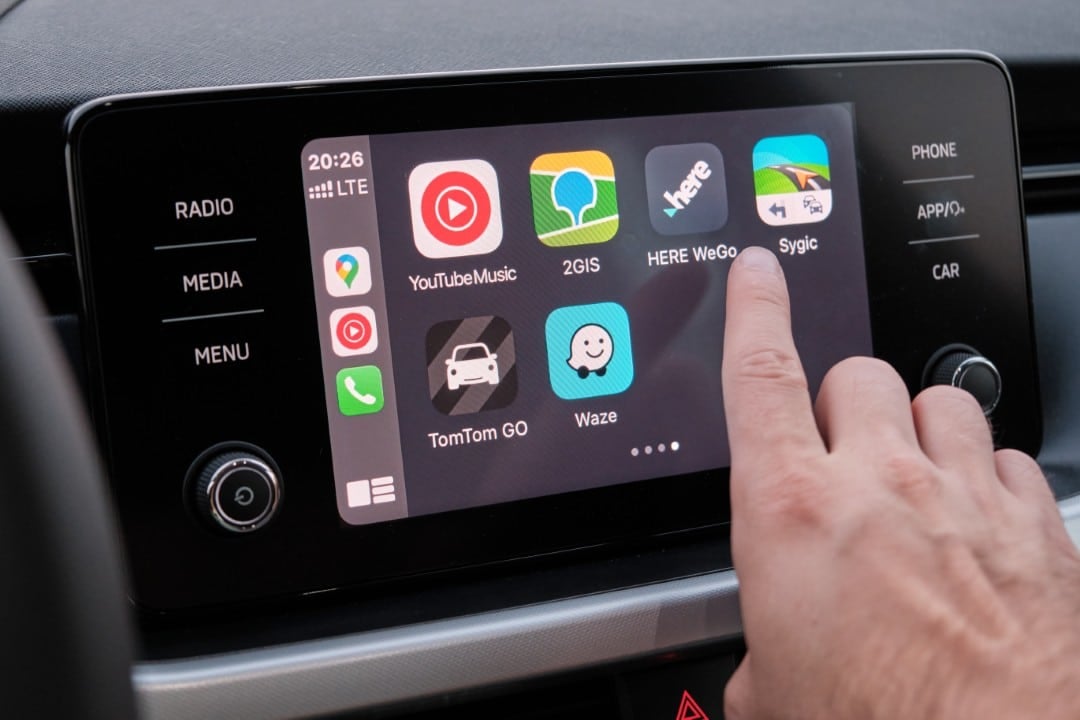
Technical implementation requires car manufacturers to update their systems to meet the new requirements of the company’s certification program. Não is just a software update on the user’s phone, but a cross-validation between the mobile device and the car’s on-board computer. Essa safety check is key to unlocking the feature, ensuring that entertainment does not become a dangerous distraction while driving.
Integration with sensors and security protocols
The operation of the new feature is based on a “state confirmation” sent by the vehicle to the mobile device. Diferente Of navigation applications that work regardless of the car’s gear, video playback requires the speedometer to read zero and, in many cases, the parking brake to be engaged or the gear to be in park. If the sensors detect any wheel movement, the video transmission stops instantly, returning to the standard audio or map interface.
Technology developers focused on creating a robust digital barrier. The objective is to prevent software failures or unlocking attempts by users from allowing films and series to be shown while the car is in motion. The responsibility for detecting motion falls to the car’s hardware, which sends real-time telemetry data to the phone’s operating system, creating a continuous safety feedback loop.
For automakers, the news requires adherence to new protocols within the brand’s accessory licensing program. Manufacturers need to ensure that their infotainment systems can send vehicle status signals accurately and tamper-proof. Isso means that the functionality may not be immediately available on all car models that already have the system, depending on firmware updates from automakers.
Market impact and user experience
The demand for in-vehicle visual entertainment has grown exponentially in recent years, driven largely by the popularization of electric cars and the need to wait during charging cycles. Motoristas who spend time idling at charging stations or waiting for passengers at schools and airports are the primary target audience for this update. The ability to watch videos transforms idle time in the vehicle into a more complete media consumption experience.
– Acesso to video streaming platforms while waiting in a stopped vehicle.
– Automatic and immediate Bloqueio of the screen when engaging gear or starting movement.
– Necessidade of specific certification by the manufacturer to enable the feature.
– Utilização of the vehicle’s sound system for an immersive cinema experience.
Previously, users resorted to unofficial workarounds or tablet holders to consume video in the car. Native integration eliminates the need for extra hardware and uses the screen that is already ergonomically positioned on the dashboard, in addition to integrating the audio directly into the car’s stereo system speakers, providing better sound quality than isolated mobile devices.
Adhesion of automakers and current scenario
The global automotive market already has a vast installed base of vehicles compatible with the technology company’s interface. Marcas like Honda, Toyota, Ford and BMW have integrated the system into a large part of their fleets for years. However, activating video via AirPlay will depend on the agility of these companies in validating the new security protocols required. The expectation is that new models will leave the factory with this capability enabled, while older models may depend on updates at dealerships.
Studies on consumer behavior indicate that embedded technology has become a decisive factor when purchasing a car. The panel interface is often used more than traditional mechanical resources. By releasing the video, the technology company aligns its product with “living room on wheels” trends, a concept widely explored in prototypes of next-generation autonomous and electric vehicles.
The update also reflects a response to competition in the automotive software sector. Outros operating systems dedicated to cars have already started to offer gaming and video features when the vehicle is stationary. The Apple measure aims to maintain the relevance and preference of users who want a fluid extension of their smartphones into the vehicular environment, without compromising the rigorous safety standards that the industry requires.
Outlook for in-flight entertainment
The introduction of in-dash video opens the door to new categories of applications adapted for the automotive environment. Além of traditional streaming services, news, sports and even video conferencing applications can gain versions optimized for parked use. Isso transforms the vehicle into a productivity and leisure hub, something especially valuable in large urban centers where time spent in the car is significant.
Security remains the central pillar of this transition. Especialistas in transit warn that, although the feature is blocked in motion, driver education is essential to avoid misuse before departure. Technology acts as a physical barrier, but awareness of the dangers of distracted driving remains the primary line of defense in road safety.
With the iOS 26 update, the border between the mobile device and the car becomes even more blurred. The video functionality is just one step towards deeper integration, where the car starts to act as an advanced smartphone peripheral, taking advantage of high-resolution screens and premium sound systems to deliver an experience that goes far beyond simple locomotion.




