

The Ukrainian athlete Vladyslav Heraskevych was disqualified this Thursday from the Jogos Olímpicos, The measure was taken due to Heraskevych refusing to remove a personalized helmet.
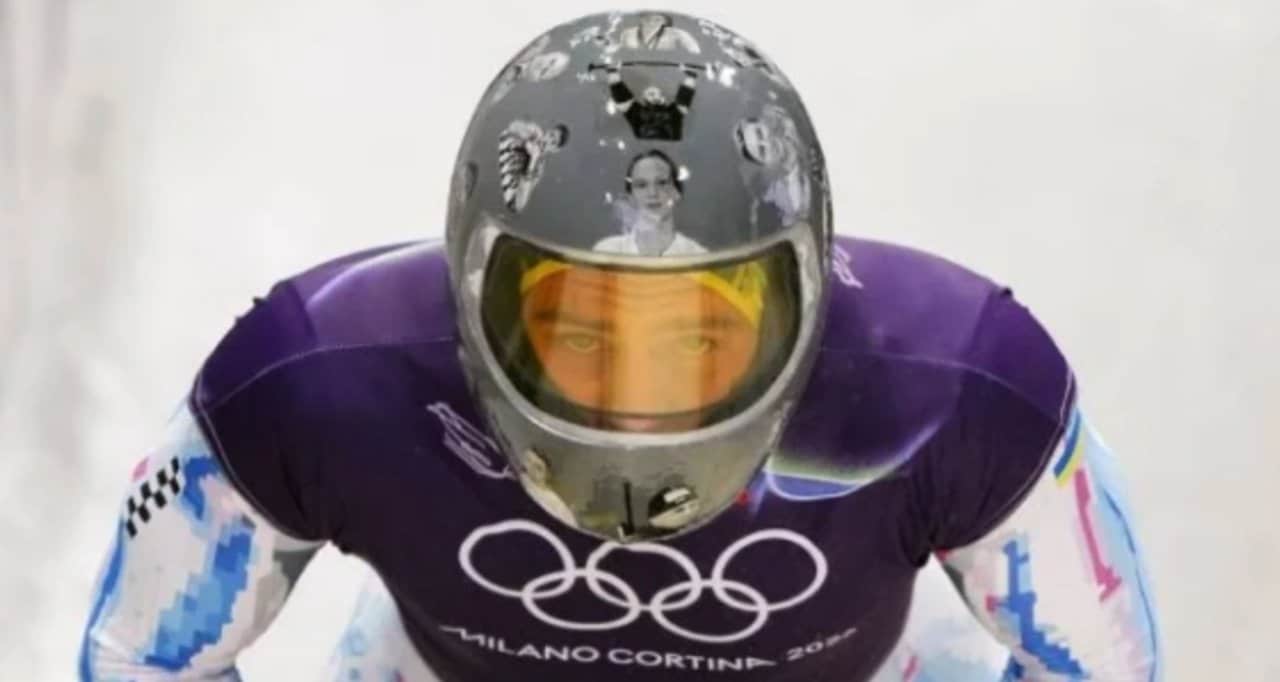
The equipment featured images of Ukrainian athletes who lost their lives in the conflict against Rússia, representing a posthumous tribute. The IOC considered the act a violation of its strict guidelines on athlete demonstrations during the event.
Disqualification prevents the athlete from representing his country in the competition, generating an intense debate about political neutrality in sport. The controversy reignites long-standing discussions about participants’ freedom of expression on a global stage.
Heraskevych had used the helmet during training on Monday and Wednesday, the days before the decision. The refusal to follow the guidelines of the Olympic entity culminated in the withdrawal of his credential for the games.
IOC position and limits of expression
In an official statement, Comitê Olímpico Internacional stated that Vladyslav Heraskevych “will not be able to participate” in Jogos Olímpicos of Inverno. The decision was justified by his refusal to “comply with IOC guidelines on athletes’ expression”, after several attempts at dialogue to get the athlete to change his stance. The president of the IOC, Kirsty Coventry, even met directly with Heraskevych to explain the entity’s position.
Despite the conversations, the athlete maintained his intention to wear the memorial helmet, which led the judges of Federação Internacional of Bobsleigh and Skeleton (IBSF) to take action. The disqualification was formalized based on the regulation that prohibits the use of equipment that does not comply with approved standards, guaranteeing the uniformity and neutrality required by the Olympic organization.
The memorial on the helmet and the athlete’s trajectory
The helmet used by Vladyslav Heraskevych was a symbol loaded with meaning, named by his team as a “memorial helmet”. Tratava is a gray model adorned with photographs of Ukrainian athletes who were victims of the war, transforming a protective item into a vibrant tribute. Essa initiative aimed to honor the memory of fellow athletes and draw global attention to the drama experienced by Ucrânia. Heraskevych, known for his passion for skeleton and for representing his country in other editions of the Jogos Olímpicos, including PyeongChang 2018 and Pequim 2022, has always demonstrated deep patriotism, using his platform to express his nation’s suffering, even if this meant clashing with strict Olympic standards.
Immediate repercussions and demonstrations of support
The news of the disqualification quickly spread, provoking diverse and intense reactions. Vladyslav Heraskevych himself used the social network X to express his feeling, declaring: “This is the price of our dignity.” Sua speech resonated as an echo of personal sacrifice in the name of a greater principle, the memory of his compatriots.
Ukrainian diplomacy also spoke out, through the minister of Relações Exteriores, Andrii Sibiga. Ele vehemently criticized Comitê Olímpico Internacional, stating that the entity “vetoed not only the Ukrainian athlete, but its own reputation”. Sibiga further stated that “future generations will cite this as a moment of shame”, intensifying public pressure on the IOC.
On the other hand, the president of Ucrânia, Volodymyr Zelensky, openly praised Heraskevych’s initiative, demonstrating the government’s official support for the athlete’s gesture. Este endorsement underlines the deep connection between sport, politics and national identity in times of conflict.
Neutrality guidelines in Olympic sport
The Comitê Olímpico Internacional (IOC) has maintained a strict position regarding political neutrality in the Jogos for decades. Carta Olímpica, the document that governs the Olympic movement, prohibits political, religious or racial demonstrations in competition venues, ceremonies and Olympic villages. The stated objective is to preserve unity and sportsmanship, preventing the Jogos from becoming platforms for external conflicts.
However, the application of these guidelines generates constant and complex debates. The athletic community and the public question the extent to which the individual expression of athletes can be curtailed in the name of neutrality, especially in contexts of great humanitarian commotion. The ambiguity of the guidelines raises discussions about:
The impact of the war on the Ukrainian sports scene
Since the start of the large-scale conflict with Rússia, the sports scene in Ucrânia has faced unprecedented challenges. Muitos athletes and sports professionals were forced to interrupt their careers to enlist in the defense forces or to seek refuge. Instalações sports facilities were destroyed, and training programs were severely impacted by instability and violence.
The loss of life in the sporting world is a painful reality, with hundreds of athletes, coaches and team employees dying in combat or as a result of war. Cada one of these names represents not only a lost talent, but also a piece of the Ukrainian sporting soul that is fading. Heraskevych’s tribute serves as a poignant reminder of these losses.
For Ukrainian athletes who manage to compete on international stages, each participation transcends the sporting contest. Eles carry the burden and honor of representing a nation at war, transforming their performances into acts of resistance and hope. The visibility gained at events like Jogos Olímpicos becomes a crucial opportunity to keep the spotlight on the situation in your country.
This additional pressure, coupled with personal and collective pain, shapes the experience of these sportsmen, who seek inspiration in the memory of their fallen compatriots. Solidarity between them and the search for opportunities for expression are ways of keeping the flame of resistance alive and honoring those who can no longer fight.
The skeleton modality: speed and technique on ice
Skeleton is one of the most exciting and dangerous disciplines in the Jogos Olímpicos of Inverno, requiring athletes to use a unique combination of courage, physical strength and technical precision. Competitors travel down a narrow, winding ice track, lying face down on a small sled, with their heads forward and their feet back. Speeds can exceed 130 km/h, exposing athletes to intense G-forces and considerable risks at every turn. The descent begins with a short run to gain momentum before launching yourself onto the sled, and the trajectory is controlled by subtle movements of the body and feet. Variações minimums in aerodynamics and in the line traveled can mean the difference between victory and defeat, making the sport a spectacle of high speed and millimeter skill.
Precedents of protests and Olympic expressions
The history of the Jogos Olímpicos records several moments in which athletes used the global platform to express political or social convictions. One of the most iconic examples occurred in 1968, in the Jogos of the Cidade of the México, when North American athletes Tommie Smith and The gesture, although widely condemned by the IOC at the time, became a milestone in the fight for civil rights.
More recently, the IOC has faced the challenge of balancing freedom of expression with the ideal of neutrality. Em Tóquio 2020 (held in 2021), there were cases of athletes expressing support for social causes, leading to internal debates and a slight relaxation of the rules that, even so, maintain strict prohibitions for the podium and the playing field. The case of Heraskevych, however, highlights the complexity and sensitivity of dealing with expressions directly linked to armed conflicts and tributes to war victims.



