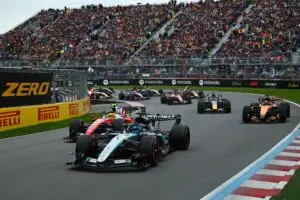
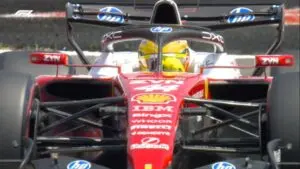
Hamilton points out technical setbacks in new cars and compares performance with access category
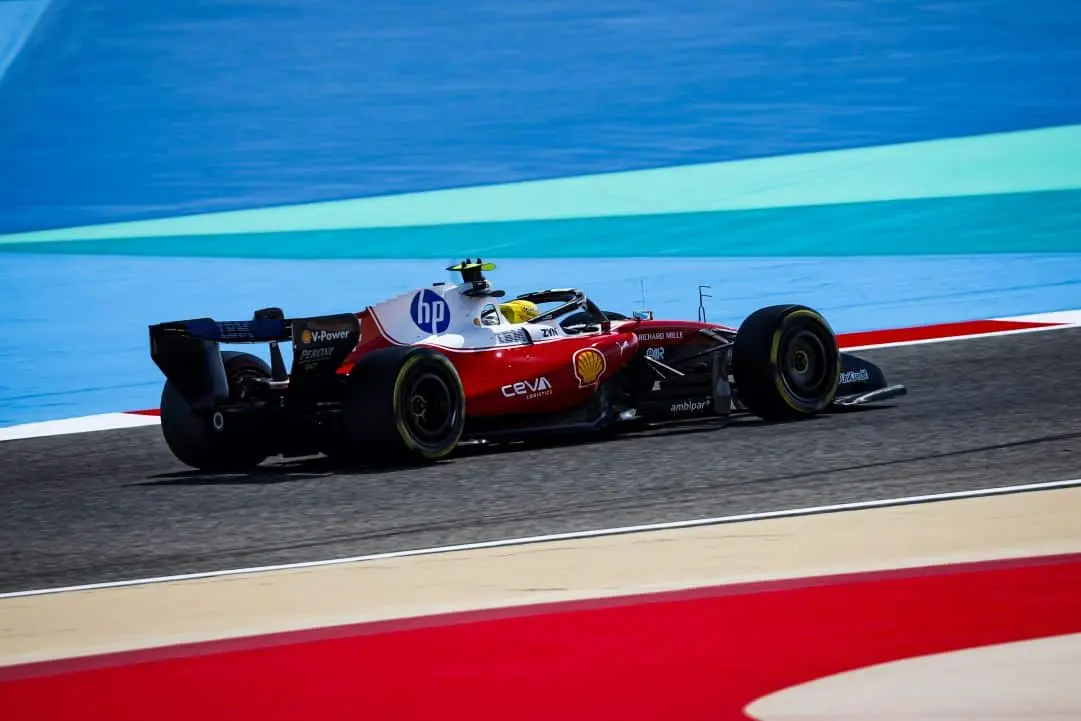
The pre-season tests carried out at the Barcelona circuit brought to light the first real impressions of the new era of the main category of world motorsport. The introduction of the new technical regulations, which guide the cars built for this year’s championship, generated immediate and controversial reactions behind the scenes. The focus on sustainability and energy efficiency, pillars of the new guidelines, seems to have taken a heavy toll on the pure performance of the machines that took to the track.
Lewis Hamilton, now wearing the colors of Ferrari, was one of the most critical voices after the first evaluation sessions. The seven-time world champion, known for his technical frankness, did not mince words when describing the driving experience of the new models. Segundo the British, the feeling behind the wheel is far from what is expected from the motorsport elite, coming dangerously close to the lap times and dynamic response observed in the Fórmula 2, the access category.
On the same topic: Formula 1: CEO Stefano Domenicali questions the value of ‘real’ overtaking
#F1TESTING: 最初の分類
ランド・ノリスがバーレーンで多忙な最初を終わって次に行った#F1 pic.twitter.com/284cGbXC0Q
— フォーミュラ1 (@F1)2026年2月11日
The driver’s dissatisfaction reflects a concern that circulated only as a theory in the simulators and is now confirmed on the asphalt. The search for an equal division of power, with 50% coming from the combustion engine and 50% from the electrical system, drastically changed the behavior of cars. Para Hamilton, this change transformed driving into an exercise in software management, taking away from the pilot the ability to attack curves and seek the physical limits of grip as in previous generations.
Challenges of the new power unit
The reconfiguration of the engines had direct consequences for the dynamics of the races. The significant increase in the weight of batteries, necessary to meet the new electrical demand, made cars heavier and slower to change direction. Hamilton highlighted that agility, a hallmark of the category in recent decades, has been sacrificed in the name of energy efficiency, resulting in vehicles that respond slowly to steering wheel commands.
Another critical point raised refers to energy management during the straights. The new system requires drivers to take their foot off the accelerator well before braking, a technique known as “lift and coast”, to ensure the battery has enough charge to complete the lap. Isso creates a scenario where the final speed on the straights drops drastically before reaching the curves, reducing the sensation of speed and the technical challenge of braking at the limit.
This technical characteristic imposes a new driving style that veterans are unhappy with. Instead of duels based on courage and millimeter precision, disputes on the track run the risk of becoming battles of efficiency, where the best energy saver wins, and not necessarily the fastest driver. The central criticism is that technology, instead of enhancing human talent, has started to limit it.
More on this story: Mercedes and Ferrari dominate pre-season as rivals tune cars for new era of Formula 1
Active aerodynamics and instability
In addition to engine issues, the introduction of active aerodynamics brought new stability problems. The system, designed to reduce drag on straights and increase aerodynamic pressure in curves, has generated unpredictable behavior. During testing, it was noted that the transition between wing modes can cause imbalance in braking, making the cars unstable at critical moments of the lap.
See Also

Alexander Albon garante permanência na Williams até 2027 e impulsiona planos da equipe na Fórmula 1

Gabriel Bortoleto detalha desafios da pista de Zandvoort no GP da Holanda de Fórmula 1

Lucas di Grassi, campeão da Fórmula E e ex-F1, anuncia adeus às pistas após três décadas
For the technical team at Ferrari and the engineers at Hamilton, the challenge now is to find a setting that minimizes these oscillations. However, the pilot points out that the complexity of the electronic systems is masking the purity of the piloting. The feeling of direct connection with the car, fundamental to driver confidence, was diluted by layers of electronic intervention required to keep the car on the track under the new rules.
Impact on sporting spectacle
Hamilton’s statements raise a warning about the future of entertainment provided by the category. If cars are significantly slower and more difficult to drive not because of excess power, but because of weight and energy management, the visual spectacle for the public may be compromised. The perception of speed is one of the main attractions of the sport, and the approximation of lap times to lower categories can devalue the final product.
Learn more: Lewis Hamilton’s turnaround at Ferrari yields best first half in F1 since 2021
Key points of attention raised include:
– The constant need to save battery prevents prolonged wheel-to-wheel disputes.
– Excessive weight of cars increases tire wear and reduces agility on closed circuits.
Learn more: Lewis Hamilton shows hard training during F1 vacation; see video
– The complexity of the systems can generate an even greater disparity between the teams that get the initial project right and those that fail.
The motorsport community is now watching the development unfold with caution. The fear is that the category has taken a big step towards sustainable technology, forgetting the essential elements that make racing an exciting event: speed, controlled danger and the demonstration of human skill at the limit.
The future of the season
With the start of the championship approaching, teams are racing against time to mitigate the problems highlighted. Ferrari, under the leadership of its engineers and with crucial feedback from Hamilton, tries to adapt the car so that it is as least intrusive to driving as possible. The hope is that, with development throughout the year, performance will improve and the distance to the access category will once again be an abyss, as it has historically always been.
However, the message left by the tests is clear: the new era requires unprecedented mental and technical adaptation. Para Hamilton, accustomed to machines that defied the laws of physics due to their speed, piloting the new models seems like an exercise in restraint. Resta to know if this new formula will be able to maintain the passion of the fans and the drivers themselves, or if emergency adjustments to the regulations will be necessary in the near future to return the aggressive soul to the tracks.