


The arrival of a new family vehicle model at Japanese dealerships caused an atypical movement in the automotive sector, generating waiting lines and high consumer interest in the first weeks of sales. The launch, which had its official presentation in December and began sales in February, marks a crucial stage in the manufacturer’s strategy to dominate the medium minivan segment. The brand’s bet lies in an aggressive combination of renewed design, superior energy efficiency and a technological package that promises to redefine comfort and safety standards for passenger transport.
This vehicle was designed to compete directly with consolidated models from major competitors, such as the Honda and Toyota, which have historically competed for the preference of large families. Para stands out in this competitive scenario, the project’s engineering focused on solving the main demands of users: versatile internal space, fuel economy and state-of-the-art connectivity. The public response indicates that the changes implemented were well received, consolidating the model as one of the main purchasing options for those looking for robust and technologically advanced transport.
The pricing strategy was designed to cover a wide range of consumers, with starting prices starting at 2,785,200 yen. Essa acessibilidade na versão de entrada, combinada com a sofisticação das versões topo de linha, permite que o modelo atenda tanto a quem busca funcionalidade quanto a quem deseja luxo e automação. The initial sales success suggests that the combination of tradition and innovation is the right way to maintain the brand’s relevance in an increasingly demanding market focused on electrification.
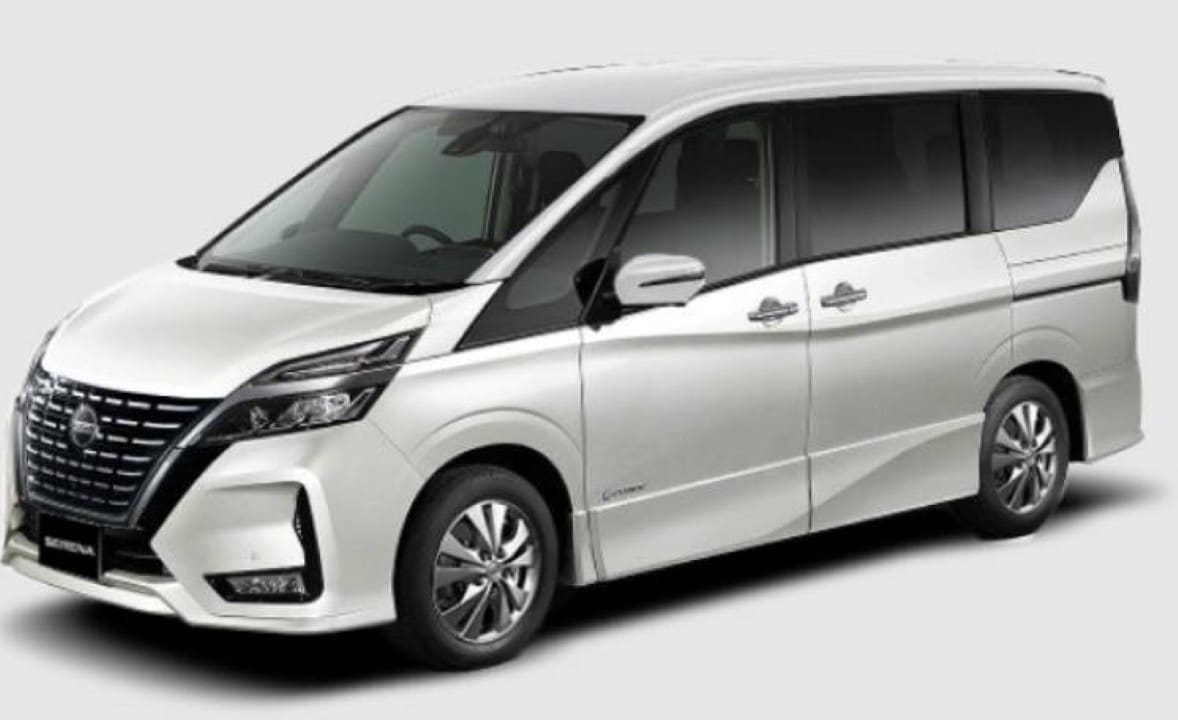
The external design underwent a significant redesign, adopting an aesthetic that conveys modernity and dynamism, without losing the functionality required by the category. Entre the main visual and structural changes stand out: the evolution of the front grille with the V-shaped movement concept, which now integrates the headlights in a more fluid way; the adoption of LED optical sets for better nighttime visibility; bumpers with an aerodynamic design to reduce air resistance; and new alloy wheel options that give the package a sportier look.
Aesthetic evolution and functional dimensions
The visual identity of the new model reflects a futuristic approach, especially at the front, where the changes are most evident. The front grille has been completely redesigned to create a feeling of width and stability, integrating perfectly with the new headlights. Essa design choice is not only aesthetic, but also functional, helping to improve airflow and, consequently, the vehicle’s energy efficiency. LED lighting, in addition to providing a distinct light signature, guarantees greater safety on night trips, a crucial factor for the family target audience.
Despite the visual updates, the vehicle’s dimensions were kept within parameters that guarantee its practicality on narrow Japanese streets and in urban parking lots. The total length remains at 4,765 mm, while the width varies between 1,695 mm and 1,715 mm, depending on the version chosen. The height also presents subtle variations, ranging between 1,870 mm and 1,885 mm. Maintaining a wheelbase of 2,870 mm was a strategic decision to preserve the large interior space, which has been considered one of the largest in the category since the launch of the first generation of the model in the early 1990s.
Inside, the technological revolution is palpable. The instrument panel has been replaced by an integrated digital cockpit, which groups driving and entertainment information on high-resolution screens. The traditional gear lever gave way to a button selector, freeing up space on the center console and making it easier to move between the front seats. Essa modern configuration not only improves ergonomics, but also increases the feeling of space and freedom inside the cabin, allowing the driver and passenger to have easier access to the vehicle’s various features.
Connectivity and advanced propulsion system
One of the biggest technological differences of this launch is the native integration with the Google services, through the NissanConnect system. Pela For the first time in this segment, users can access maps, voice assistant and applications directly on the car’s screen, without the need to pair a smartphone. Isso transforms the navigation experience, making it more intuitive and accurate, with real-time traffic updates and voice commands that allow the driver to stay focused on the road while adjusting the temperature or choosing a song.
Under the hood, the minivan offers two distinct engine options to suit different usage profiles. The first is a 2.0-liter gasoline engine, available with front or all-wheel drive, focused on reliability and value for money. However, the big highlight is the second generation of the e-POWER system. Nesta hybrid configuration, a 1.4-liter engine acts exclusively as a power generator to charge the battery, while wheel drive is 1000% electric. Isso provides a smooth, silent drive with instant torque, typical characteristics of electric cars, but without range anxiety.
The e-POWER system has been improved to deliver 163 horsepower and 315 Nm of torque, numbers that guarantee safe overtaking and agility in urban traffic. Além In addition, intelligent energy management monitors the vehicle’s speed and battery charge to activate the combustion engine only when necessary, prioritizing silence on board. The e-4ORCE system, also available, adds four-wheel drive with precise electronic control, improving stability in curves and safety on slippery surfaces, distributing braking and acceleration forces independently between the wheels.
Autonomous security and market positioning
Active safety received a considerable boost with the introduction of ProPILOT 2.0 in the top-of-the-line version, called Luxion. Este advanced driver assistance system allows hands-free driving on highways, as long as certain conditions are met, such as maintaining the lane and setting a route in the navigation system. Sensores and cameras monitor the vehicle’s surroundings at 360 degrees, detecting moving objects and preventing collisions, which raises the standard of protection for all occupants.
The interior was designed to accommodate seven or eight passengers in comfort, offering multiple seating configurations. Versatility is a key point, allowing the space to be adapted to transport large volumes of cargo or prioritize passenger comfort on long journeys. The efficient air conditioning system and electric sliding doors with sensor activation facilitate access and guarantee the comfort of families with young children or the elderly, reinforcing the utilitarian and welcoming character of the model.
With prices that can reach almost 5 million yen in the most complete version, the model is positioned as a premium alternative within the minivan segment. The combination of an attractive design, energy efficiency provided by the hybrid system and autonomous driving technologies puts this vehicle in an advantageous position compared to its rivals. The manufacturer hopes that these innovations will not only maintain the loyalty of current customers, but also attract new buyers looking for a family vehicle that does not compromise on technology and performance.
[KEYWORDS]
Nissan Serena 2026, e-Power system, hybrid minivan, ProPILOT 2.0
family car technology



