


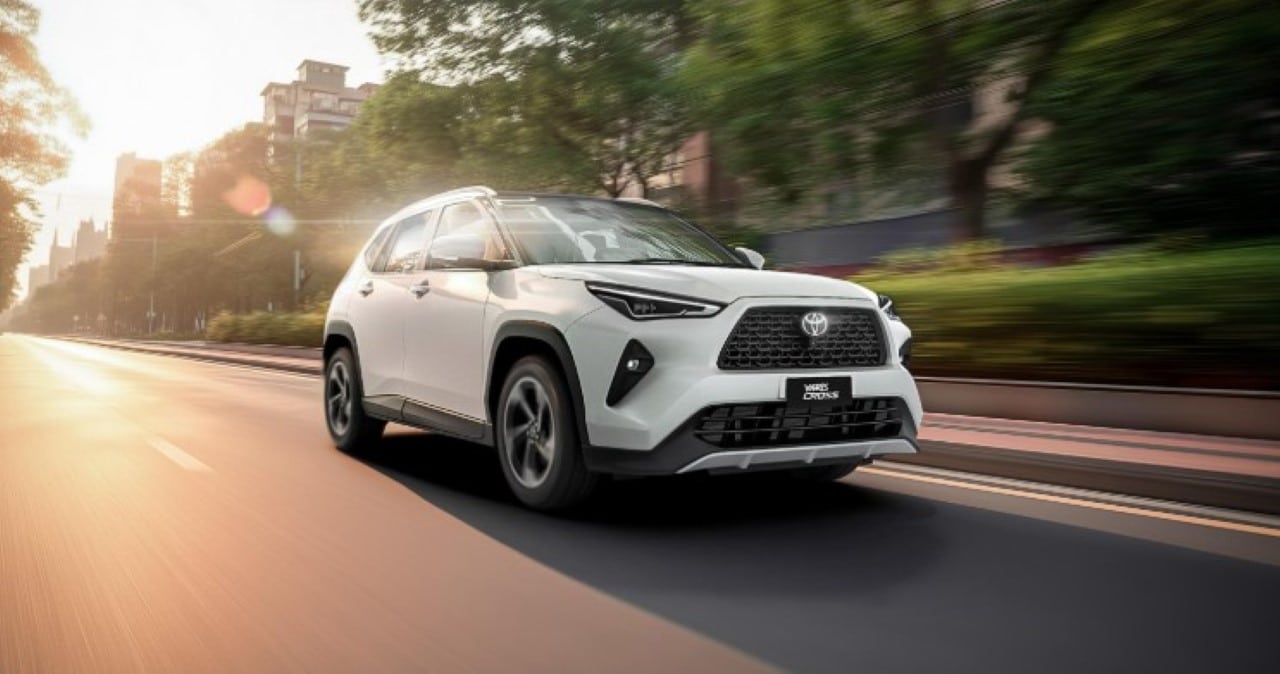
Japanese automaker Toyota intensified its defense strategy in the Brazilian market with the launch of a model that promises to redefine efficiency standards in the compact sports utility vehicle segment. Diante of the growing wave of imported electrified vehicles, especially from Asian manufacturers that have gained ground in recent years, the brand is betting on a solution that combines hybrid technology with the local vocation for the use of ethanol. The movement is seen by analysts as a direct and robust response to maintaining relevance and leadership in key categories of the national industry.
The new vehicle arrives at dealerships with the mission of democratizing access to low-emission technology, using a platform that prioritizes cost-benefit and autonomy. Diferente of purely electric models that depend on an external charging infrastructure still under development in the country, the manufacturer’s focus is on the flex hybrid system. Essa technology allows the car to be refueled at any conventional gas station, generating its own electricity through regenerative braking and the combustion engine, eliminating range anxiety common on long journeys.
Local production is another fundamental pillar of this strategy. By nationalizing manufacturing, the company is able to protect part of its costs against exchange rate fluctuations and new import tariffs for electric and hybrid vehicles, which are back in full force in the current economic scenario. The Porto Feliz factory, inside São Paulo, plays a central role in this ecosystem, being responsible for manufacturing the propellants that equip the new product, reinforcing the brand’s commitment to the Brazilian production chain.
Energy efficiency and technical specifications
The heart of the new sports utility vehicle is a mechanical package designed to maximize fuel economy, leaving sporting performance in the background in favor of the owner’s financial sustainability. The system combines an internal combustion engine, capable of delivering 91 horsepower and 12.3 kgfm of torque, with an auxiliary electric propellant of 80 horsepower and 14.4 kgfm. Quando operate together, the system delivers a combined power of 111 horsepower, enough to guarantee agility in urban traffic and safety when overtaking on the highway.
Engineering data reveals that the focus of the project is not raw acceleration from 0 to 100 km/h, but rather the ability to run most of the time in electric or combined mode in intense traffic situations. Intelligent energy management results in impressive consumption figures: the model is around 30% more economical when fueled with gasoline and has 33% greater efficiency with ethanol compared to purely combustion vehicles in the same category. Essa feature positions the car as one of the most rational options for drivers facing daily traffic jams.
The hybrid system’s battery, although compact, is fundamental to this efficiency equation. Ela is automatically recharged during decelerations and by the operation of the thermal engine itself, eliminating the need for cables or sockets. Esse closed energy cycle is the great asset of full hybrid technology (HEV) in a country of continental dimensions like Brasil, where the total electrification of the fleet still faces significant logistical challenges.
Intelligent design and space utilization
To stand out in an extremely competitive segment, Toyota engineering paid special attention to dimensions and the use of internal space. The utility vehicle measures 4.31 meters in length, which makes it easier to maneuver in tight spaces in condominiums and shopping malls, without sacrificing the comfort of the occupants. The 2.62 meter wheelbase is generous for the category, allowing passengers in the rear seat to travel with legroom, a common requirement of Brazilian families.
Versatility is also reflected in load capacity. The trunk was designed to accommodate the luggage of an average family, offering 400 liters of capacity in the combustion-only version. In the hybrid variant, due to the positioning of the electrical components and battery, the volume is slightly reduced to 391 liters. However, this difference is imperceptible in everyday use, maintaining the practicality necessary for grocery shopping or weekend trips.
The exterior design follows a robust line, measuring 1.77 meters wide and 1.66 meters high, giving it an imposing stance in traffic. The high height in relation to the ground is not only aesthetically pleasing, but also offers practical functionality when overcoming speed bumps, ditches and irregularities typical of Brazilian asphalt. Internamente, the cabin relies on modular solutions and finishes that seek to balance durability with the perception of quality.
Commercial strategy and overcoming industrial challenges
The price positioning was meticulously calculated to attract consumers looking to migrate from compact hatches or sedans to the world of SUVs, as well as those who want their first electrified car. With prices ranging between R$ 149,990 and R$ 189,990, the model falls into a market range where competition is fierce, competing both with top versions of traditional models and with entry-level options from premium brands and aggressive Chinese automakers.
The arrival of this model on the streets also represents the overcoming of significant obstacles in the production line. The launch trajectory faced logistical and industrial challenges, including a fire incident at a supply facility that impacted the original schedule. The rapid recovery and adjustment of the assembly lines demonstrate the resilience of the local operation and the strategic importance that this project has for the Japanese headquarters.
In the macroeconomic scenario of 2026, with the resumption of import duties on foreign electrified vehicles, national production gains a crucial competitive advantage. Enquanto imported rivals suffer from price adjustments due to the tax burden, the locally manufactured model is able to maintain greater stability in list values. Além Furthermore, the use of ethanol as a decarbonization vector aligns the product with government guidelines for sustainable mobility, guaranteeing incentives that can benefit the end consumer in the long term.
Toyota, with this launch, reaffirms its vision that the energy transition does not need to be abrupt or exclusive. By offering a mature, reliable technology adapted to the reality of Brazilian vegetable fuel, the brand builds a solid bridge to the future, ensuring that efficiency and sustainability are accessible to a larger portion of the population, while at the same time protecting its market share against the aggressive expansion of international competition.



