
Apple’s automotive system releases videos on the dashboard with a stationary vehicle and focuses on traffic safety


The latest update to the Apple automotive ecosystem brings a feature that drivers and technology enthusiasts have been waiting for for more than a decade: the ability to play videos directly on the vehicle’s dashboard. Esta innovation, introduced with the new iOS 26 operating system guidelines, marks a significant change in the way entertainment is consumed inside cars, transforming the multimedia center into a high definition screen for audiovisual content. However, the implementation is accompanied by strict security protocols, ensuring that the functionality is only active when the car is in complete immobility, respecting traffic laws and international safety standards.
The feature operates through deep integration between the iPhone and the vehicle’s hardware, using advanced communication protocols to determine the car’s status. Diferente from previous versions, which blocked any attempt at video mirroring for security reasons, the new software architecture allows for a controlled exception. The system requires electronic confirmation that the gearshift is in the parking position or that the electronic handbrake is activated, creating a digital barrier that prevents driver distraction while the vehicle moves along the road.
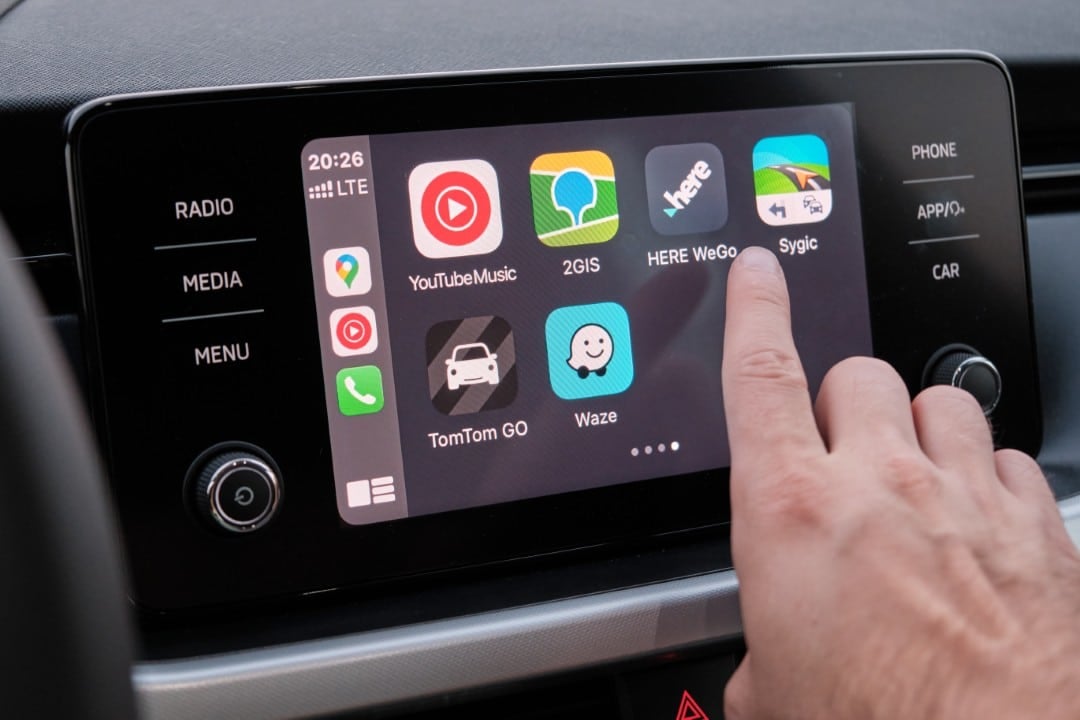
This new feature reflects a growing trend in the automotive industry, where the car is no longer just a means of transport to become an extension of the user’s digital environment. With the increase in the fleet of electric vehicles and the need for charging stops, the demand for on-board entertainment has grown exponentially. The Apple responds to this market need, offering a native solution that does not require third-party adaptations or the use of physical supports for cell phones, integrating the visual experience directly into the ergonomics of the car dashboard.
Technical integration via AirPlay and audio sync
The technological basis for this new functionality lies in the improvement of the AirPlay protocol, now optimized for vehicular environments. The system does not just perform a simple mirroring of the smartphone screen; it establishes a high-speed data path that separates the video stream from the audio stream, ensuring perfect synchronization with the car’s sound system. Isso eliminates the latency common in older Bluetooth connections, providing a cinema experience inside the cabin, where the vehicle’s surround sound is fully utilized for immersion in the content being watched.
For the magic to happen, the vehicle’s software acts as an authenticated receiver. Quando the user selects a video from compatible streaming applications on the iPhone, the system checks the availability of the dashboard screen. If safety conditions are met, the image is transferred to the central display, while playback controls remain accessible both on the car’s touchscreen and on the mobile device. Essa control duality facilitates operation, allowing passengers to also interact with the content without interfering with driving if the vehicle needs to start moving suddenly.
Additionally, energy management was a focal point in the development of this technology. The intense graphics processing required to decode high-resolution videos is intelligently distributed between the smartphone’s processor and the multimedia center’s graphics chip, when available. Isso prevents devices from overheating and preserves cell phone battery, a constant concern for users who use GPS navigation and music streaming simultaneously during long trips or prolonged stops.
Strict security protocols and active sensors
Road safety remains the central pillar of this update, with the Apple implementing a series of tamper-proof logic locks. The system constantly monitors the vehicle’s speed sensors and transmission position. The moment the sensors detect any movement of the wheels or the shift of the gear lever to the drive or reverse position, video playback stops instantly. The screen immediately returns to the standard navigation or audio interface, removing any visual stimuli that could distract the driver from the road.
This proactive approach aims to mitigate the risks associated with cognitive and visual distraction. Estudos of traffic safety indicate that looking away from the road for just two seconds drastically increases the risk of collisions. By automating video blocking, the technology eliminates the burden of human decision-making at critical moments, ensuring that entertainment never competes with the attention required for safe driving. The system was designed to be foolproof, always prioritizing the vehicle’s telematics data over the user’s media requests.
The app developer guidelines have also been updated to reflect these requirements. Aplicativos video files that want to be compatible with CarPlay must include specific metadata that allows the car’s operating system to manage the playback state. Isso creates a standardized ecosystem where all streaming services, be they films, series or short videos, obey the same security rules, preventing malicious or poorly optimized software from bypassing movement restrictions.
The role of automakers in implementing the feature
While the iOS 26 update enables the functionality on the smartphone side, the actual activation of the feature depends on the collaboration of car manufacturers. Automakers need to update the firmware of their multimedia centers to support the new security handshake required by Apple. Isso means that not all CarPlay-compatible vehicles will have immediate access to video playback; It will be up to each brand to validate and release the functionality through updates via the internet (OTA) or at dealerships.
This scenario puts additional pressure on the engineering of automakers, who must ensure that their internal systems communicate the state of the vehicle accurately and without delays to the Apple device. Legal liability in the event of video blocking failures is a sensitive topic, leading automotive companies to carry out exhaustive tests before making the function available to the final public. Integration requires specific certification within the MFi (Made for iPhone) program, ensuring that the car’s hardware meets the quality and safety standards established by the technology giant.
Brands that already invest heavily in software-defined vehicle architectures tend to come out ahead, offering the novelty as a competitive differentiator. The ability to update the car as if it were a smartphone thus becomes a decisive factor in purchasing, with consumers valuing vehicles that can evolve and gain new functions over time of ownership, keeping the infotainment system relevant for years to come.
Transformation of the vehicle into a leisure and waiting space
The introduction of videos on the dashboard recontextualizes the time spent in the car, especially in large urban centers. Situações everyday tasks, such as waiting for your children to leave school, waiting for someone at an airport or being stuck in a traffic jam at a complete stop, gain a new dimension of usefulness and leisure. The car starts to function as a temporary living room, offering comfort and entertainment of a higher quality than a cell phone screen held in your hand.
For electric vehicle owners, the impact is even greater. Charging time at public stations, which can vary from twenty to forty minutes, becomes an opportunity to consume content. The integration of video into the premium sound systems of many modern vehicles creates an immersive experience that makes taking a break from traveling less tedious and more productive. Essa change in user behavior is being closely watched by advertisers and content creators, who see the broadcast environment as a new frontier for engagement.
The convergence between digital life and urban mobility suggests a future where automotive operating systems will be as important as the car’s mechanics. The Apple, by enabling videos on the dashboard, takes a calculated step towards an ecosystem where the user does not need to disconnect from their digital life when entering the vehicle, as long as this is done in a safe and responsible manner. Technology therefore serves as a bridge between the convenience of home and the need to travel, redefining the experience of being on board.



