

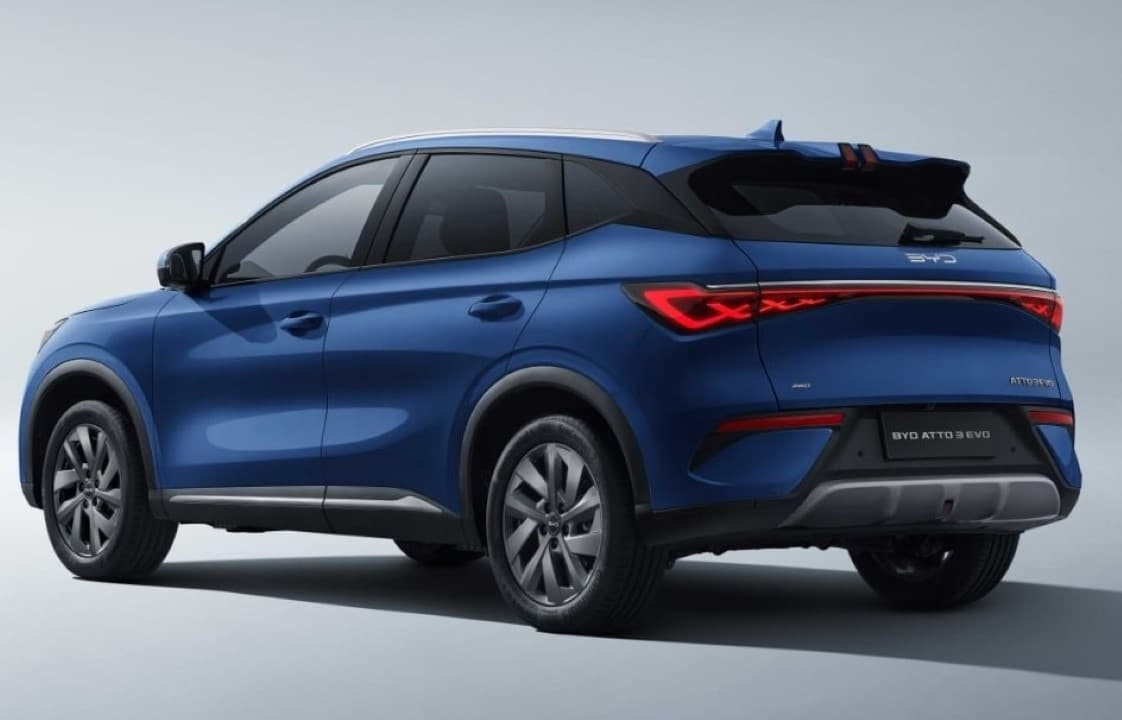
Chinese manufacturer BYD has expanded its presence on the European continent with the official launch of the Atto 3 EVO, a robust update to its compact SUV that aims to redefine charging and performance standards in the segment. The vehicle incorporates the advanced 800-volt platform, a technology usually reserved for luxury cars, democratizing access to high-power recharges and greater thermal efficiency. Esta strategic move seeks to consolidate the brand in competitive markets, such as Spain, offering superior technical specifications at aggressive prices.
High voltage and energy efficient architecture
The great technical difference of the new model lies in the adoption of the 800 volt electrical architecture, which replaces conventional lower voltage systems. Essa change allows the 74.8 kWh Blade battery, composed of lithium iron phosphate (LFP), to operate with greater thermal stability and durability. The technology not only optimizes energy consumption, but also transforms the fueling experience for the driver.
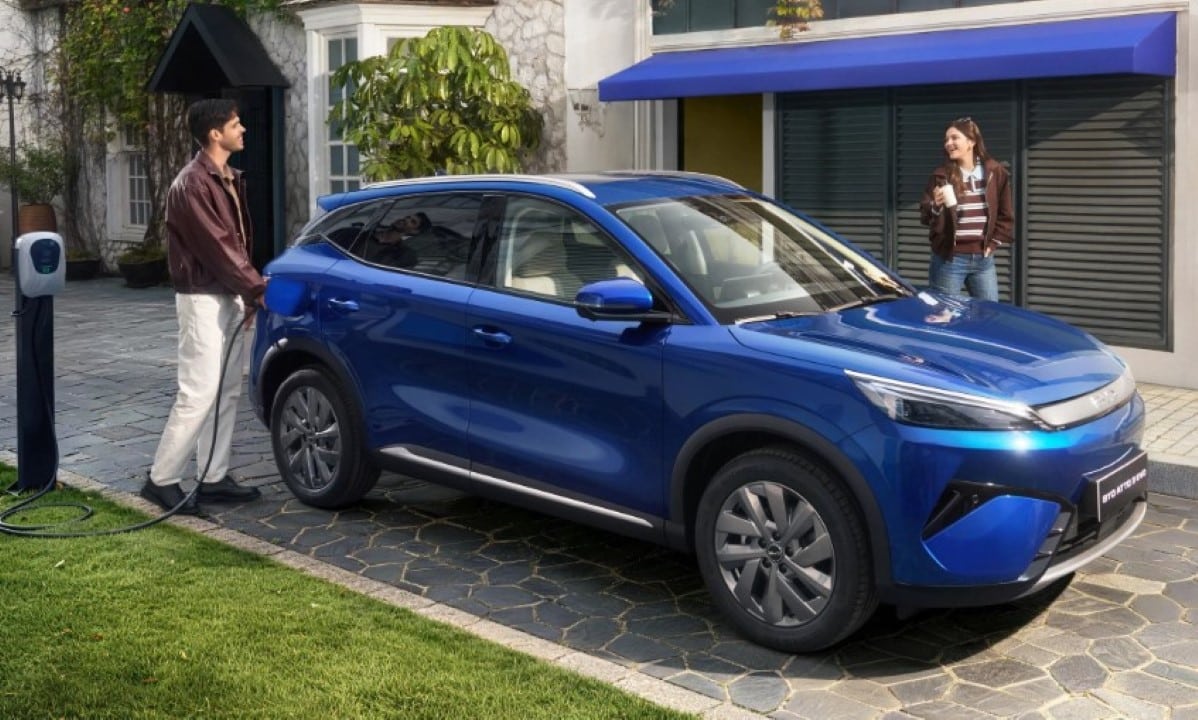
Among the main capabilities of the energy management system, the following stand out:
- Support for direct current (DC) charging with a maximum power of 220 kW.
- Reduced recharge time from 10% to 80% to just 25 minutes in ideal conditions.
- Integration of V2L (Vehicle-to-Load) technology, allowing the car to supply power to external devices.
- Extended warranty for the battery pack, covering 8 years or 25 thousand kilometers.
The implementation of this electrical infrastructure aims to eliminate range anxiety on long journeys, positioning the SUV as a viable alternative to combustion vehicles. The system’s efficiency is directly reflected in daily usability, allowing for shorter stops at quick charging stations.
Dynamic performance and available versions
The European market will receive two distinct variants, adapted to different driving profiles. The entry-level version, called Design, has an electric motor on the rear axle that delivers 230 kW (approximately 313 horsepower). Este mechanical set allows acceleration from 0 to 100 km/h in 5.5 seconds. In the WLTP cycle, the combined autonomy is 510 km, reaching 710 km in strictly urban use, where the regeneration system operates more frequently.
For consumers looking for greater performance, the Excellence version adds a front engine, resulting in all-wheel drive and a combined power of 330 kW (449 horsepower). Acceleration time drops to an impressive 3.9 seconds, although range is slightly reduced to 470 km in the mixed cycle. Ambas configurations use Cell-to-Body (CTB) technology, which integrates the battery into the chassis structure, increasing torsional rigidity and safety in the event of collisions, in addition to lowering the vehicle’s center of gravity.
Innovations in internal space and connectivity
Battery integration engineering allowed better use of space in the cabin and cargo compartment. The rear trunk offers 490 liters of capacity, suitable for family use. A relevant new feature is the inclusion of a front compartment, known as “frunk”, with an additional 101 liters. Este extra space, made possible by the compactness of the mechanical components, is ideal for storing charging cables or small purchases, keeping the main trunk free.
In terms of technology, the interior is dominated by a 15.6-inch rotating central screen, complemented by an 8.8-inch digital instrument panel. The infotainment system integrates Google services and advanced voice commands, facilitating distraction-free operation. Safety is enhanced by a full suite of driving assistants and seven airbags, ensuring comprehensive protection for all occupants.
Pricing strategy and market positioning
BYD adopted a competitive pricing policy for the launch on Península Ibérica. The Design model has a suggested starting price of 42,990 euros, while the top-of-the-line version Excellence starts at 45,990 euros. However, the company is betting on promotional campaigns and government subsidies, such as the Plano MOVES III at Espanha, which can reduce the final cost to the consumer to around 30,000 euros.
In regions with specific tax regimes, such as Ilhas Canárias, values can be even more attractive, starting at around 25,419 euros after incentives. With a 6-year general warranty for the vehicle and the promise of immediate delivery, the automaker seeks to capture a significant share of the market, challenging traditional European manufacturers with a package that combines cutting-edge technology and aggressive cost-benefit.



