
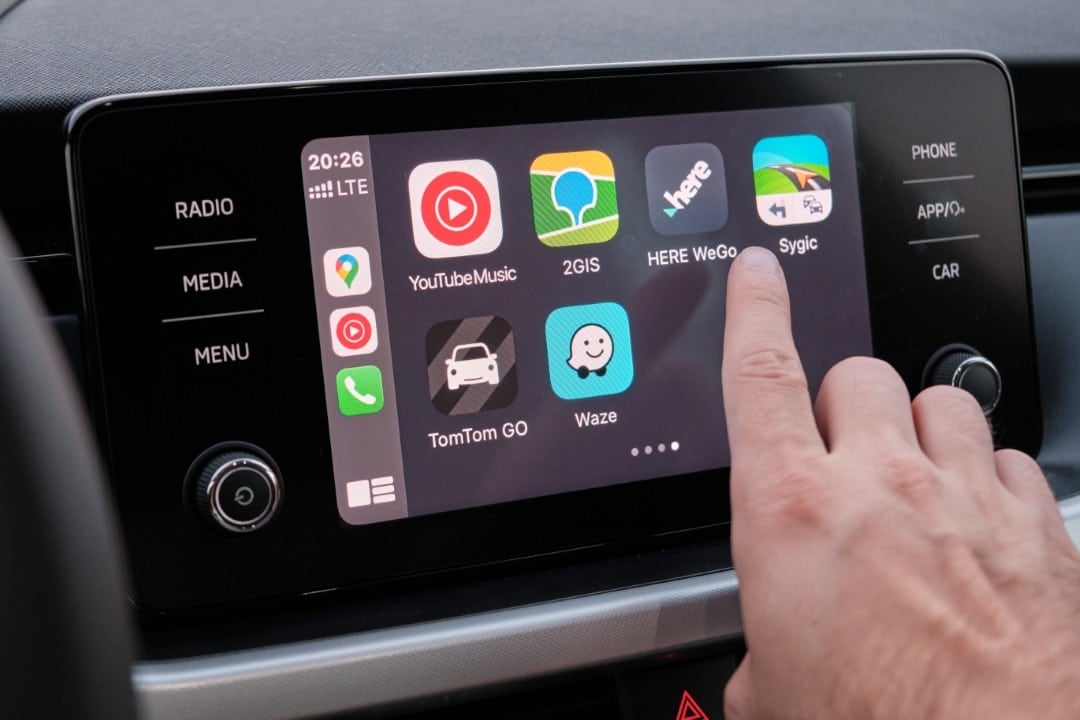
New implementations in the mobile connectivity ecosystem now allow drivers and passengers to use the vehicle’s dashboard screen to watch videos, but with a crucial security restriction. The newly updated technology establishes direct communication between the smartphone and the car’s sensors, ensuring that image mirroring occurs exclusively when the car is completely immobilized. The feature aims to transform the vehicle’s internal environment into an entertainment center during stops, without compromising the necessary attention in traffic.
Software engineers and road safety experts collaborated to develop protocols that prevent driver distraction. The system is designed to instantly detect any wheel movement or transmission changes. Assim Once the vehicle starts moving, the video display is immediately blocked, leaving only the audio or standard navigation interfaces, strictly complying with international traffic legislation.
Integration with sensors and automatic locking
The operation of this technology depends on a sophisticated reading of the vehicle’s telemetry data. The cell phone’s operating system does not act in isolation; it receives constant signals about the status of the ignition, the position of the gear lever (which must be in “Park” or neutral) and the application of the parking brake. Essa verificação cruzada assegura que não haja falhas que permitam a reprodução de filmes ou clipes enquanto o motorista dirige.
During movement, the interface prioritizes essential information. Mapas, route instructions and music controls remain visible, maintaining the simplified visual pattern that prevents cognitive overload. The transition between video mode (stationary) and driving mode (in motion) occurs fluidly, ensuring that safety is restored in fractions of a second after starting to move.
Demands generated by electric vehicles
The introduction of this feature responds to a behavioral change driven by the growth of the electric car fleet. Proprietários of these models often face waiting periods of between 20 and 40 minutes at fast charging stations. Anteriormente, this idle time was filled by the use of small smartphone or tablet screens, which did not offer ideal comfort inside the cabin.
With the new functionality, the car’s digital dashboard now acts as a cinema screen or TV monitor. Isso allows occupants to enjoy series, news or films with greater visual quality and integration with the vehicle’s sound system, making charging breaks more productive or relaxing. Charging infrastructure, although expanding, still requires patience, and in-flight entertainment has become a key part of the electric car user experience.
Hardware and wireless connectivity requirements
To support high-definition, low-latency video transmission, the technology requires robust connection standards. Diferente of audio, which can be transmitted via simple Bluetooth, video mirroring requires a direct Wi-Fi connection between the mobile device and the media center. Isso guarantees perfect synchronization between image and sound, eliminating delays that could harm the experience.
Car manufacturers are adapting their new models to support these higher data transfer rates. Compatibility depends on both the cell phone software and the hardware installed on the car dashboard. Older Veículos may not have the necessary architecture to validate the security protocols required for video release, limiting the resource to newer or updated models.
Evolution towards mobile office and video conferencing
In addition to leisure, the update opens doors for corporate use of the car. Profissionais who spend the day on the move, such as sales representatives and executives, can use parked time to participate in video conferences with full visual support. The dashboard screen can display meeting participants or slide presentations, transforming the cabin into an extension of the office.
Security remains the limiting factor in this scenario as well. Caso the driver needs to move during a virtual meeting, the system automatically cuts the video feed, keeping the call active only through audio. Essa hybrid functionality meets the need for productivity without violating safety standards, consolidating the trend towards increasingly connected and versatile vehicles.
