


The automobile industry is witnessing a decisive moment with the confirmation of the Japanese automaker’s new global strategy for its most popular vehicle. The sixth generation of the world’s best-selling sports utility vehicle will definitively abandon engine options powered exclusively by gasoline. The move marks a complete transition towards electrification of the portfolio, with the international launch scheduled for the end of 2025 and arrival at Brazilian dealerships scheduled for the first half of 2026.
At Brasil, the major innovation will be the introduction of a flex hybrid system, developed to operate with ethanol and electricity simultaneously. Engenheiros of the brand already carry out road tests in the national territory to tropicalize the components, ensuring that the mechanical assembly supports local road conditions and delivers the promised efficiency. The technology aims to drastically reduce carbon emissions, taking advantage of the country’s sustainable energy matrix.
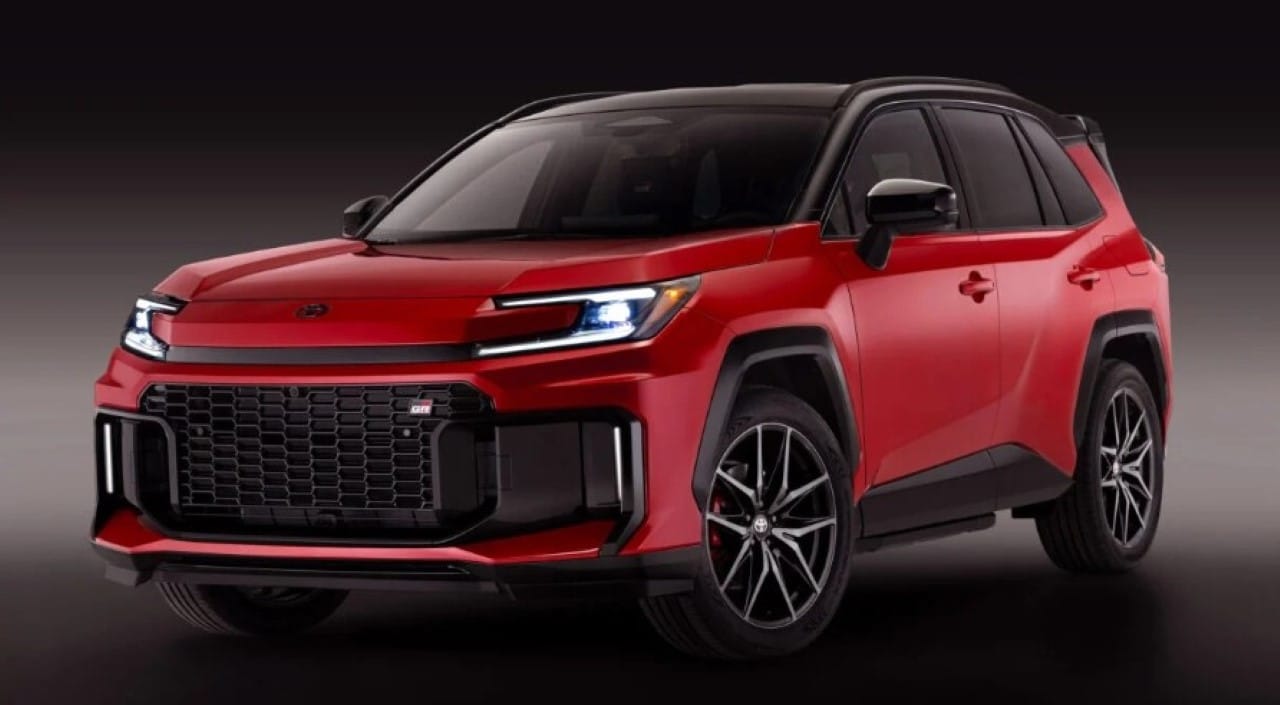
This technical update is not just a response to stricter environmental regulations, but a market repositioning to maintain leadership in the medium SUV segment. The decision to exclude purely combustion engines anticipates global trends and forces competitors to accelerate their own electrification projects.
Mechanical evolution and efficiency
The powertrain that will equip the new vehicle is based on the fifth generation of the manufacturer’s hybrid system (THS 5). The 2.5-liter combustion engine will work in synergy with more compact and efficient electric motors, resulting in a combined power that surpasses the 220 horsepower barrier. Essa configuration ensures safer overtaking and quick accelerator responses.
Preliminary data from engineering tests point to a significant improvement in fuel consumption, estimated at 15% for the urban cycle. Acceleration from 0 to 100 km/h has also been optimized, making the vehicle more agile without sacrificing economy. Para the plug-in versions, the autonomy in 100% electric mode has been increased, allowing the majority of daily journeys to occur without pollutant emissions.
The all-wheel drive also received important updates to its electronic calibration. The system distributes torque more intelligently between the axles, providing greater stability in curves and superior grip on low-friction terrain, such as wet tracks or dirt roads.
Aggressive design and functional aerodynamics
The visual identity adopted follows the “Hammerhead” language, already present in other recent models of the brand, giving the SUV a more robust and futuristic appearance. The front stands out for its tapered “C” shaped LED optical assembly, integrated into a redesigned front grille that improves air flow to the engine.
On the sides, the lines became more fluid and muscular, a design work focused on reducing the drag coefficient. Essa aerodynamic concerns result in lower wind noise in the cabin during highway trips and directly contribute to the energy efficiency of the hybrid set.
Digital interior and security technologies
The cabin has undergone a complete redesign, prioritizing the digital experience and occupant comfort with soft-touch materials and reinforced acoustic insulation. The panel is now dominated by high-definition screens, eliminating most physical buttons.
Among the main technological resources incorporated into the model, the following stand out:
– Central 14-inch multimedia with wireless connection;
– Painel of instruments fully configurable by the driver;
– Virtual Assistente with natural voice recognition for vehicle commands.
The active safety package has also evolved, expanding the danger detection capacity. The pre-collision system now identifies pedestrians and cyclists in low-light conditions with greater accuracy. Além In addition, adaptive cruise control gained functions for heavy traffic, allowing automatic stops and restarts with greater smoothness, reducing driver stress in urban congestion.
Main keywords: Toyota RAV4 2026, flex hybrid SUV, automotive market, electrified cars.
Palavra long-tail key: launch of hybrid cars in Brasil.
Links researched: https://www.toyota.com.br/, https://motor1.uol.com.br/, https://autoesporte.globo.com/



