

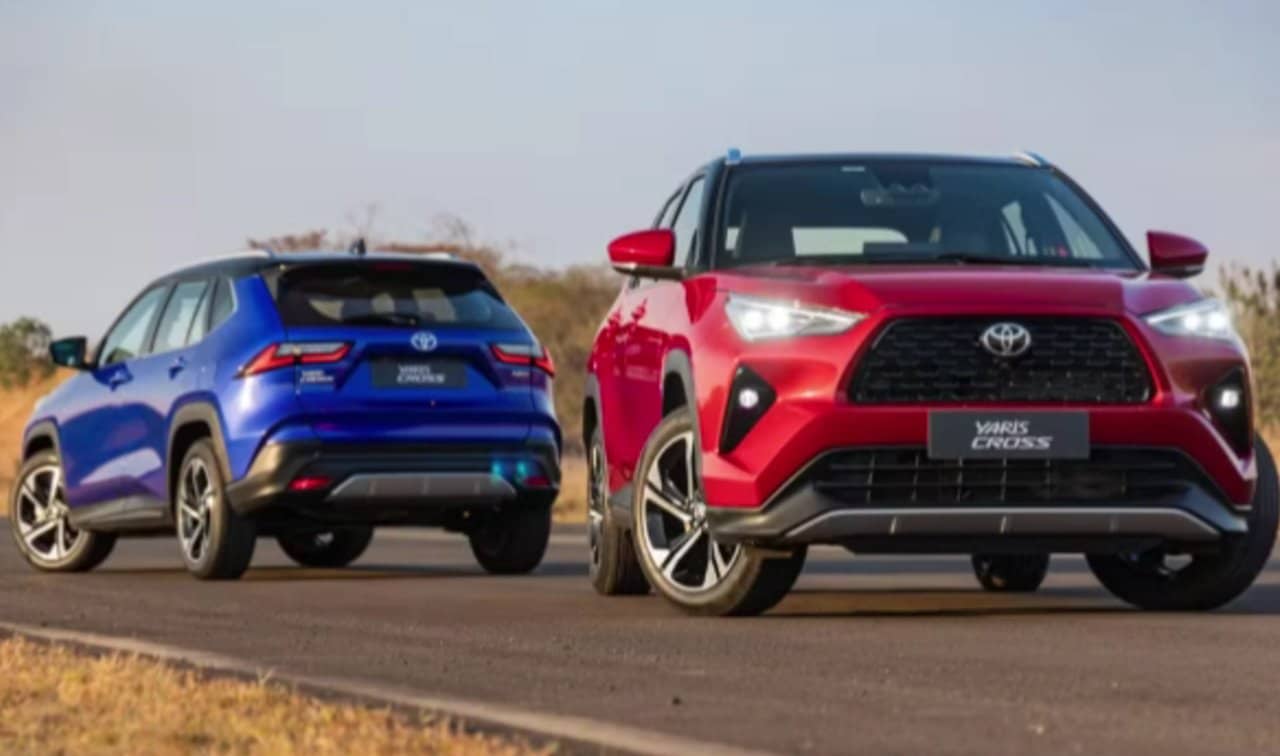
Toyota confirmed an important strategic decision for the Brazilian market by announcing the maintenance of the launch values for the Yaris Cross. Mesmo after the initial batch of 8,500 pre-sale units was sold out, the Japanese automaker chose not to apply immediate adjustments to the table, contrary to expectations of a common increase in situations of high demand. The measure aims to consolidate the model in the competitive compact SUV segment and ensure the loyalty of new customers awaiting the vehicle’s arrival at dealerships.
The brand’s positioning reflects an aggressive approach to gaining market share against direct competitors. By holding down prices, the manufacturer ensures that the model continues to be an attractive option for both the end consumer and the PCD public (People with Deficiência), maintaining versions within the tax exemption limits. The fixed price strategy covers all vehicle configurations, from combustion options to hybrid variants, reinforcing the company’s commitment to the commercial stability of the product in this first period of full sales.

With this definition, the official price list for the sport utility vehicle remains unchanged, with the entry-level version starting at R$149,990. Este valor é crucial para o posicionamento do carro, servindo como porta de entrada para a linha que chega até R$ 189.990 na configuração topo de linha. Maintaining these levels allows consumers to have financial predictability, a decisive factor in the journey of purchasing durable goods, especially in an economic scenario that requires caution.
Mechanical configurations and energy efficiency
The Yaris Cross hits the market with two different engine options, designed to meet different usage profiles. The XR, XRE and XRX versions are equipped with a 1.5 aspirated flex engine, which works together with a CVT automatic transmission that simulates seven speeds. Este set delivers up to 111 horsepower and 15.4 kgfm of torque when fueled with ethanol, prioritizing smooth and linear driving, suitable for both urban traffic and road trips.
The automaker’s big bet, however, lies in hybrid configurations. The system combines a 1.5 flex Atkinson cycle engine, producing up to 91 horsepower, with an 80 horsepower electric drive. The combined power is 111 horsepower, but the highlight is the efficiency provided by the 0.7 kWh lithium-ion battery. The system automatically manages the switch between propulsion modes, allowing the vehicle to run in 100% electric mode in low-speed situations or maneuvers, drastically optimizing fuel consumption.
Data from Programa Brasileiro of Etiquetagem Veicular (PBEV) of Inmetro prove the efficiency of the hybrid set. The model is capable of achieving impressive averages of 17.9 km/l in the city and 15.3 km/l on the highway when fueled with gasoline. With ethanol, the numbers remain competitive, registering 12.6 km/l in the urban cycle. Essa high autonomy, combined with a 36-liter fuel tank, ensures that the driver makes fewer stops for fuel, a relevant difference for daily use.
Embedded technology and security items
Safety was treated as a priority in the development of the project, with the inclusion of six airbags as standard in all versions. Além of passive protection, the model incorporates the Toyota Safety Sense package in the most complete configurations. Este driving assistance system includes advanced features such as pre-collision warning, autonomous emergency braking and lane change alert, raising the standard of protection offered in the compact category.
Inside, connectivity is guaranteed by a floating multimedia center, available with 7 or 10.1 inch screens, depending on the version. The system offers wireless integration with Apple CarPlay and Android Auto, eliminating the need for cables for mirroring navigation and music apps. The configurable digital instrument panel allows the driver to select the most relevant information for driving, from consumption data to the operation of the hybrid system in real time.
Other comfort and convenience items are part of the equipment list, such as automatic digital air conditioning, electronic parking brake and induction cell phone charger. Nas top versions, the consumer still finds a panoramic sunroof and interior finishing with soft-touch materials, reinforcing the perception of quality and sophistication on board the new utility vehicle.
Dimensions and internal space
Built on the DNGA platform, a variation of the brand’s global architecture focused on emerging markets, the SUV features balanced dimensions for urban use. São 4.31 meters long, 1.77 meters wide and 1.65 meters high. The wheelbase of 2.62 meters was optimized to offer good legroom for rear seat occupants, a critical point in many vehicles in this segment.
The trunk offers a volumetric capacity of 400 liters in combustion-only versions, a competitive number for the category. Nas hybrid variants, due to the positioning of the battery pack and auxiliary electrical systems, the volume is slightly reduced to 391 liters. Mesmo With this small difference, the cargo compartment maintains a regular shape that makes it easier to accommodate suitcases and purchases, well meeting the needs of small families.
Produced at the Sorocaba factory, in the interior of São Paulo, the vehicle represents a fundamental step in the renewal of the brand’s national portfolio. The nationalization of production not only guarantees the supply of the dealership network, but also facilitates maintenance and the availability of spare parts, factors that historically weigh in favor of the Japanese manufacturer in the Brazilian consumer’s purchasing decision.



