


The large sports utility vehicle market started the year with a significant change in the competitive dynamics between the main brands operating in the country. Dados recent reports released by Esse performance contrasts with the movement of the segment’s historical leader, which faced a seasonal downturn and saw its numerical advantage fall to the smallest margin ever recorded since the beginning of the direct dispute.
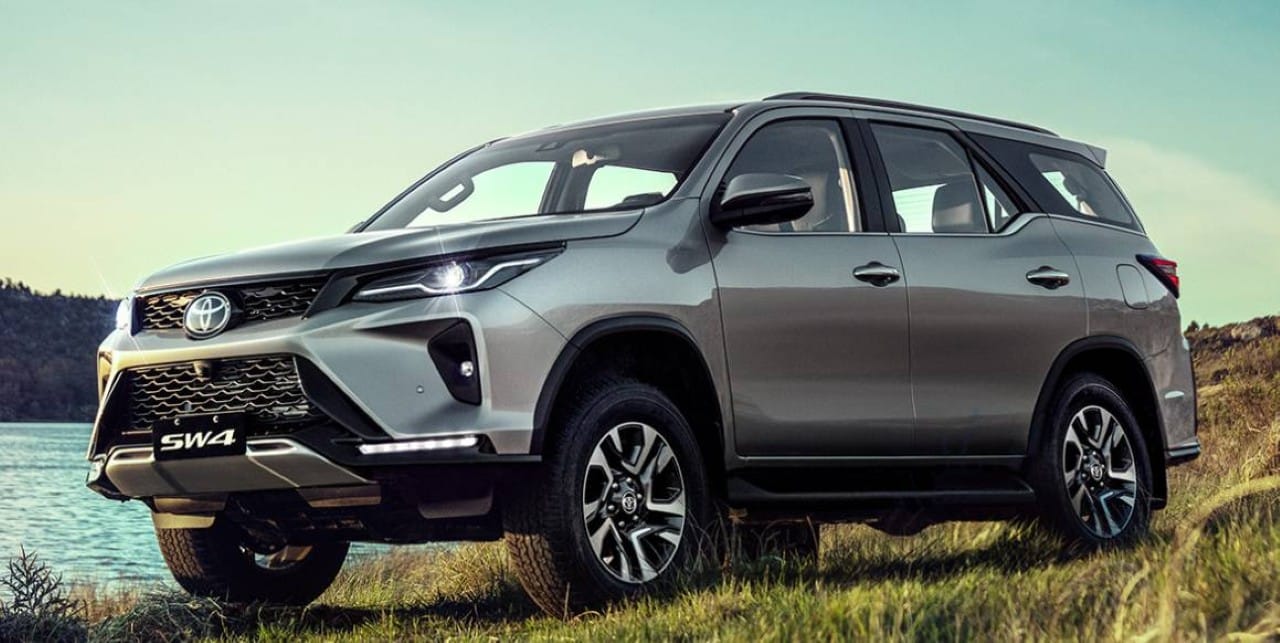
The rapprochement between the two competitors creates a new scenario for the automotive sector, especially in the category of diesel-powered vehicles with 4×4 traction. The Toyota SW4, which traditionally dominates the category by a wide margin, recorded 1,231 units sold in the same period. The volume represents a drop of 35.6% compared to December, a natural movement after the increase in sales typical of the end of the year, but which allowed the rival to reduce the difference to just 349 vehicles.
Essa narrow margin of less than 400 units raises an alarm about consumer preference and the acceptance of new technologies in the national market. Desde its arrival in September 2025, the GWM utility has accumulated a consistent growth trajectory, totaling 3,087 units registered on Brazilian soil. The speed with which the model achieved such numbers demonstrates a paradigm shift in trust in Asian brands.
Commercial evolution and market competition
Analysis of the numbers reveals a continuous upward trend for the Chinese challenger, which did not suffer the negative impact common to the months of January. Enquanto the general market tends to slow down, Haval H9 maintained the growth rate observed in the last quarter. In November, the model had registered 570 registrations, rising to 774 in December and reaching the current peak of 882 units.
On the other hand, Toyota SW4 showed fluctuations characteristic of a consolidated product that reacts to seasonality. The Japanese model had a significant peak in December, with 1,913 units, driven by the closing of the fiscal year and sales bonus. The contraction in January adjusts stocks, but the competitor’s persistence in growing even in this scenario indicates that there is a real migration of customers or an expansion of the consumer niche.
Competition in the segment, which previously included stronger models such as the Chevrolet Trailblazer and Mitsubishi Pajero Sport, is now polarized. Former rivals remain far apart in volume, with the Trailblazer often registering fewer than 300 units monthly. The main dispute now centers between Japanese tradition and Chinese innovation.
Aggressive pricing strategy
One of the determining factors for the rapid advancement of the Haval H9 lies in the commercial positioning adopted by the automaker. The vehicle is offered in a single version in the Brasil with a suggested price of R$329,000. Essa label places the SUV as the most affordable option within the large diesel vehicle segment with real off-road capability and a high level of onboard technology.
On the other hand, the price list for the Toyota SW4 requires a significantly greater investment on the part of the buyer. The entry-level version of the model starts at R$417,590, establishing an immediate difference of R$88,590 compared to the competitor. Para consumers looking for the top-of-the-line configuration, called Diamond, the price jumps to R$475,990.
The financial disparity reaches R$146,990 when comparing the most equipped versions on each side. Esse amount, enough to purchase a second passenger vehicle, has been a powerful rational argument to attract customers who previously did not consider leaving the Japanese brand. GWM bets on cost-benefit to break the barrier of traditional brand loyalty.
Technical differences and motorization
The clash between the two utilities also occurs in the field of engineering, with different mechanical proposals. The Toyota SW4 maintains its commitment to the proven robustness of the 2.8 turbo diesel engine. The engine delivers 204 horsepower and 50.9 kgfm of torque, coupled to a six-speed automatic transmission. The set is known for its durability and wide availability of parts, deriving directly from the Hilux pickup truck.
The Haval H9 features a more recent design, equipped with a 2.4 turbo diesel engine. Embora the power is slightly lower, with 190 horsepower, and the torque is 48.9 kgfm, the model compensates in the transmission. The nine-speed automatic transmission offers more fluid and efficient driving on roads, allowing the engine to work at lower revs at cruising speed.
The suspension architecture also differs. Enquanto the Japanese model focuses on resistance for heavy work, the Chinese seeks to balance off-road capability with urban comfort, using four-wheel independent suspension. Ambos have 4×4 and reduced traction, essential for the category.
Technology and standard equipment
The equipment list has become the battlefield where value perception is built. The GWM model hits the market with a complete package that includes items that are often optional or absent from rivals. The panoramic sunroof, seats with heating and ventilation systems, as well as massage for the driver, are offered as standard.
In terms of connectivity and interface, the Haval H9 stands out with a 14.6-inch central screen, superior to the 9-inch display found on the SW4. Ambos systems offer wireless integration with Android Auto and Apple CarPlay, but the Chinese system’s resolution and processing speed reflect a newer generation of semiconductors.
Active safety is included in both vehicles with semi-autonomous driving assistants. Package includes:
– Controle adaptive cruise (ACC) with stop and go function.
– Sistema autonomous emergency braking with pedestrian detection.
– Assistente of stay and centering in lane.
– Monitoramento of blind spots and rear cross traffic.
Perspectives for the national market
The consolidation of GWM with a factory in Iracemápolis, in the interior of São Paulo, promises to further intensify the dispute. The nationalization of models and the expansion of the dealership network are fundamental steps to guarantee after-sales support, a point that historically favors Toyota. The Japanese brand has one of the most widespread and praised networks in the country, which guarantees high resale value for its products.
The Brazilian consumer of large SUVs, who values internal space, load capacity and robustness, now has real options to choose from. The pressure exerted by the new competitor can force price adjustments or faster updates on the part of traditional automakers, benefiting the market as a whole.
With the difference in sales falling month by month, the year promises to be decisive in determining whether SW4 will maintain its absolute hegemony or whether the market will share leadership between two Asian powers with distinct value and technology propositions.



