

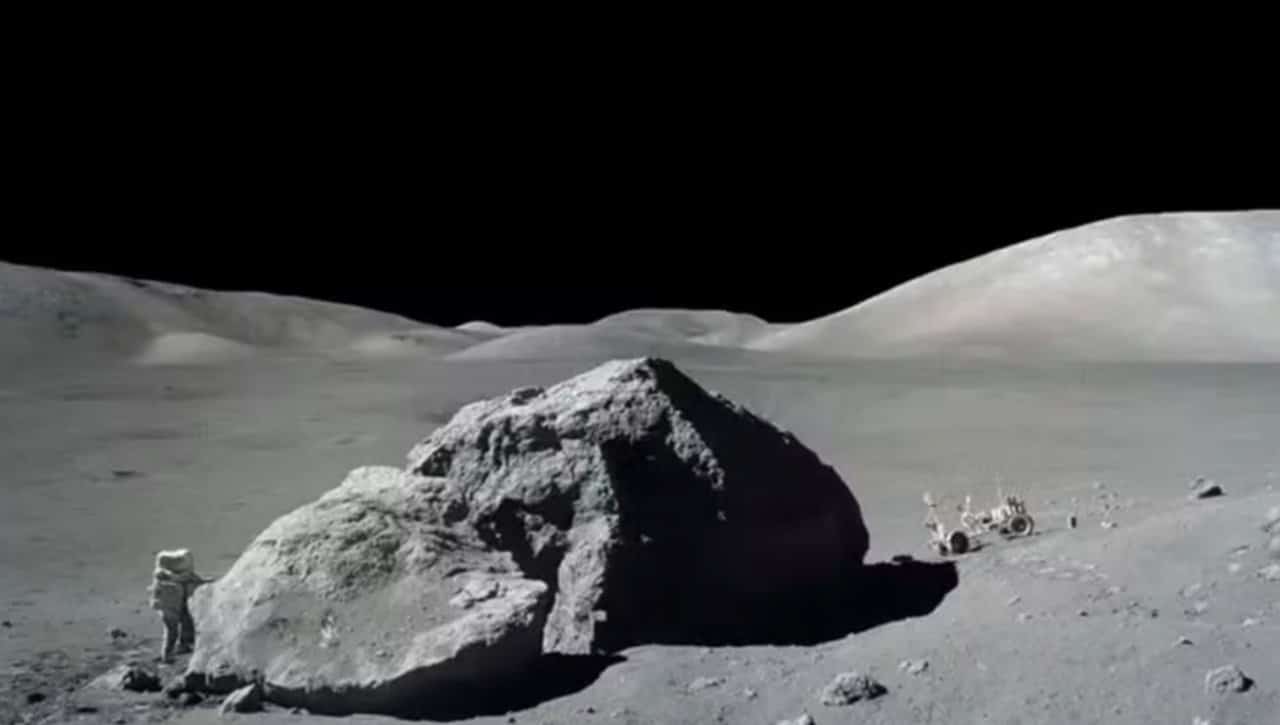
Scientists and researchers in the field of astronomy reinforce the theory that a hypothetical planet, called Theia, collided with the young Terra approximately 4.5 billion years ago. The catastrophic event would have resulted in the merger of much of the mass of this celestial body with our planet, while the remaining fragments grouped together in space to form Lua. Este phenomenon is widely known in the scientific community as the giant impact hypothesis and serves to explain several current geological features.
Analysis of the chemical composition of rocks collected on space missions demonstrates profound similarities between lunar and terrestrial material. Especialistas point out that, without this cosmic encounter, Terra would not have its natural satellite, which would drastically alter the conditions of life here. The presence of Lua exerts a continuous gravitational force that stabilizes the tilt of the Earth’s axis over billions of years.
The stabilization process prevented the planet from facing extreme and chaotic climate variations that would hinder biological development. Dados collected by international research institutes suggest that the impact occurred during a phase of great instability in the formation of Sistema Solar. Detailed research into these events uses advanced computer models to simulate the trajectory and force of the original collision.
Chemical composition of lunar samples reinforces the theory of kinship between stars
Space missions carried out in the 1960s and 1970s were essential for lunar geologists to study the origin of the Terra-Moon system. Antes of the physical analysis of materials, science worked with three main hypotheses that tried to explain how the satellite would have appeared in outer space. Theories varied between the fission of a piece of Terra, the gravitational capture of a wandering body or the simultaneous co-formation of both stars.
When analyzing the rocks brought by the astronauts, scientists noticed that the chemical elements were practically identical to those found in the Earth’s mantle. Essa discovery weakened previous theories and gave prominence to the impact model with the planet Theia, which would be approximately the size of Marte. Evidence shows that the rocks underwent extreme heating, typical of high-magnitude collisions in a vacuum.
- Lunar material has a shortage of volatile elements that evaporate easily at high temperatures.
- The density of Lua suggests that it formed from the outer layers of Terra and the impactor.
- Mathematical models indicate that iron from Theia sank into the Earth’s core during the merger.
Traces of planet Theia may be located deep in the Earth’s mantle
One of the biggest challenges for contemporary researchers is identifying exactly where the remains of Theia ended up after the massive collision. Como the planet had about 10% of the mass of Terra, it was completely fragmented and integrated into the internal structure of our world. Estudos Recent geophysicists indicate the existence of two large dense structures deep in the mantle that may be relics of this ancient star.
These regions, located under África and Oceano Pacífico, have seismic characteristics distinct from the rest of the material that makes up the planet’s interior. The hypothesis suggests that the denser material from Theia did not completely mix, remaining preserved near the Earth’s core for billions of years. Essa discovery opens new fronts of investigation into the geochemical evolution and dynamics of tectonic plates.
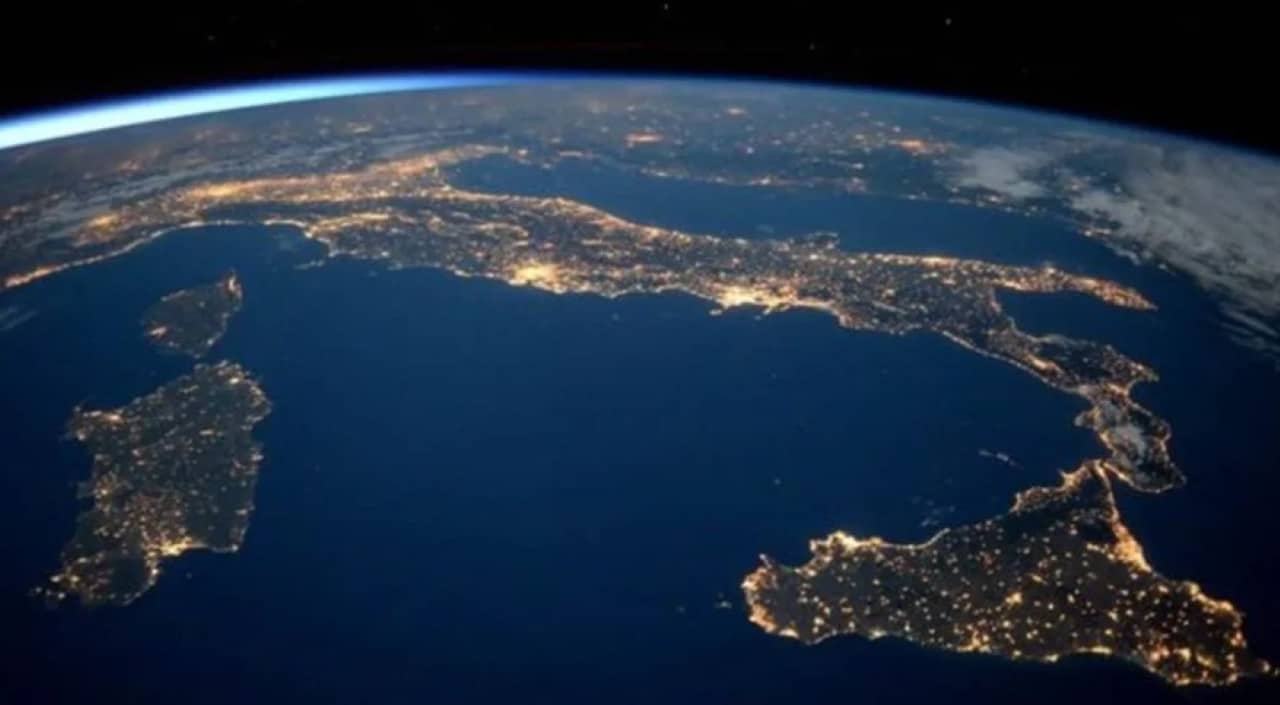
New space missions seek definitive answers about the formation of the solar system
The scientific community’s enthusiasm for the return of manned missions to the lunar surface is directly linked to the search for unprecedented data. The new explorations aim to collect samples in never-before-visited regions, such as the lunar Polo Sul, to compare with data from previous missions. Espera These new materials are expected to provide clearer chemical signatures about the identity of Theia and its impact.
Different space agencies plan to install seismic monitoring equipment and drill deeper into the satellite’s crust. Geologists believe that the lower layers of Lua hold secrets about the liquid state in which the star found itself shortly after the impact. Current technology allows for much more precise analyzes than the tools available in the last century, ensuring greater fidelity to the results.
Advances in computer modeling confirm the dynamics of the giant impact
Supercomputer simulations allow astrophysicists to recreate the scenario from 4.5 billion years ago with high physical fidelity. Esses models show that the impact angle was decisive for the material to be launched into orbit instead of just being destroyed. The precision of the calculations helps to understand why Terra retained most of its mass and how Lua acquired its current orbit.
- Simulations show that the impact occurred at a speed of thousands of kilometers per hour.
- The heat generated by the collision was enough to melt the surface of both celestial bodies.
- The distribution of oxygen isotopes in Lua is almost identical to that in Terra, validating the mixture of materials.
- The angular momentum of today’s Terra-Moon system is a direct reflection of this prehistoric collision.
Importance of satellites for maintaining life and protecting the surface
Lua plays a role that goes beyond nighttime lighting or influencing ocean tides around the globe. Ela acts as a partial shield against meteorite impacts and stabilizes the planet’s rotation, preventing sudden oscillations. Sem this stability, the Earth’s poles could migrate to the equator in short cycles, making agriculture and complex life unfeasible.
Studying Theia and lunar formation helps understand the rarity of similar planetary systems in other galaxies. Astrônomos uses this data to refine the search for exoplanets that could harbor life in conditions similar to ours. Understanding the history of Terra is fundamental to predicting the behavior of other worlds in formation in the universe.
Perspectives on research and international collaboration between space agencies
Global interest in Lua has united scientists from different countries around common goals of exploration and discovery. Universidades and research institutes share satellite data to map the mineralogical composition of the surface with meter accuracy. Essa cooperation is essential for developing theories that explain how water and other compounds arrived in the system.
Continued exploration promises to transform current knowledge about planetary geology and the physics of large impacts. Cada new sample analyzed in high-tech laboratories brings science closer to a definitive answer about the final fate of Theia. Constant space monitoring and analysis of lunar meteorites found in Terra also complement this vast cosmic puzzle.



