
Fire risk motivates remote update on 97,000 BYD hybrid vehicles after factory failure


China’s largest new energy vehicle manufacturer has initiated a broad safety protocol involving one of its most popular product lines in the Asian market. The preventive measure aims to correct a manufacturing flaw identified in the power controller, a vital subcomponent for the safe operation of the hybrid system. Autoridades Regulators have determined that errors in the production process can lead to incorrect voltage readings, compromising the integrity of the vehicle and the safety of the occupants.
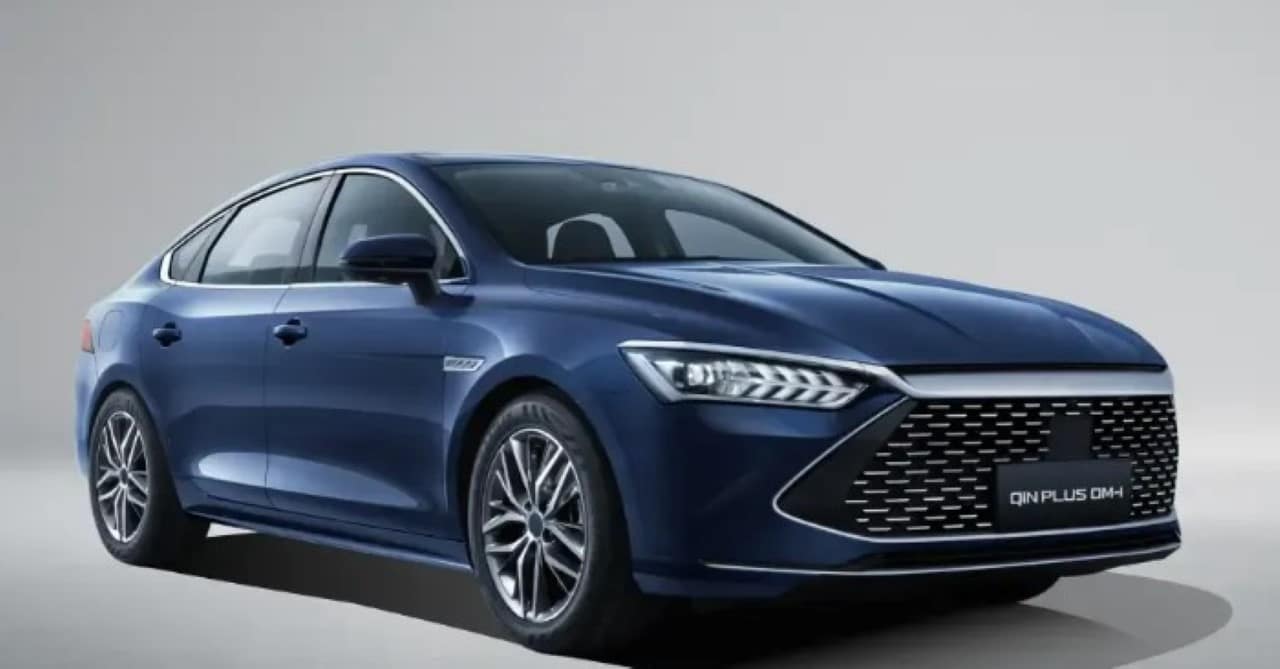
The technical work focuses specifically on the Qin Plus DM-i model, a plug-in hybrid sedan that is among the brand’s best sellers. According to documents submitted to the state market regulation administration, the affected lot comprises a total of 96,714 units. The cars under intervention were manufactured between the beginning of 2021 and the end of 2023, covering a significant production window that requires direct response from the automaker to ensure system stability.
Correction strategy via software update
To solve the problem efficiently and minimize inconvenience to drivers, the company adopted a strategy based on remote technology. The primary repair will be performed through an “over-the-air” (OTA) software update, eliminating, in most cases, the need for the customer to physically travel to a dealership for the initial repair. Este method reflects the modern trend of software-defined vehicles.
The new data package transmitted to vehicles has the ability to recalibrate power cell monitoring parameters. The updated software can detect whether voltage divergence caused by manufacturing error in the controller hardware exceeds physical tolerance limits. Caso the digital system identifies an irreversible physical anomaly, the owner will receive a warning on the dashboard and, only in this specific situation, the physical replacement of the part will be necessary at an authorized workshop, free of charge.
This technological implementation demonstrates the evolution of modern vehicles, where code can diagnose and mitigate mechanical or hardware failures. However, if the software detects that wear or risk of fire or electrical failure is imminent due to the faulty controller, physical replacement of the component becomes mandatory to prevent serious thermal events from occurring.
Warning signals and system monitoring
For the vast majority of users with connected cars, the update will occur automatically, but it is essential that drivers are aware of the vehicle’s behavior while the correction is not applied. Sistemas hybrids normally emit clear signals when there is instability in energy management, and the correct interpretation of these warnings can prevent accidents.
Automotive safety experts recommend that owners of affected models note any battery- or drivetrain-related error messages displayed on the instrument panel. The battery module, when not operating according to initial calculations, may present specific indicators that suggest the vehicle must be stopped immediately in a safe location.
Key symptoms indicating control module failure include:
– Mensagens error on the panel connected to the high voltage network or traction battery.
– Perda sudden loss of power or immobilization of the vehicle during electric mode.
– Comportamento erratic battery charge indicators or unstable fluctuations in estimated range.
– Excessive Aquecimento noticed on the floor or in the battery pack installation area.
Corporate responsibility and security protocols
This recall highlights the critical importance of battery management systems (BMS) in the era of vehicle electrification. Diferente of combustion vehicles, where mechanical failures tend to be progressive, problems in high voltage systems require real-time monitoring and prevention against thermal propagation. The automaker’s quick response is necessary to avoid damage to the brand’s image and ensure consumer confidence in the energy transition.
The manufacturer’s action in using remote updates to screen for faulty hardware reflects a paradigm shift in the industry. By filtering which cars can only be fixed via software and which ones require physical intervention, the dealership network is able to optimize the service flow, avoiding congestion in workshops and prioritizing the most severe cases.
Consumers who have the Qin Plus DM-i model manufactured within the stipulated date must check the vehicle management application or wait for official communication. The service is legally free and the correction is essential to maintain the validity of the warranty and, mainly, for road safety.
Electric vehicle market context
With the exponential growth of the fleet of hybrid and electric cars, the quality management of electronic components has become as vital as engine engineering in the last century. The mass production of semiconductors and power modules requires rigorous quality control, as small variations in manufacturing can create unprecedented challenges for automotive engineering.
Recalls of this nature, although they generate initial concern, demonstrate that the industry’s traceability mechanisms are working. The ability to isolate a specific batch that experienced errors during welding or subcomponent assembly and apply an accurate corrective solution is critical to sustaining the credibility of new energy vehicles.
Transparency in communicating about fire risks is a central pillar for global regulatory bodies. Atualmente, the vehicle is seen as a computer on wheels, and the complexity of integrating heavy hardware with intelligent software sets new standards for passive and active safety on highways and urban roads.



