


Critical visibility warning due to dense fog affected Pensilvânia until Thursday morning. A dense fog warning was issued for several regions of Pensilvânia, significantly impacting traffic conditions and driver safety. Visibility in some areas was reduced to less than 400 meters, creating a high risk scenario on the roads, where response capacity and perception of obstacles were severely compromised. Autoridades meteorologists reiterated the need for maximum caution, advising the population to avoid unnecessary travel and to take extra care when driving, especially in the early hours of the day. Este atmospheric phenomenon, although common at certain times of the year and under specific climatic conditions, requires constant attention and strict preventive measures to avoid accidents and guarantee the integrity of all road users. Low visibility, as pointed out by experts, turns familiar routes into unexpected challenges, requiring immediate adaptation from drivers.
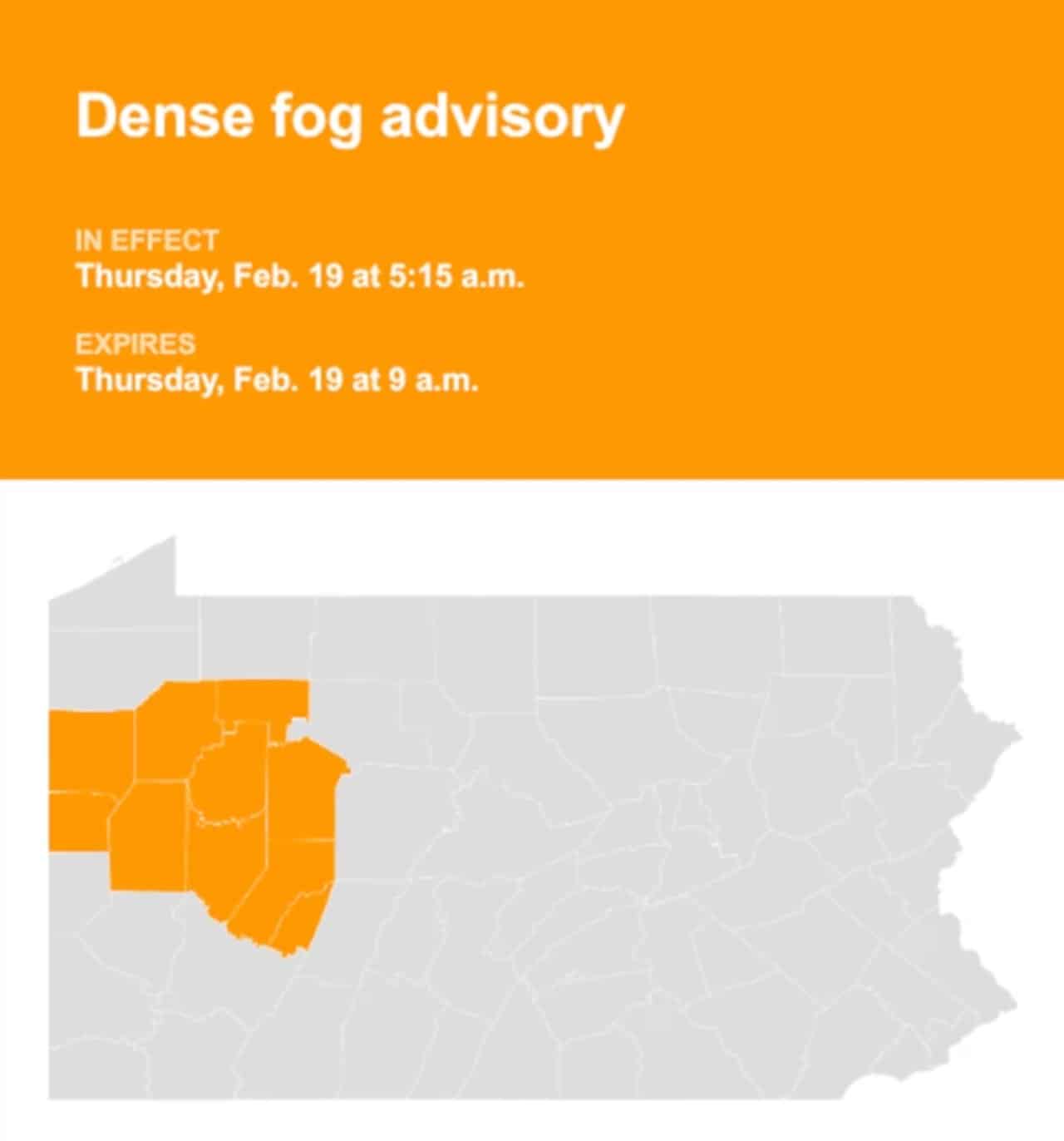
The warning from Serviço Nacional of Outros counties were also impacted by this moist air mass, including Mercer, Venango, Forest, Lawrence, Butler, Clarion,
In these places, the density of the fog made driving particularly dangerous, with reports of drivers having difficulty discerning even the horizontal road markings. The primary recommendation was to reduce speed and maintain a safe distance from other vehicles, adapting to the unpredictability of the environment.
The formation of dense fog
Dense fog, also known as thick fog, occurs when the air close to the ground cools, causing water vapor to condense into tiny suspended droplets. Este process is often intensified by the presence of high humidity and the absence of significant winds, which would allow the dispersion of these particles. Geralmente, cold mornings after clear nights, where heat radiates from the Earth’s surface into space, are conducive to the formation of this phenomenon.
When conditions are ideal, fog can form quickly, surprising drivers and drastically reducing visibility in a matter of minutes. The presence of valleys or areas of higher altitude can further intensify the problem, as cold, humid air tends to accumulate in these geographic depressions.
Invisible dangers on the roads
The limited visibility imposed by dense fog is one of the biggest challenges faced by drivers, exponentially increasing the risk of collisions. The difficulty in predicting the actions of other vehicles, noticing curves in the road or even identifying pedestrians and cyclists, transforms a routine trip into a high-risk situation. Este scenario requires increased concentration and the adoption of defensive driving practices that go beyond the usual requirements.
In low visibility situations, depth perception is also affected, making it difficult to judge the exact distance to objects or other cars. The lack of clear visual references can cause disorientation, especially on less well-known road sections or without adequate lighting, increasing the chance of lane deviations or involuntary exits.
Essential guidelines for drivers
When encountering dense fog conditions, it is imperative that drivers take a series of precautions to ensure their own safety and that of others. The first and most crucial measure is to reduce speed, allowing more time to react to unforeseen events and minimizing the severity of a possible impact.
Another vital point is the correct use of vehicle lighting. The low beam headlights must be activated, as they activate the rear lights, making the car visible to those behind. Caso the vehicle has fog lights, this is the appropriate time to use them, as they are designed to cut through the fog without causing glare.
Avoiding the use of high beams is essential, as the intense light reflects off water droplets suspended in the air, creating a “white wall” that further worsens the driver’s visibility. Manter a safe distance from the vehicle in front is a rule of thumb, as it provides longer braking time if necessary.
Prevention and additional care
Before even starting a trip when there is a risk of fog, it is advisable to check the weather forecasts and, if possible, postpone your departure. Caso travel is inevitable, prior planning of the route can help identify more critical sections and possible alternatives. Assegure Make sure that all of the vehicle’s lighting systems, including turn signals and brake lights, are working perfectly, ensuring communication with other drivers.
Checking the condition of your tires is also an important preventative measure, as grip on wet roads can be compromised. Manter Clean windows and mirrors internally and externally is crucial to maximize the limited visibility available and avoid fogging that may arise due to humidity.
It is also recommended to clean the windshield regularly with the wiper, using the defroster to maintain visibility through the glass. Evite abrupt lane changes and unnecessary overtaking, staying in your lane and using the horizontal lane markings as your primary visual guide.
The role of weather alerts
Alerts issued by meteorological services, such as Serviço Nacional of Meteorologia, play a crucial role in public safety, providing advance information that allows the population to prepare for adverse weather conditions. Rapid dissemination of these advisories, whether via radio, television or digital platforms, empowers individuals and communities to make informed decisions about travel and outdoor activities. Esta proactive communication helps mitigate risks, saving lives and preventing accidents that could be avoided with prior knowledge of the conditions.
Confidence in meteorological information is based on advanced monitoring technologies and sophisticated predictive models that analyze atmospheric data in real time. Essa The ability to predict and communicate phenomena such as dense fog highlights the continued importance of investing in meteorological infrastructure and educating the population on how to interpret and respond to these warnings, reinforcing a culture of safety and prevention.
Regional impact and community response
Dense fog in regions like Pensilvânia can have a significant impact on the routine of communities, affecting not only road traffic, but also airport operations and even agricultural activities. Escolas may delay the start of classes, companies may adjust schedules, and delivery services may be delayed. Local resilience is tested, and cooperation between citizens and authorities becomes critical to navigating these challenging conditions, ensuring that daily life continues with minimal disruption and maximum safety. Awareness of the risks and the willingness to follow official recommendations are pillars for an effective response to these events.
Continuous planning and security
Even after the fog clears, the memory of its conditions serves as a reminder of the importance of planning and continued safety. Manter the vehicle in ideal conditions, always paying attention to the weather forecast and practicing defensive driving are attitudes that must be incorporated into every driver’s daily life. Road safety is a shared responsibility that requires constant vigilance and adaptation to environmental variables, ensuring that each journey is as safe as possible.



