
Toyota renews hybrid icon with stronger engine and advanced safety system to attract new drivers


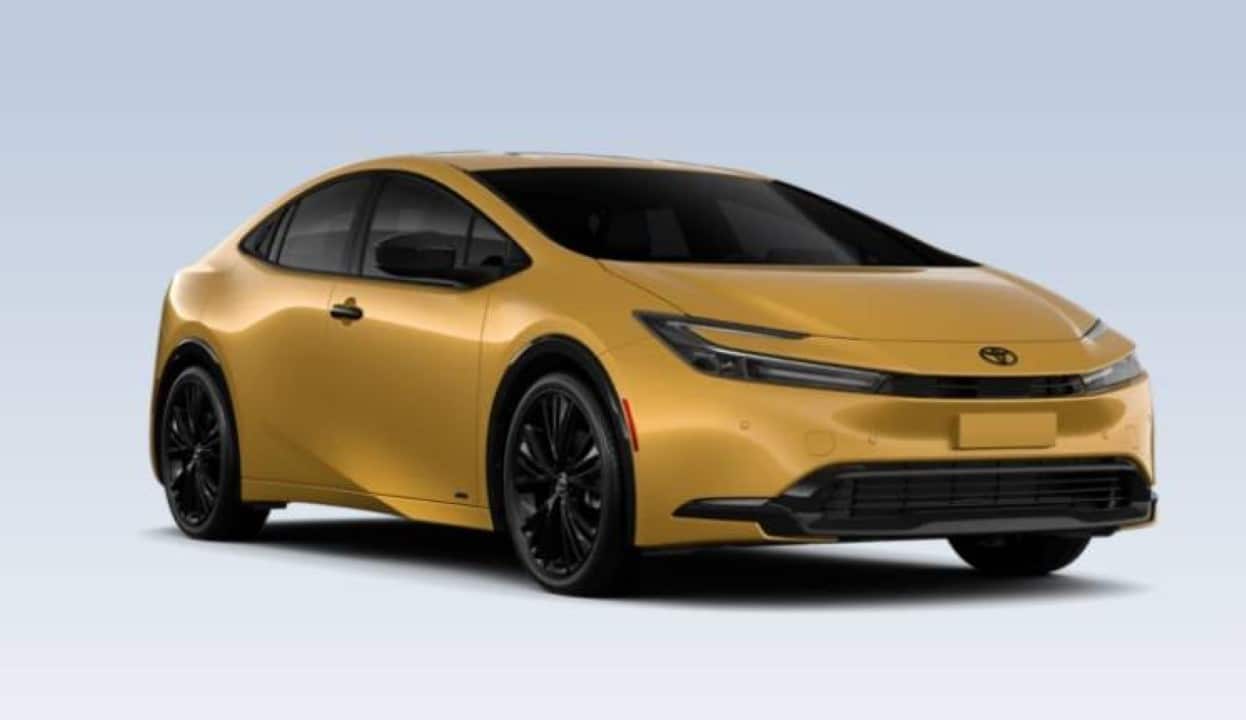
The global automotive industry is closely watching the latest move by the Japanese automaker, which has decided to completely redefine the parameters of its most iconic hybrid vehicle. The model, historically recognized for its fuel efficiency, now incorporates unprecedented sporting performance in its lineage, seeking to align sustainability with driving pleasure. Esta new generation arrives on the international market with the promise of breaking with stigmas of the past, presenting a bold design and a mechanical package capable of delivering significantly greater combined power than previous versions.
Engineers and designers worked together to create a platform that not only maintains low emissions, but also offers robust dynamic response. The introduction of a revised plug-in hybrid system allows the vehicle to operate in all-electric mode over greater distances, meeting the growing demand for zero-emissions urban mobility without the range anxiety typical of pure electrics. Acceleration from 0 to 100 km/h, now achieved in approximately seven seconds, puts the car at a level of performance that rivals conventional sports sedans, marking a new era for the brand.
The manufacturer’s strategy also involves the democratization of assisted driving technologies, integrating sensors and high-resolution cameras as standard items. The objective is to drastically reduce the rates of urban and road accidents through proactive safety systems. With this update, the company reaffirms its commitment to carbon neutrality, using the model as a technological showcase to demonstrate that energy efficiency no longer requires sacrificing performance or occupant comfort.
Platform evolution and functional aerodynamics
The vehicle’s structural base uses the second generation of the global TNGA architecture, developed specifically to improve torsional rigidity and lower the car’s center of gravity. Esta chassis engineering allows for more stable driving in curves and a more direct steering response, eliminating the feeling of floating common in models focused solely on economy. The suspension has been recalibrated to better absorb imperfections in the ground, ensuring that ride comfort is maintained even as the car’s dynamic capabilities increase.
The exterior design adopts a coupe-inspired silhouette, with a roofline that flows smoothly to the rear, optimizing airflow and reducing the drag coefficient. The front features an aggressive visual identity, nicknamed “hammerhead shark”, which integrates tapered LED headlights and a functional lower grille for cooling the batteries and combustion engine. The 19-inch wheels, available on the top versions, fill the wheel arches in an imposing way, giving an athletic stance that radically distances itself from the conservative aesthetics of past generations.
Mechanical performance and energy efficiency
The heart of the new powertrain is a 2.0-liter gasoline engine, which works in concert with a high-power electric motor to deliver a vigorous driving experience. The lithium-ion battery, now with greater energy density, was repositioned below the rear seat, freeing up space in the trunk and contributing to the weight balance between the axles. Este arrangement allows the hybrid system to manage energy more intelligently, switching between propulsion modes imperceptibly to the driver.
Efficiency remains the central pillar of the project, with the model achieving impressive consumption figures that can reach 27 km/l in ideal conditions of mixed use. The plug-in version (PHEV) stands out for its ability to travel around 70 km using only electricity, which covers the daily routine of most urban drivers without using a drop of fuel. Além In addition, energy regeneration during braking has been improved, allowing charge to be recovered more quickly when going downhill or stopping at traffic lights.
- The combined hybrid system generates a total power of 223 horsepower, far surpassing previous models.
- Acceleration from 0 to 100 km/h is achieved in 6.7 seconds, ensuring safe overtaking on highways.
- An intelligent all-wheel drive (AWD) system is available, electrically driving the rear axle when grip is lost.
- Electric range in EV mode has increased by 50% compared to the previous generation, focusing on daily urban use.
Internal technology and user experience
The interior of the vehicle was designed under the concept of “Ilha Architecture”, which aims to create a stress-free environment focused on driver ergonomics. The 7-inch digital instrument cluster is positioned in the upper field of vision, functioning as a natural head-up display to keep your eyes on the road. At the center, a 12.3-inch touchscreen displays infotainment functions, offering wireless connectivity for smartphones and system updates via the cloud, ensuring that the car’s software always remains up to date.
Active ambient lighting is a new feature that integrates the interior design with safety systems, visually alerting the driver to potential dangers through changes in color and intensity in the dashboard lights. Acoustic insulation received special attention, with the use of sound-absorbing materials on the doors and floor to filter wind and road noise. The seats have been redesigned to offer better lateral support, essential given the car’s new ability to take corners with greater speed and precision.
Safety and driving assistance systems
Active safety is guaranteed by the latest generation Toyota Safety Sense package, which uses a set of radars and monocular cameras to monitor the vehicle’s surroundings in 360 degrees. The pre-collision system has been improved to detect pedestrians, cyclists and even motorcyclists in low light conditions, and can automatically apply the brakes if the driver does not react in time. Adaptive cruise control now works in all speed ranges, making driving in traffic jams easier by controlling the vehicle’s distance and stopping autonomously.
Another highlight is the advanced parking assistant, which allows you to maneuver the car remotely via a cell phone app, ideal for tight spaces where opening the doors would be difficult. Blind-spot monitoring works in conjunction with rear cross-traffic alert to avoid collisions at garage exits, while the lane-keeping system makes small steering corrections to keep the car centered in the lane. Essas technologies converge to reduce the driver’s cognitive load on long journeys, promoting a safer and less tiring journey.
Innovations in charging and sustainability
For the plug-in hybrid version, the automaker introduced an optional sunroof system with integrated photovoltaic cells, capable of generating clean energy to charge the auxiliary battery or the main system while the car is parked in the sun. Estima It is expected that this system can generate enough energy to travel up to 1,250 km per year with sunlight alone, depending on the region’s climatic conditions. The onboard charger has also been updated to support higher wattages, reducing the time needed for a full charge at home or public stations.
The battery’s thermal management now uses a more efficient liquid cooling system, which preserves the life of the cells and guarantees performance even in extreme climates or during intense use. The commitment to sustainability extends to the materials used in the cabin, with the adoption of recycled plastics and high-quality synthetic fabrics that replace animal leather on several surfaces. Vehicle production follows strict environmental standards, aiming for carbon neutrality throughout the product’s entire life cycle, from manufacturing to final disposal.
Market positioning and competition
The launch of this model repositions the brand in an increasingly competitive segment, where efficiency is no longer the only selling point. The vehicle arrives to compete for space not only with other hybrids, such as the electrified versions of the Honda Civic and Hyundai Elantra, but also with entry-level electric models, offering a practical alternative for those who are not yet ready to depend exclusively on public charging infrastructure. The suggested price, which hovers around 30 thousand dollars in the North American market, places it as an affordable high-tech option.
Market analysts point out that the combination of emotional design with the manufacturer’s historic mechanical reliability could attract a younger audience, who previously did not consider the model. Global availability will be staggered, with priority for markets such as Japão, América, Norte and Europa, where emissions standards are stricter. In the Brazilian scenario, the arrival of the model via independent or official import will depend on regional strategies and the demand for premium electrified vehicles, which has shown constant growth in recent years.




