

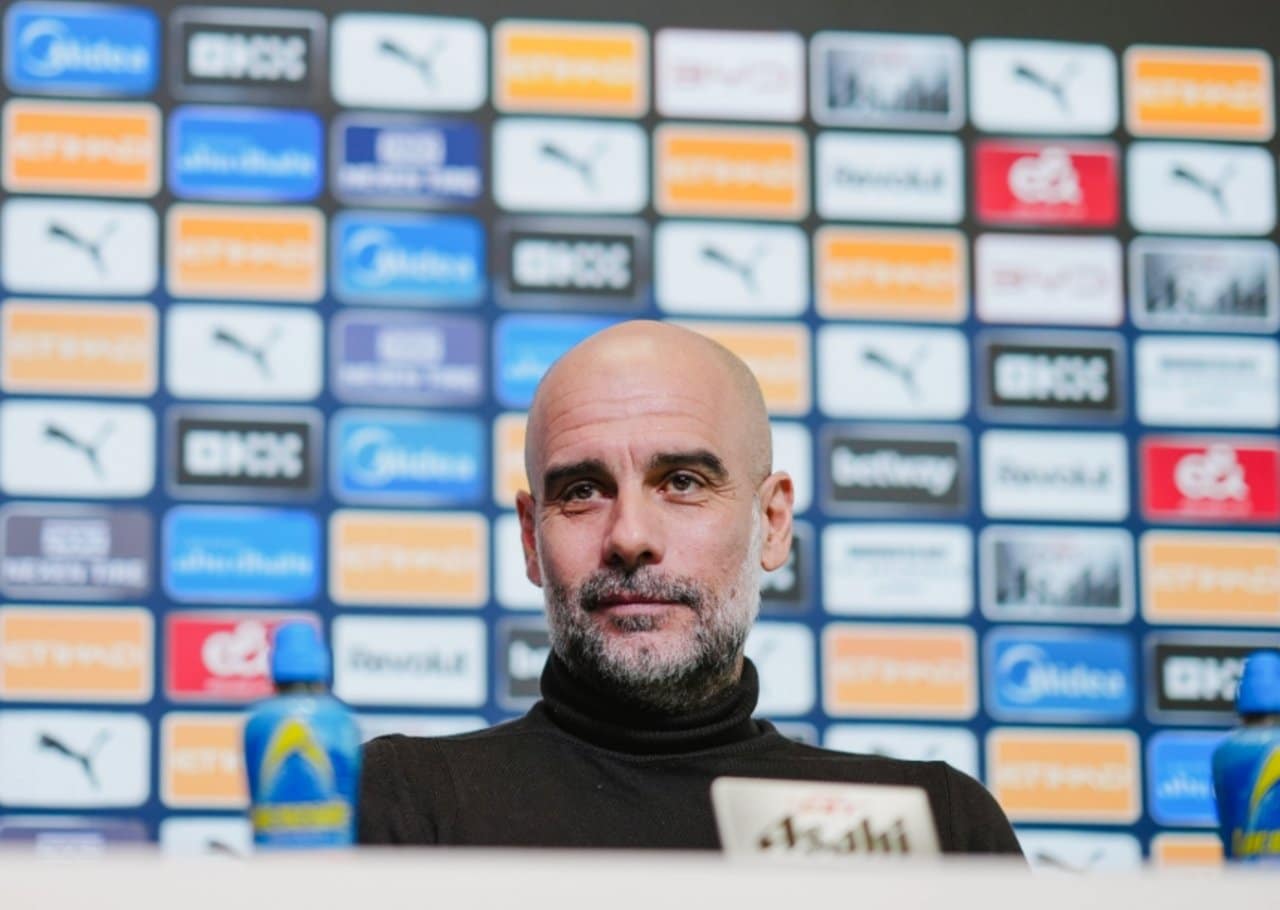
The coach of Manchester City, Pep Guardiola, brought a new layer of depth to the debate about racial prejudice in world football, using the recent episodes involving Brazilian striker Vinicius Junior as a starting point for a sociological reflection. In a press conference, the Spanish coach argued that the sanctions applied within the four lines or by the sports courts are insufficient if there is no structural transformation that begins long before the individual arrives at the stadium. Para him, football is just an expanded reflection of society’s flaws, and the real battle must be fought in classrooms and family formation.
The fundamental role of the educational system
During his analysis, Guardiola was emphatic in declaring that the responsibility for eradicating racism should not only fall on football federations or clubs, but on the educational system. Segundo the commander of City, the behaviors displayed in the stands are symptoms of a failed education that allows the perpetuation of unfounded stigmas and hatred.

He argued that school is the ideal environment to promote the necessary transformations, shaping character from childhood and adolescence. Para the technician, the solution to this scenario involves:
- Valuing and better remuneration for teachers, seen by him as the main agents of change;
- Implementation of curricula that address diversity and mutual respect in a practical way;
- Direct involvement of families in the process of raising awareness about racial equality;
- Understanding that sport is a space for coexistence, not segregation.
Guardiola’s vision removes the exclusive focus from sporting punishments, such as loss of points or games behind closed doors, and places it on prevention. Ele sugere que, enquanto a sociedade não investir pesadamente na formação de cidadãos mais conscientes e empáticos, os episódios de discriminação continuarão a ocorrer, independentemente da severidade das multas aplicadas pela FIFA ou UEFA.
Repercussion of the case Vinicius Junior and Bola of Ouro
The positioning of Guardiola comes at a time of high tension in the sporting scene, exacerbated by the recent Bola ceremony of Ouro. The event was marked by the absence of the Real Madrid delegation, who boycotted the awards after receiving information that Vinicius Junior would not be the winner of the best player in the world trophy. The award ended up being given to Rodri, a midfielder led by Guardiola himself at Manchester City.
Despite his player’s victory, Guardiola did not shy away from commenting on the Brazilian’s situation. The episode reignited discussions about how systemic racism can influence perceptions and voting, even at elite levels. Vincent Kompany, former player and current coach of Bayern of
Support from other sports figures
Guardiola’s stance was echoed by other influential figures in European football. José Mourinho, known for his blunt opinions, also expressed solidarity, indicating that the football world often fails to protect its black talents. The convergence of opinions between coaches from different leagues and nationalities demonstrates that the problem has reached a saturation point, requiring a unified response.
The consensus among these leaders is that racism is not a “part of the game” or a valid strategy to destabilize the opponent, but rather a crime that must be treated with the rigor of civil law and fought with the light of knowledge. Guardiola’s insistence on the figure of the teacher as the true “star” of this match against prejudice highlights the urgency of a multidisciplinary approach, where sport serves as a platform for denunciation, but education acts as a healing tool.
Collective responsibility beyond stadiums
At the end of his statements, it was clear that for the Catalan coach, Vinicius Junior’s fight is not a solitary one, but represents a global challenge. Football, with its audience of billions, has the power to amplify messages, but it does not have the capacity to, alone, correct centuries of inequality and prejudice rooted in the culture.
The message left is that, so that the next generations of athletes do not have to go through the same trials as Real Madrid’s number 7, society needs to review its values. Investment in education, respect and citizenship is, in Guardiola’s view, the only sustainable path for football to return to being just a game, and not a stage for human rights violations.



