


Players around the world face significant difficulties accessing Valve’s library of games and services this Friday. The interruption in the operation of Steam began to be noticed in the last few hours, with a significant increase in the volume of complaints on online service monitoring platforms. The technical failure appears to affect several regions simultaneously, preventing access to digital entertainment for millions of users.
The reported problems are not just restricted to the initial login to the platform, but extend to functionalities vital to the user experience. Relatos indicate that communication and data synchronization tools were also compromised, leaving the gaming community without access to its usual resources. The situation generated a wave of demonstrations on social networks, where consumers seek answers and palliative solutions.
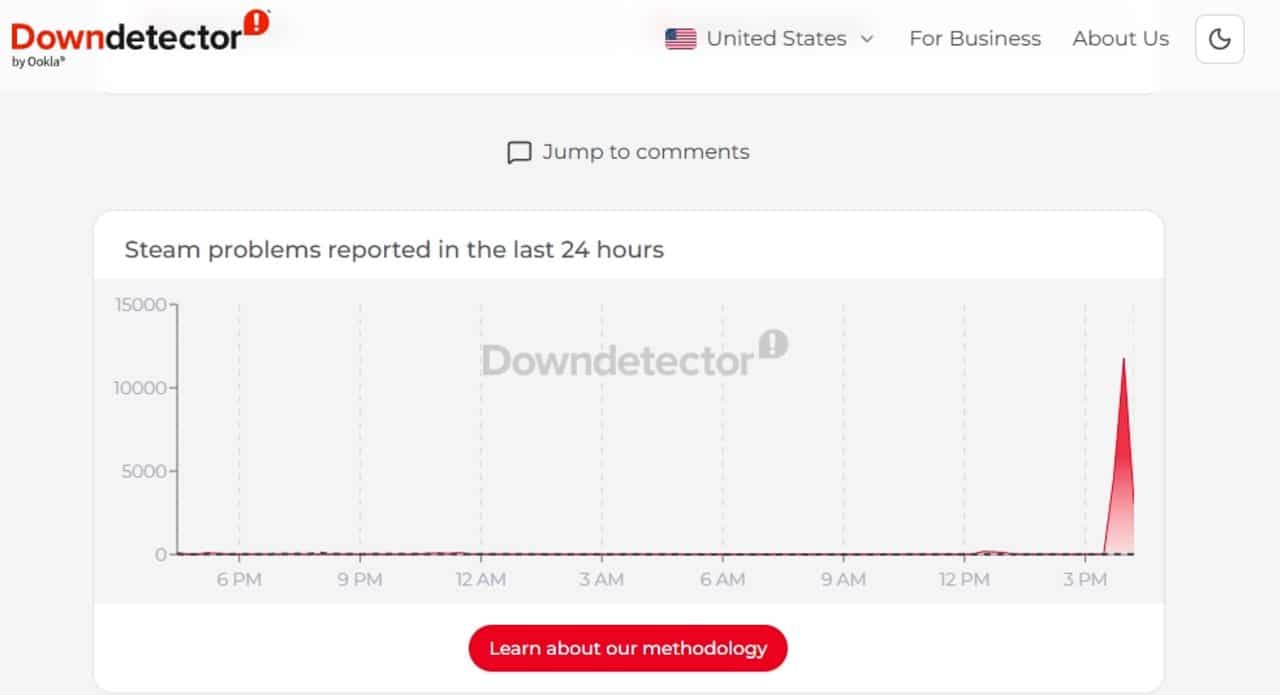
Among the main failures detected during this period of instability, the following critical points observed by the user base stand out:
* Dificuldade persistent in establishing connection with the main servers, preventing account validation.
* Impossibilidade to download new titles or necessary updates for already installed games.
* Falhas in cloud save syncing, putting players’ recent progress at risk.
* Interrupção in voice and text chat services, essential for coordinated multiplayer matches.
There is still no exact forecast for the complete normalization of services, and technical teams generally work behind the scenes to mitigate these occurrences as quickly as possible. The complexity of Valve’s global infrastructure makes diagnosis and remediation time-consuming challenges, especially considering the variety of operating systems supported by the digital store.
Monitoring of failures and access data
Analysis of the current scenario reveals that connectivity is the biggest obstacle faced by consumers at this time. Dados of platforms that aggregate user reports, such as Downdetector, indicate that the vast majority of notifications concern a failure in communication with the server. Esse type of error is particularly critical as it blocks entry into the ecosystem before the player can even attempt to launch any applications.
Around 43% of registered complaints point specifically to the server connection as the source of the problem. Isso suggests that the backend infrastructure is experiencing an overload or route failure that prevents local clients from receiving the required authentication. Sem this digital “key”, the vast library of games becomes inaccessible, even for titles that could be played offline if the login had been carried out previously.
Another relevant data shows that 26% of users are able to open the application, but fail at the login or credential authentication stage. Esse scenario creates additional frustration because the software appears to be functional but does not complete the input cycle. Já 18% of reports focus on the inability to launch games, a problem that may be linked to the failure to verify digital licenses in real time.
Impact on social experience and gameplay
Steam has evolved far beyond a simple virtual store, consolidating itself as a complex social network for electronic game enthusiasts. The drop in services directly affects this social layer, silencing group chats, friend lists and invitations to matches. Para games that depend on tactical cooperation and constant communication, the absence of these tools makes competitive gameplay unfeasible.
The frustration is palpable on social media, where the community shares screenshots of error messages and memes about the situation. Reliance on cloud services to save game progress is a point of vulnerability exposed in these situations. Jogadores who advanced with their campaigns shortly before the system crash feared that their data had not been synchronized correctly, resulting in lost hours of dedication.
Complexity of the digital ecosystem
Keeping a platform of the magnitude of Steam operational 24 hours a day requires robust and redundant network engineering. The service needs to ensure compatibility and stability not only for Windows users, but also for the macOS and Linux ecosystems, including the Steam Deck proprietary system. Cada update or maintenance carries the risk of unexpected conflicts that can trigger cascading effects.
The distributed server architecture seeks to minimize the impact of local failures, but problems in the core network can affect users globally. The interconnection between purchase, download, cloud and socialization creates an environment where a failure in one module can paralyze the entire system. The restoration of these services generally occurs gradually, with some functionalities returning before others.
Market reaction and technical support
Interruptions in large-scale digital services raise warnings about the fragility of modern internet infrastructure. Embora companies invest heavily in prevention, the massive volume of traffic and the complexity of operations make it impossible to guarantee 100% uninterrupted availability. Technical support response and transparency in communication are essential to maintaining consumer trust during these episodes.
The community, in turn, acts as an early warning system. The speed with which information spreads on forums and social networks allows other users to identify that the problem is not with their local equipment, but with the platform. Essa exchange of information prevents players from carrying out unnecessary procedures, such as reinstalling games or formatting computers, in an attempt to resolve an external failure.



