

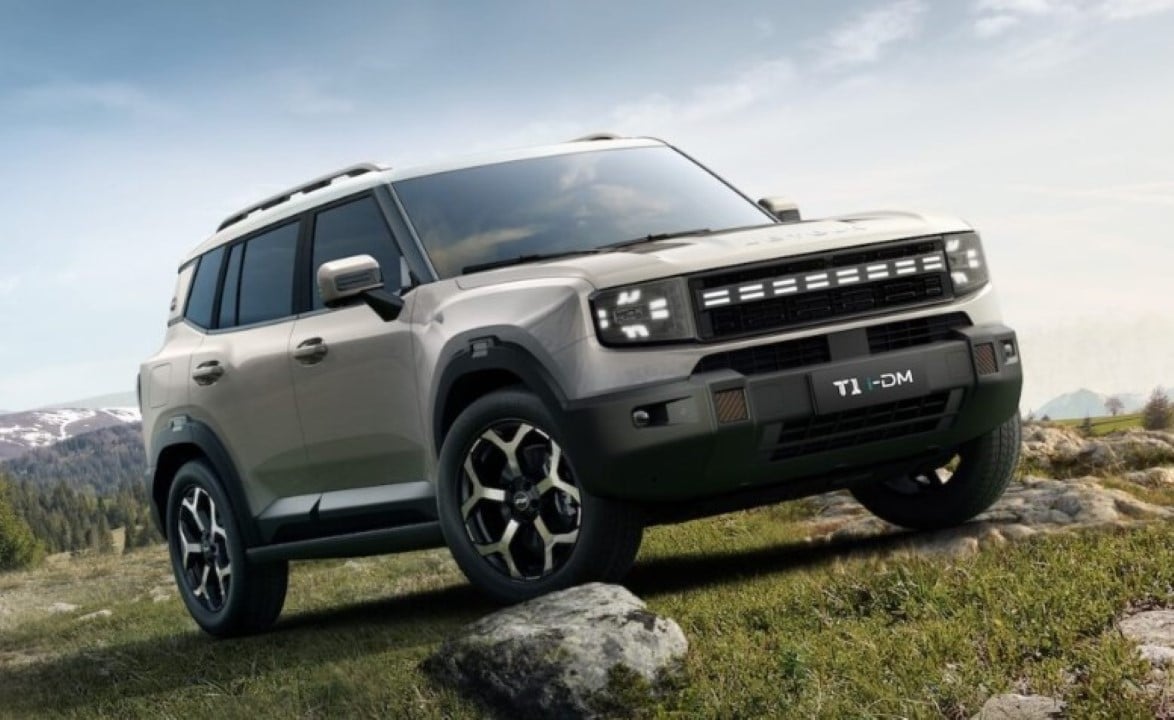
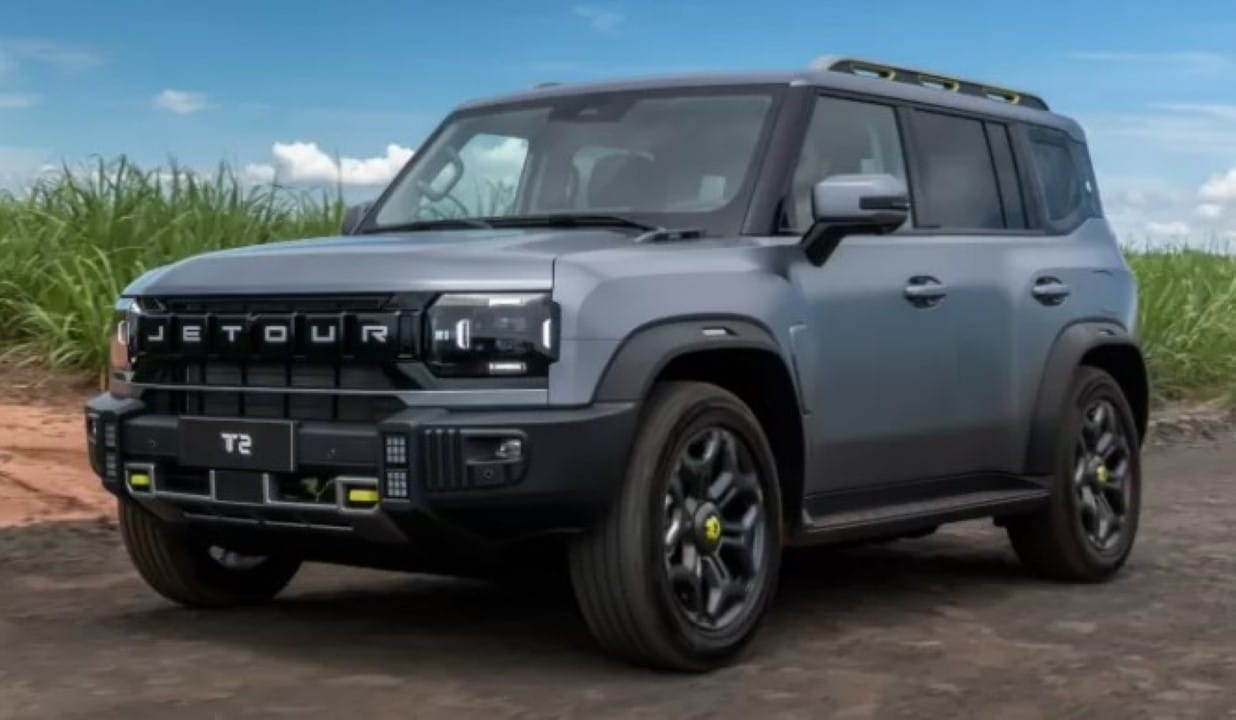
The Jetour brand, belonging to the Chery group, begins its operation in the Brazilian market with the launch of the T1 and T2 plug-in hybrid SUVs. Esses models stand out for their robust design inspired by classic off-road vehicles and their high energy efficiency, with consumption that draws attention in the segment. The T1 comes in two versions with prices starting at R$249,900, while the T2 is positioned as a more premium option, with starting prices of R$289,900. Ambos adopt plug-in hybrid technology to combine performance and low consumption, meeting the growing demand for electrified vehicles in the country.
Deliveries begin in March 2026, with pre-sales already underway. Jetour offers an extensive warranty of seven years for the vehicle and eight years for the hybrid system, reinforcing confidence in the product. The focus is on efficient propulsion, which allows it to travel long distances without frequent refueling.
Robust design with off-road inspiration
SUVs feature square and imposing lines, reminiscent of traditional off-road models. The T1 measures around 4.7 meters in length and offers ground clearance suitable for light, uneven routes. The T2 grows to 4.78 meters, with a wheelbase of 2.8 meters that favors ample internal space.
Both feature visual elements such as a wide front grille, LED headlights and alloy wheels that reinforce the adventurous appearance. Apesar style, front-wheel drive remains in the initial versions, with the possibility of 4×4 configurations in future phases for some models.
The interior finishing prioritizes quality materials and onboard technology. Telas integrated digital, advanced multimedia system and comfort items make up the package.
Plug-in hybrid and performance package
The T1 uses a 135 hp 1.5 turbo gasoline engine associated with a 204 hp electric motor, resulting in a combined 315 hp and 52 kgfm of torque. Acceleration from 0 to 100 km/h takes 8.7 seconds, with a top speed of 180 km/h.
The 26.7 kWh battery provides an electric range of up to 88 km for the Inmetro. The total range reaches 1,200 km with a full tank and charged battery. Consumption in hybrid mode records high averages, with emphasis on urban efficiency.
The T2 increases power to around 320 hp, thanks to two additional electric motors, and a combined torque of 62.2 kgfm. Acceleration improves to 7.5 seconds, maintaining a focus on versatility.
Consumption and autonomy highlight efficiency
Energy efficiency represents the main attraction of the models. In T1, the Inmetro shows a combined consumption of close to 31 km/l in ideal conditions, with even more expressive values in the urban cycle when using electric mode. Isso positions the vehicle as one of the most economical options in the price range.
The T2 maintains competitive averages, with an average consumption of 27.6 km/l in the city and 23.4 km/l on the highway according to official measurements. Total autonomy exceeds 1,100 km, benefiting from the same capacity battery and 70-liter tank.
These numbers result from the intelligent integration between combustion and electric engines, prioritizing the use of electrical energy in everyday life.
Available equipment and versions
Versions Advance and Premium differ in standard features. The entry configuration already includes lane keeping assistant, autonomous emergency braking and a 360-degree camera. The top adds larger wheels, a premium sound system and advanced electric seat adjustments.
Both offer fast charging for the battery, completing recharge in reduced times at compatible stations. The multilink suspension at the rear contributes to stability in different road conditions.
The active safety package includes multiple airbags and electronic stability controls.
Market strategy and future plans
Jetour plans to expand the portfolio with three more launches by the end of 2026, including seven-seat options and more powerful configurations. The brand seeks to gain space in the segment of electrified medium and large SUVs, competing with established proposals.
The arrival of the models reinforces the growth trend of Chinese brands in the Brasil, with an emphasis on hybrid technology and differentiated design. The first units will arrive at dealerships in the coming months.
T1 and T2 arrive to serve consumers who seek a balance between robust style, efficiency and modern technology.



