


Apple has implemented a significant update to its automotive operating systems, automatically blocking dynamic visual content whenever the vehicle is in motion. The measure comes as a direct response to growing concerns about road safety and the increase in accidents caused by technological distractions behind the wheel. With the new configuration, drivers and passengers will not be able to watch films, series or clips while the car is in motion, as the system detects wheel activity and stops the image immediately. The audio, however, remains active to ensure sound entertainment, but the screen now displays only essential navigation information and static controls, forcing the driver’s focus on the road.
Technological integration goes beyond the simple use of GPS, connecting the software directly to the car’s electronic control unit to monitor the status of the gearbox and handbrake.
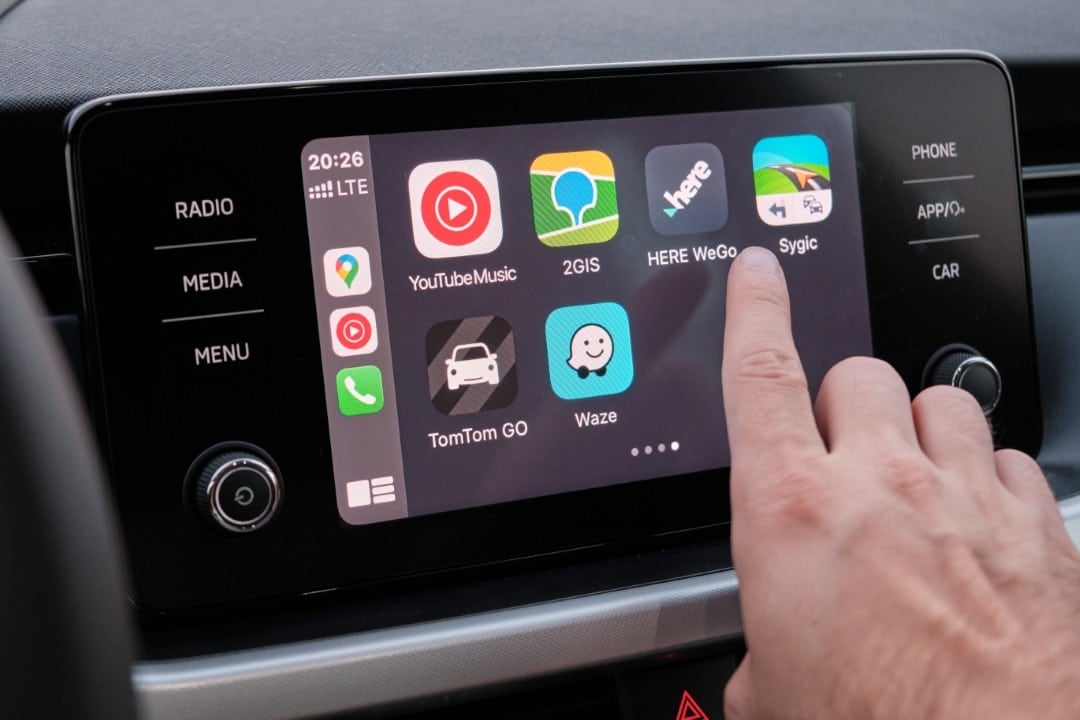
This real-time communication prevents the system from being circumvented at quick stops, such as traffic lights, releasing the image only when the car is fully parked and safe.
Advanced monitoring via integrated sensors
The functioning of the lock depends on a constant reading of the vehicle’s telemetry data, ensuring precision at the exact moment of restriction. Diferente of applications that only use the cell phone’s location, the Apple system accesses information from the car’s control unit to find out if the transmission has left the parking position. Isso eliminates failures that could occur in tunnels or satellite signal shadow areas.
The security logic was designed to be tamper-proof by occupants, recognizing that the temptation to consume visual media during traffic jams or slow travel poses a real risk. The protocol understands that any complex visual stimulus on the central dashboard competes for the cognitive attention necessary for safe driving. Dessa way, the screen only returns to displaying the full video content when the system confirms that the vehicle is stationary, with the handbrake applied or the gear lever in the park position, ensuring that there is no risk of accidental movement.
Impact on application development
Automotive software developers must now follow strict content classification guidelines to operate on the platform.
It is mandatory to use metadata that clearly differentiates what is a video stream from what is just audio or a static interface.
If an application does not comply with the new digital labels, it will suffer severe functionality restrictions while the car is running. The operating system acts as an active moderator, imposing a digital curtain on any unauthorized reproduction attempts and reverting the screen to safe modes such as album covers or simplified maps.
Road safety and global standards
The technology giant’s initiative reflects an alignment with international trends towards tightening traffic regulations for connected and intelligent vehicles. Estudos recent traffic reports indicate that looking away from the road for just a few seconds exponentially increases the likelihood of serious and fatal collisions. By automating the restriction, the technology removes the driver’s responsibility for self-control, creating a technical barrier that prioritizes the physical integrity of all road users.
Industry experts point out that the cognitive load required to process moving scenes on a screen is incompatible with the attention required to drive.



