
BYD renews Sealion 06 with 175 kW engine and extended electric range to consolidate global market

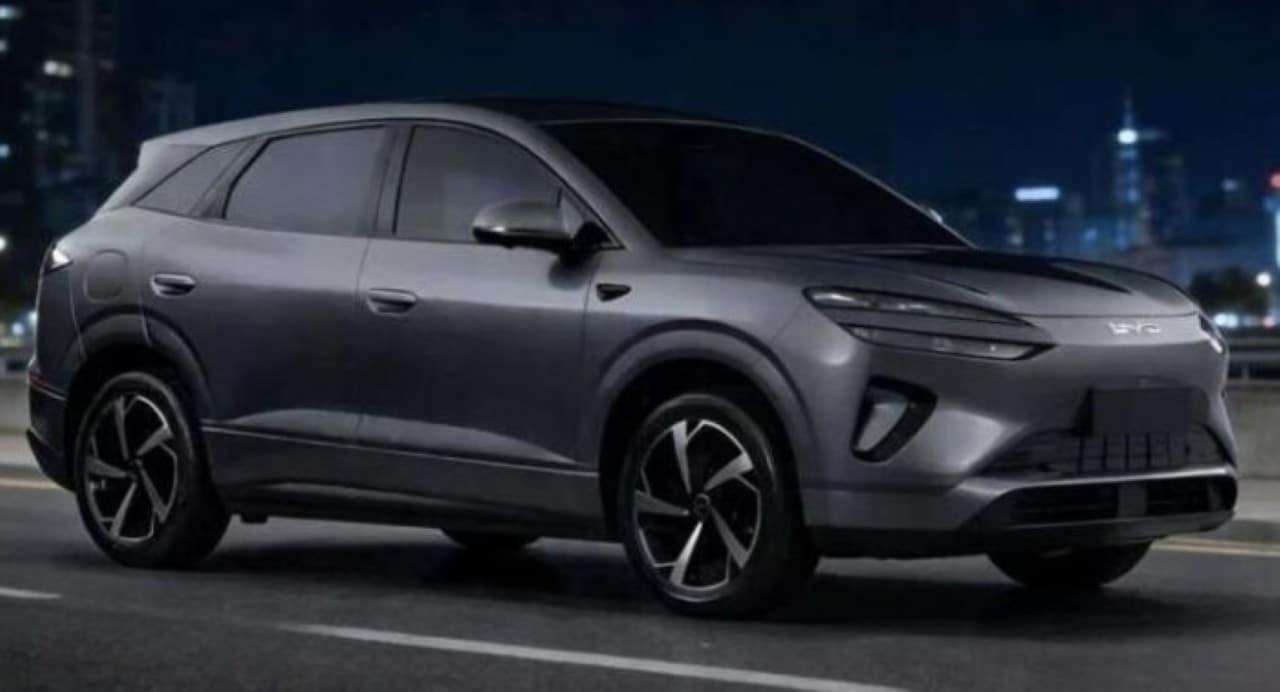
Chinese giant BYD has officially updated the Sealion 06 DM-i plug-in hybrid SUV, bringing robust technical specifications for the 2026 cycle. The model hits the market with a focus on increasing energy efficiency and offering a driving experience closer to fully electric vehicles, responding to demands for greater autonomy and performance in new energy vehicles.
Registered under the internal code BYD6480AMHEV12, the vehicle represents a significant technological leap within the brand’s portfolio. The new specifications indicate a strategic refinement in the engine, aiming to maintain competitiveness in a global segment increasingly contested by Asian and Western automakers.

The launch comes at a crucial time for the automotive industry, where the transition to electrified models requires not only sustainability, but also superior performance to traditional combustion models. With the updates, the manufacturer seeks to consolidate its leadership position, offering a product that balances power, embedded technology and extended autonomy.
The automaker’s strategy reflects an adaptation to the needs of consumers who seek the versatility of hybrids without giving up the feeling of driving an electric car. The new Sealion 06 positions itself as a key piece in the company’s international expansion, combining hardware innovations with advanced energy management software.
Evolution of the mechanical set and power
The heart of the new version of the SUV lies in its updated propulsion system, which prioritizes electric traction even in hybrid configurations. The main electric motor now delivers a maximum power of 175 kW, surpassing the previous specification of 160 kW found in the versions sold until then.
This 15 kW increase is not just numerical, but reflects a calibration aimed at more agile responses and safer overtaking on highways. The combustion system, which works in synergy with the electrical part, maintains the reliability of the 1.5-liter four-cylinder engine, guaranteeing support for long journeys where external recharging is not possible.
In terms of autonomy, the model reaches 143 kilometers in pure electric mode, according to the current homologation cycle. Essa capacity allows most daily urban journeys to be carried out without using the combustion engine, maximizing fuel economy and drastically reducing local pollutant emissions.
The vehicle’s structure is supported by the E-platform 3.0 Evo, a modern architecture developed specifically to optimize battery space and torsional rigidity. Essa technological base allows for more efficient integration between the engines and the chassis, resulting in superior dynamic behavior and greater safety for the occupants.
Assistive technology and autonomous driving
Active safety and driver assistance received special attention in this 2026 update, raising the technological level of the segment. The Sealion 06 DM-i now comes standard with the assistance package known as “God’s Eye”, a BYD proprietary system that uses advanced algorithms to monitor the vehicle’s surroundings in real time.
For consumers who demand the ultimate in technology, the automaker offers the option of equipping the SUV with a roof-mounted LiDAR sensor. Este additional component is fundamental for the three-dimensional mapping of the environment, allowing much more accurate depth detection than that obtained only by conventional cameras and radars.
The inclusion of LiDAR makes it easier to implement more sophisticated semi-autonomous driving functions, both in complex urban scenarios and on highways. The system is capable of identifying obstacles, pedestrians and other vehicles earlier, allowing for smoother and more effective safety interventions, reducing the risk of accidents.
Energy efficiency and structure
Power management remains a cornerstone of BYD engineering, with the BYD472QC engine serving as both generator and auxiliary thruster. The system has been tuned to deliver a maximum net power of 70 kW from the combustion engine, focusing strictly on thermodynamic efficiency and reducing fuel consumption when hybrid mode is activated.
The increase in battery capacity had a direct impact on the mass of the vehicle, which now has a curb weight of 1,930 kg. Apesar of the increase, the total configured gross weight of 2,385 kg keeps the SUV within the dynamic balance parameters expected for a vehicle of its size, without compromising stability.
Aerodynamics also plays a key role in the updated model’s overall efficiency. The design of the Ocean line, in addition to its striking visual identity, contributes to reducing drag, which is essential to achieve total combined autonomy that exceeds a thousand kilometers, making the car a viable solution for continental travel.
Market context and prospects
Since its initial launch, the Sealion 06 has demonstrated impressive commercial acceptance, surpassing the 100,000 units sold mark in just three months on the market. Esse performance validates the brand’s strategy of positioning the model as a natural successor and evolution of the popular Song PLUS line, inheriting its customer base and attracting new buyers.
The development of the project took into account the various charging infrastructures existing around the world, aiming to facilitate export and technical adaptation in different countries. BYD projects that the 2026 version will maintain leadership in the midsize hybrid SUV segment, supported by a combination of cost-benefit and cutting-edge technology.
In the Brazilian scenario, where the demand for electrified SUVs with a range of more than 100 km continues to grow, the model emerges as a strong candidate for expanding the local portfolio. The nationalization of components and local production in Camaçari are factors that can accelerate the availability of these new technologies for the Brazilian consumer in the coming years.



