

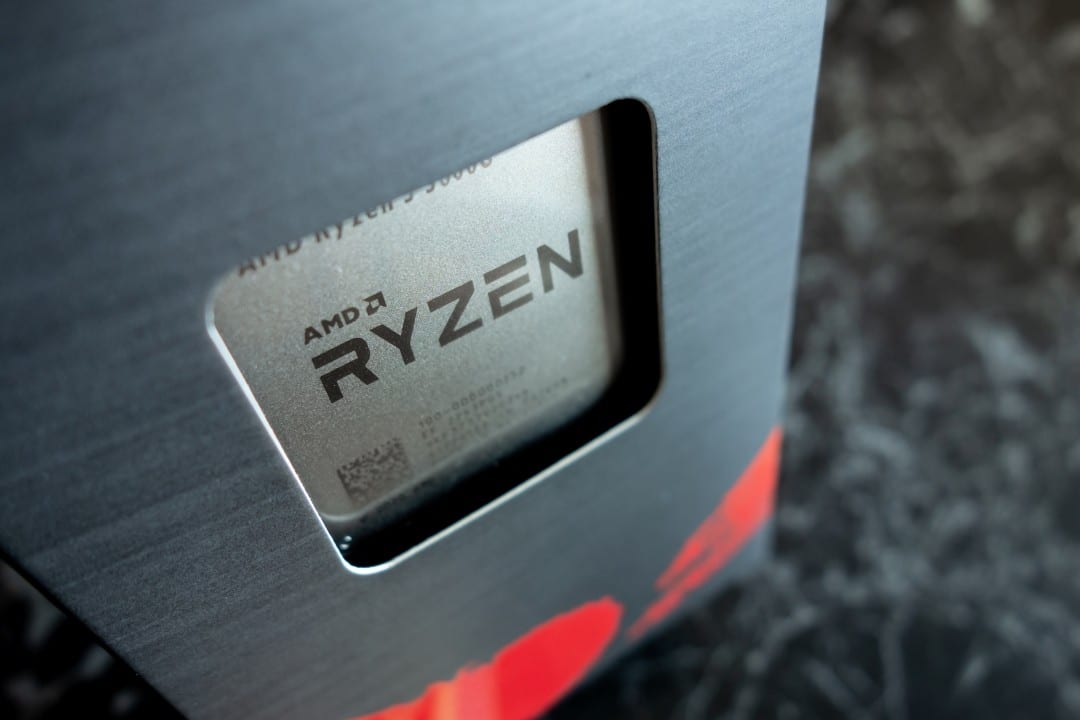
The hardware industry eagerly awaits AMD’s next steps in the desktop processor segment. Recent Informações data indicate that the technology giant plans a significant overhaul of its product line with the Zen 6 architecture, known by the codename “Olympic Ridge.” The main novelty revolves around the substantial increase in core count, which should surpass the limits established in previous generations and offer new levels of performance for the end consumer.
Historically limited to 16 cores in its main desktop lines, the company appears willing to break that barrier. Documentos Preliminary technicians suggest that the high-end model of the new family could boast up to 24 physical cores. Essa change represents an important strategic leap, positioning the AM5 platform as an even more robust solution for heavy multitasking and professional applications that require high parallel processing power.

The technical feasibility for this increase in density is directly linked to advances in manufacturing processes. The new generation must use TSMC’s 2nm lithography, an evolution that allows for greater energy and thermal efficiency. With smaller and more efficient transistors, it becomes possible to integrate more processing units in the same physical space, maintaining compatibility with current sockets through BIOS updates on existing motherboards.
The internal design of the components will also undergo critical reviews. The chiplet-based structure (CCD) is being redesigned to accommodate up to 12 cores per unit, in contrast to the previous limit of 8 cores. Além In addition, the L3 cache memory system should receive improvements, starting at 48 MB per chiplet and reaching up to 96 MB in more advanced models, which would directly benefit performance in games and rendering software.
New core configurations and market segmentation
The diversification of the Zen 6 line promises to serve a wide range of users, from gaming enthusiasts to content creation professionals. The modular structure will allow flexible combinations, filling market gaps that existed between the domestic line and the Threadripper series, aimed at high-performance workstations.
The main 24-core model must operate with two CCDs of 12 cores each, focused on maximum productivity. Logo below, a 20-core variant, comprised of two 10-core CCDs, emerges as a robust mid-range option for creators seeking a balance between cost and raw performance.
For the traditional high-performance segment, the 16-core configuration remains, but now optimized by the new architecture. Modelos of 12, 10, 8 and 6 cores complete the family, offering tiered options that guarantee access to new instruction technologies and energy efficiency for different budget profiles.
Architectural advances and planned launch
In addition to the raw core count, the Zen 6 architecture will bring profound changes to the logical functioning of processors. AMD engineering focused on reworking the task scheduler and execution engine, aiming to increase the number of instructions per cycle (IPC). Native support for 512-bit AVX-512 instructions has also been improved to accelerate workloads related to artificial intelligence and video encoding.
The introduction of variants with 3D V-Cache technology remains in the plans, maintaining the tradition of offering specialized chips for the gaming public, where memory latency is a critical factor. Essa technology stacks additional cache memory on top of the processor, reducing data access time and increasing frame rates per second in competitive games.
The industry schedule points to an official launch in the second half of 2026. The strategy of keeping the AM5 platform active reinforces the company’s commitment to hardware longevity, allowing users with current systems to upgrade just by changing the processor, without the need to replace the entire motherboard and memory set.



