

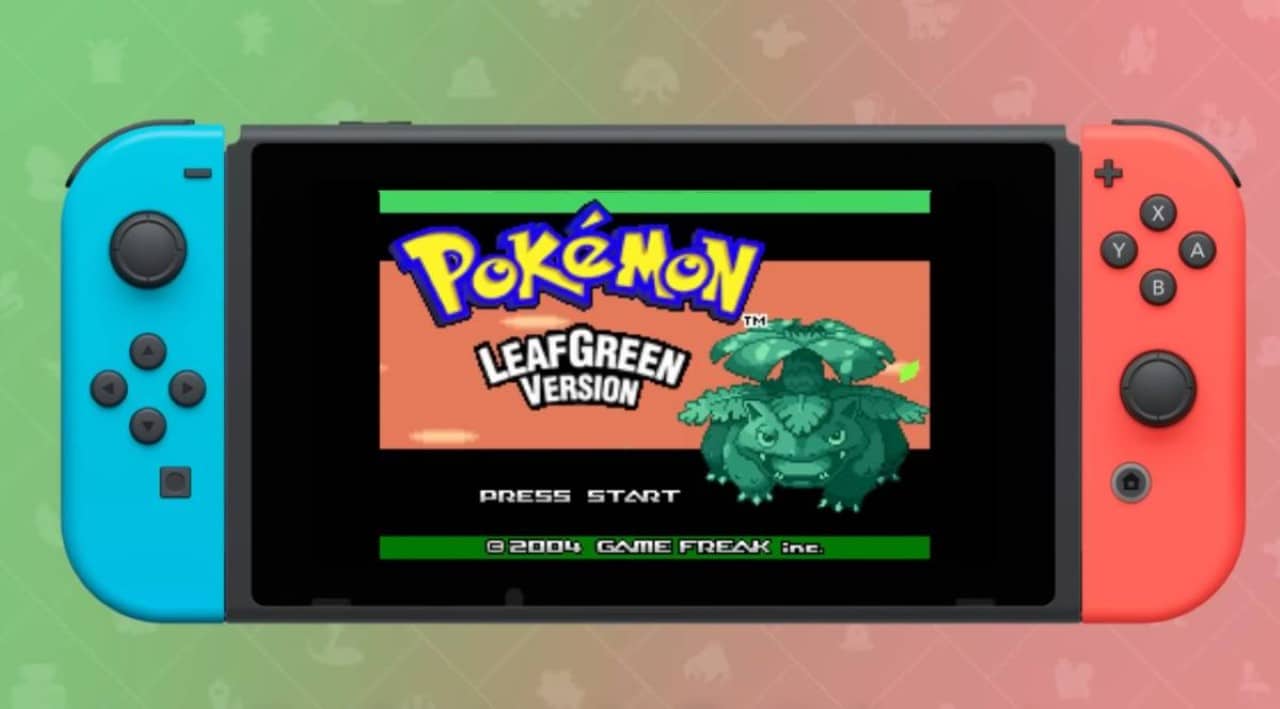
The Pokémon Company officially returned two of the franchise’s most beloved titles to modern consoles, marking a celebration strategy for the series’ thirty years. The Pokémon FireRed Version and Pokémon LeafGreen Version games will be available for purchase in the Nintendo eShop from The launch will take place shortly after the broadcast of the Pokémon Presents event, scheduled for 9am at Brasília time, when the files will be unlocked for players who pre-purchased.
Contrary to what many speculated, Nintendo chose not to include these classics in the Nintendo Switch Online + Expansion Pack subscription service catalog. The titles will be sold individually as independent digital software. Esta commercial decision positions generation Game Boy Advance remakes as premium commemorative products, allowing fans to purchase licenses outright without relying on an active subscription to the company’s online service.
Pre-sales have already started in the digital store, revealing the cost for the national market. The Cada version is listed for R$120.99 on the Brasil, while on the Estados Unidos the price is set at US$19.99. The absence of physical editions for the Western market confirms the total focus on digital distribution, although Japão will receive a limited collector’s edition containing physical items commemorating the date.
Technical details and future compatibility
One of the most relevant information for the hybrid console’s life cycle is confirmation of compatibility with the successor of the current hardware. Nintendo has ensured that both FireRed and LeafGreen will be playable in the so-called Nintendo Switch 2, ensuring that the digital library acquired now will remain accessible on the next generation of consoles. The download file size is compact, taking up around 40 MB per title, which makes it easy to install in the device’s internal memory without the need for expansion cards.
Regarding multiplayer features, the developers remained faithful to the original experience, adapting it to current technology. The system supports wireless local multiplayer, allowing two players with their own consoles and copies of the game to interact for battles and trades. It is important to highlight that there will be no support for online gaming via the internet, a choice that preserves the physical proximity mechanics that characterized the use of the Cabo Link and the Game Boy Advance’s wireless adapter in 2004.
The versions available on the eShop are separated by language, which requires the consumer’s attention at the time of purchase. Não there is an internal option to switch the language within the game; therefore, specific listings for English, French, and European Spanish were created. Essa segmentation technique replicates the structure of the original ROMs, which did not have storage capacity for multiple text scripts at the time of their original development.
Content and preservation of the original experience
Players returning to the Kanto region will find a faithful recreation of the journey to capture the 151 Pokémon from the first generation. The game’s structure maintains the mechanics introduced in the 2004 remakes, which modernized the original Red and Green from 1996.
Gameplay remains based on the classic turn-based battle system, with the introduction of natures, skills and holdable items that were new to the 32-bit portable era. The pixel art graphics were preserved without filters that alter the original aesthetics, aiming to deliver pure nostalgia to veterans. The soundtrack, known for its trumpet and synthesizer arrangements characteristic of the GBA sound chip, also returns intact.
The choice between the FireRed or LeafGreen version remains decisive to complete the Pokédex. Cada edition has exclusive monsters that can only be obtained through trades. While FireRed focuses on creatures like Ekans and Growlithe, LeafGreen offers access to Sandshrew and Vulpix, as well as differences in the encounter rates of certain wild Pokémon. The need for social interaction to obtain all the data from the virtual encyclopedia remains a central pillar of game design.
Integration with the current ecosystem
Looking to the future of collections management, The Pokémon Company has confirmed that there will be support for the Pokémon Home app. Embora functionality may not be active at the exact minute of launch, the update will allow the transfer of creatures captured in these re-releases to the most recent games in the franchise, such as Scarlet and Violet. Essa bidirectional or unidirectional connectivity (final details to be confirmed in practice) integrates the classics into the competitive and modern collecting environment.
The absence of features such as “save states” or the rewind function, common in official Nintendo Switch Online emulators, reinforces the nature of these releases as standalone software. The intention is to offer the original difficulty and rhythm, without the facilities that could trivialize the gaming experience designed by Game Freak two decades ago. Saving occurs in the traditional way, through the game menu, requiring the player’s commitment to their actions in battle.
Historical context and market reception
The launch of these titles carries significant historical weight, coinciding with the thirtieth anniversary of the Pokémon franchise. Originalmente, Pocket Monsters Red and Green arrived in Japanese stores on February 27, 1996, starting a global phenomenon. The FireRed and LeafGreen remakes, released eight years later, were responsible for standardizing many of the competitive rules that persist today and for introducing the wireless adapter, a precursor to modern communications on portable consoles.
The community’s initial reaction to the confirmation of prices and sales format has been mixed, but engaged. Enquanto part of the public questions the amount charged for games over twenty years old, another part celebrates the possibility of owning the titles permanently without the obligation of a monthly subscription. The expectation is that the nostalgia factor will boost sales, placing both games at the top of the eShop’s most downloaded lists in the weeks following their launch.
For the Brazilian market, the price of R$120.99 places the game in an intermediate range between indie titles and major releases. The pre-load facility now available allows fans to secure immediate access as soon as the clock ticks down to the end of the celebratory performance. With the promise of hours of content, especially considering the vast post-game in Ilhas Sevii and the re-playability inherent to the series, Nintendo bets on the strength of the brand to justify the individual investment in each version.



