USA Hockey: United States beats Canada in overtime and ends long drought for gold in Milan


The Estados Unidos men’s ice hockey team wrote a new golden chapter in its sporting history by winning the Olympic title in the Jogos of Inverno of Milão. In a high-tension final played last Sunday, February 22, the North American team beat rival Canadá 2-1 in extra time. The victory marked the end of a decades-long wait, returning the country to the top of the podium in the sport for the first time since 1980.
The decisive confrontation was characterized by tactical balance and physical intensity, putting the two biggest powers on the continent face to face. With the score tied at the end of regulation time, the definition of the gold medal was left for extra time, played in a three-on-three format, where individual talent and speed became determining factors for the outcome of the tournament.
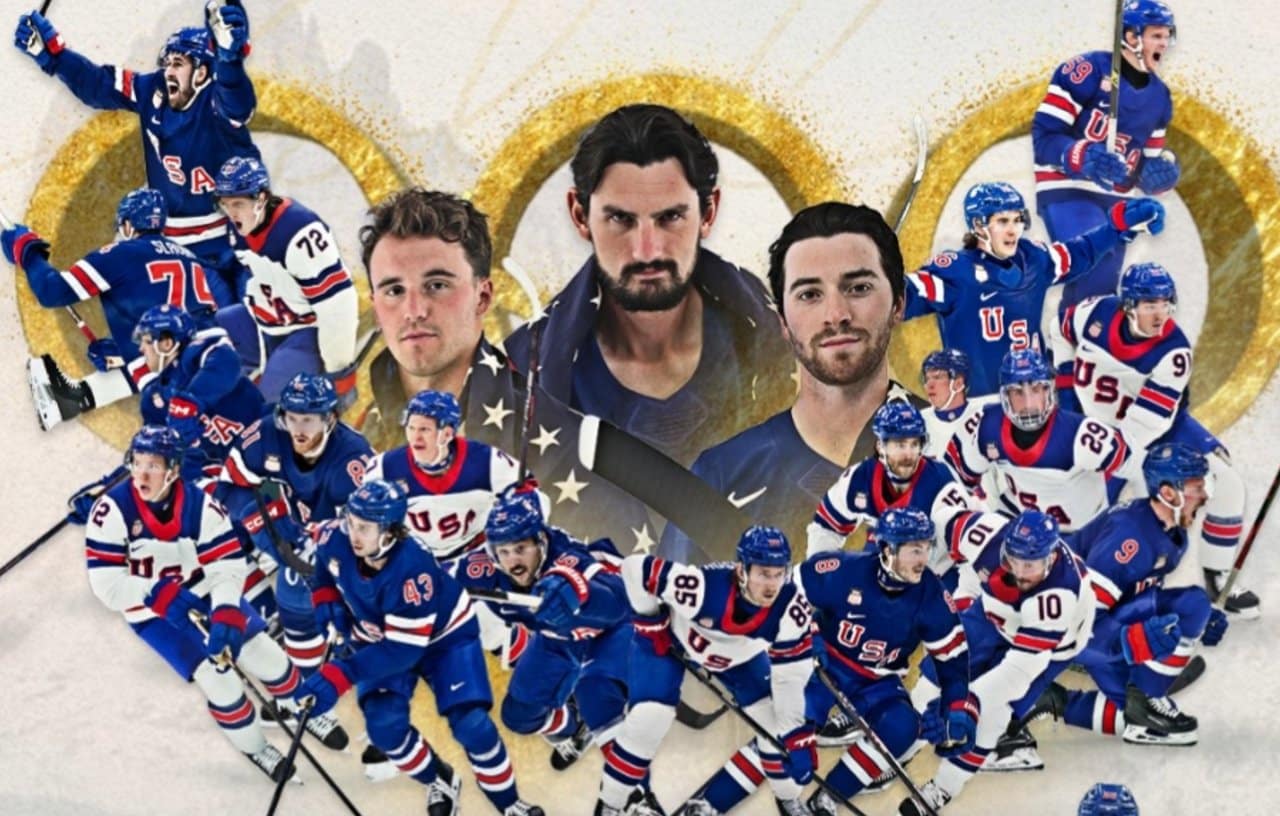
The decisive goal and the consecration of Jack Hughes
The moment of glory for the Americans occurred when there were less than three minutes left before extra time ended. Jack Hughes took responsibility and played the role that defined the championship. The forward took advantage of the reduced space on the ice to advance and beat the Jordan Binnington goalkeeper with a precise shot, sealing the final score.
Hughes’s finish not only secured victory, but also sparked an immediate celebration among the players and coaching staff in the Italian arena. The goal represented the third gold medal in the history of the Estados Unidos in men’s hockey, consolidating the current generation as one of the most talented ever formed by the country’s development program.
That’s family. ❤️🇺🇸#WinterOlympics pic.twitter.com/McJTyDQrgc
— USA Hockey (@usahockey)February 22, 2026
Monumental performance by Connor Hellebuyck
For the attack to be able to decide in the end, the defensive system had to operate close to perfection throughout the match. The big name of the North American resistance was goalkeeper Connor Hellebuyck, who had a memorable performance under the goalposts. The archer was bombarded by the Canadian attack throughout the confrontation, being forced to carry out complex interventions to keep his team alive in the fight for gold.
The match statistics reflect the pressure supported by the Estados Unidos defense. Hellebuyck made a total of 41 saves in 42 shots against his goal. Sua’s ability to concentrate in critical moments, especially when Canadá was looking for a turnaround in normal time, was fundamental in taking the game to extra time, allowing the strategy outlined by the coach to take effect at the crucial moment.
Evolution of the score in regular time
The duel began with the Estados Unidos imposing their pace and opening the scoring in the first period. Aos six minutes in, Matt Boldy demonstrated great technical skill by passing the puck over the sticks of defenders Cale Makar and Devon Toews. The backhand finish overcame the opponent’s defense, putting the Americans at an advantage and raising the temperature of the classic right from the start.
The Canadian reaction was quick and came in the second period, the result of continuous offensive insistence. Cale Makar, who had been outplayed for the first goal, redeemed himself by beating Hellebuyck’s wall with a well-placed wrist shot from the right faceoff circle. The 1-1 draw turned the third period into a battle of defenses, where neither team managed to change the score before extra time.
Historical context and trajectory
The victory in Milão carries deep symbolism for the sport in Estados Unidos. The last Olympic triumph had occurred in the legendary “Miracle at Gelo” in 1980, when a team made up of university students defeated the then unbeatable União Soviética. The return to the highest place on the podium, beating the biggest historical rival, serves as an affirmation of strength for the league and American fans.
The campaign to the gold medal was marked by constant challenges and overcoming. Nas quarter-finals, Estados Unidos had already demonstrated resilience by beating Suécia also in extra time. Canadá, in turn, reached the final after reversing disadvantages against República Tcheca and Finlândia, confirming expectations that the decision would bring together the two most prepared teams in the competition.