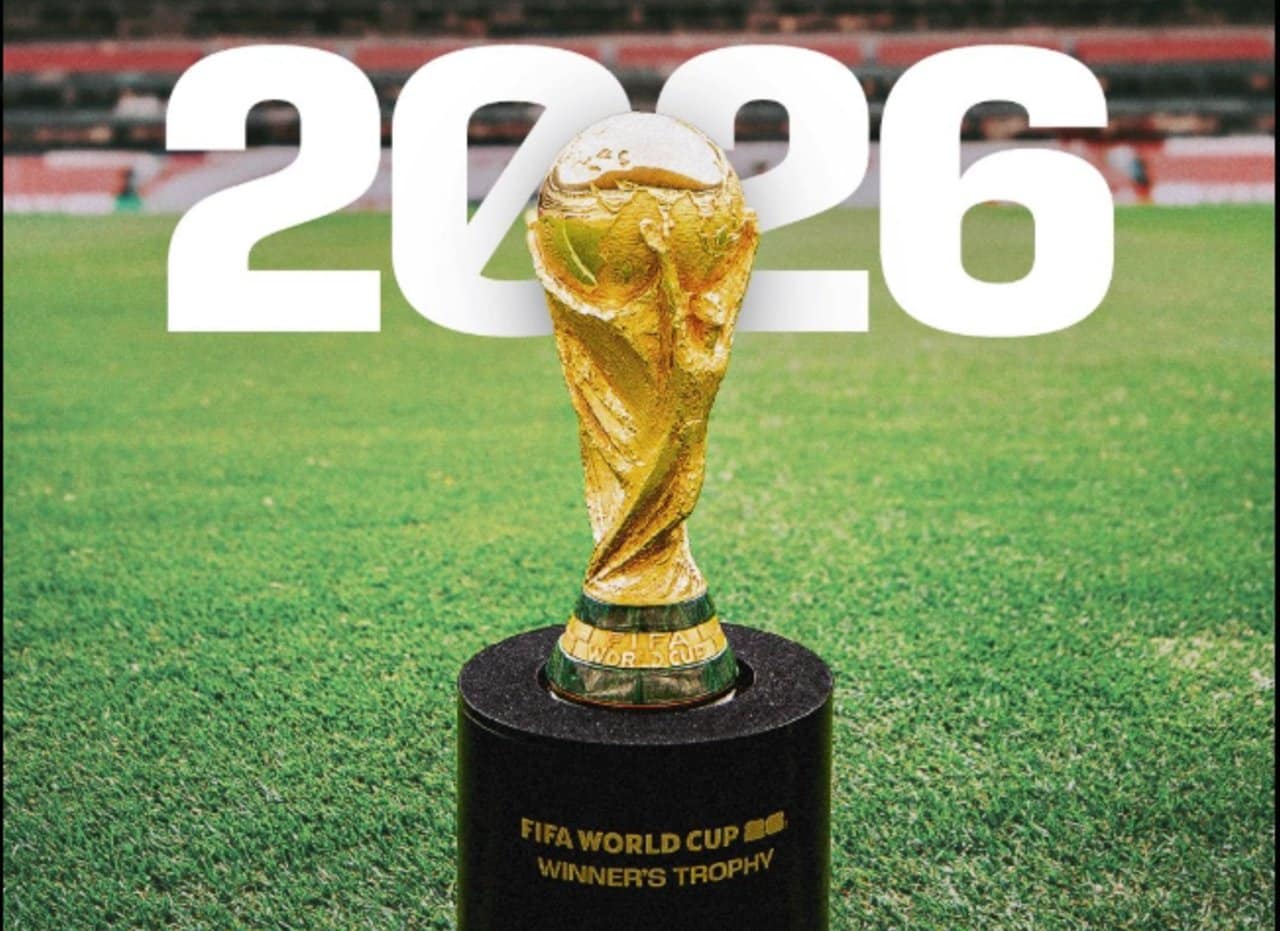
The 2026 FIFA Copa Mundo represents a significant expansion in international football by including 48 teams for the first time in the tournament’s history. Organizado jointly by Estados Unidos, México and Canadá, the event will take place between June 11th and July 19th, with 104 matches distributed in 16 cities. Essa change allows for greater representation of continental confederations and promotes more diverse competitions from the initial phase.
The world qualifiers have advanced considerably since 2023, with several teams already guaranteed in the competition. Países like Brasil, Argentina and Equador stand out in the South American qualifiers, while Asian nations like Japão and Irã also confirmed their presence. Hosts México, Estados Unidos, and Canadá classify automatically, facilitating logistics planning across multiple local time zones.
The format adopted by FIFA changes the pattern established since 1998, dividing teams into 12 groups of four teams each. The top two in each group advance directly, along with the eight best third-placed teams overall, forming 32 teams for the round of 16. Essa structure increases the number of games and increases the chances of surprises in balanced clashes.
Updated dispute format
The regulations provide that each team will play three matches in the group stage, with a traditional score of three points for a win, one for a draw and zero for a defeat. Desempates occur by goal difference, goals scored and direct confrontation, maintaining the integrity of the competitions. FIFA has implemented strict protocols against manipulation and doping to ensure fair play at all levels.
This configuration results in 72 games in the initial phase alone, followed by knockouts that include round of 16, quarterfinals, semifinals and the final. Equipes that reach the decision accumulate up to eight matches, one more than in previous editions with 32 teams. The measure balances the calendar and minimizes fatigue, with adequate breaks between rounds.
Distribution of vacancies by confederations
The allocation of places reflects the historical performance and size of the confederations, totaling 45 played in qualifiers plus three automatic ones for the hosts. UEFA gets 16 slots, the largest portion, while CONMEBOL guarantees six direct slots and one for repechage. Essa division was approved in 2017 after extensive debates in FIFA’s Conselho.
In África, CAF distributes nine direct places and one for repechage across nine groups. Ásia, by AFC, offers eight direct matches and one additional, with multiple phases that test the teams’ consistency. Oceania, represented by OFC, ensures one direct and one for repechage, expanding opportunities for smaller nations.
CONCACAF, which includes the hosts, provides three additional matches and two playoff matches. Esse scheme democratizes access and encourages investment in grassroots football in underrepresented regions. Qualifiers vary by continent, with playoffs in March 2026 defining the last placed teams.
Qualifiers process at América of Sul
The South American qualifiers adopt an all-against-all format over 18 rounds, with ten teams competing for six direct places and one for the repechage. Brasil and Equador and Uruguai remain close, demonstrating resilience in high altitude games.
Colombia and Paraguai complete the group of direct qualifiers so far, while Bolívia is positioned for the repechage after positive results at home. The final rounds, scheduled until October 2025, include decisive clashes such as Brasil versus Chile. CONMEBOL monitors fair play with immediate sanctions for irregularities.
This intense system, with 90 points up for grabs, highlights the regional competitiveness known for producing adaptable teams. Pausas to Datas FIFA allow recovery, and the schedule adjusts to varying weather conditions in participating countries.
Stadium headquarters and infrastructure
Sixteen stadiums were selected to host the matches, with 11 in Estados Unidos, three in México and two in Canadá, prioritizing capacity and accessibility. Estádio Azteca, at Cidade of México, with 87 thousand seats, opens on June 11, local time. MetLife Stadium, at Nova Jersey, with 82 thousand seats, will host the final on July 19, also at the American Costa Leste time.
Renovations are progressing in venues such as BC Place in Vancouver and BMO Field in Toronto, adapting them to FIFA standards. Os Estados Unidos concentrate the majority, including the SoFi Stadium in Los Angeles and the AT&T Stadium in Dallas, equipped with modern technologies. No México, the Estádio Akron in Guadalajara and the BBVA in Monterrey complement the Azteca with updated infrastructure.
This geographic distribution reduces long journeys and promotes regional balance between the hosting nations. FIFA integrates public and sustainable transport options, hoping to attract around 5 million visitors during the tournament.
Confirmed selections and potential debutants
By February 2026, 18 teams have already guaranteed a place, including hosts Canadá, México and Estados Unidos. Da CONMEBOL, Argentina, Brasil, Equador, Colômbia, Paraguai and Uruguai stand out with early qualifications. Na Ásia, Austrália, Coreia from Sul, Irã, Japão,
Debutants like Uzbequistão and Jordânia add newness, while OFC is represented by Nova Zelândia. The repechage, in March 2026, involves teams like Bolívia and others in tournaments in the host countries, defining the final places against FIFA rankings.
The group draw, scheduled for December 5, 2025 in Washington A.D., divides the teams into pots based on the FIFA ranking. Isso ensures balanced duels, with Europeans like França and Inglaterra still in contention in the final qualifiers.
Europeans such as Espanha, Portugal and Alemanha are strongly positioned in UEFA, with decisive playoffs. Africanos like Marrocos and Tunísia lead the way in the CAF, contributing to a globally representative tournament.
Detailed calendar and operational logistics
The schedule, released in June 2024, allocates 72 matches in the group stage from June 11 to 27, with multiple daily games at adjusted local times. The octaves take place from June 29th to July 5th, followed by the quarterfinals on July 9th and 10th. Semifinais are scheduled for July 14th and 15th, with the final on July 19th.
Clubs release players from May 25th, totaling 56 days of preparation and competition. Datas FIFA in September and October 2025 finalizes the pending qualifiers. Logistics include charter flights and designated hotels to minimize travel impacts.
Global broadcasts adapt to time zones, ensuring accessibility across multiple platforms. Testes in preparatory friendlies, they validate the planning, adjusting safety and health protocols.
Impacts of expansion on global football
The inclusion of 48 teams encourages investment in sports infrastructure in emerging nations, raising the general technical level. Confederações minors gain visibility, encouraging youth development programs and international partnerships. Essa democratization reflects the growth of football as a universal sport, with greater fan engagement in underdeveloped regions.
Economically, the tournament projects billions in revenue for the venues, boosting tourism and local jobs. FIFA allocates resources for sustainability, including renewable energy stadiums and carbon reduction initiatives. Parcerias with local governments optimize post-event legacy, such as public transport improvements.
Final preparations and logistical challenges
Preparations involve tri-national coordination for visas, security and mobility, with protocols unified by FIFA. Desafios include climate variations in June and July, with games at times that avoid heat peaks. Equipes emergency personnel train for different scenarios, ensuring fluid operations.
Investments in technology, such as improved VAR and arbitration systems, increase the accuracy of decisions. Comitês locations monitor progress, reporting monthly to FIFA for necessary adjustments.
Expectations for initial clashes
The group stage promises intense clashes, with draw pots mixing powerhouses and newcomers. Times like Brasil and França, in higher pots, face even challenges. Estratégias tactics adapt to the format, prioritizing goal difference for third-placed teams.
Coaches like Carlo Ancelotti, at Brasil, focus on roster rotations to manage fatigue. Simulações of groups indicate possibilities of zebras, enriching the show.
Repechage and remaining places
The intercontinental playoff, in March 2026, brings together six teams in a tournament format with semifinals and finals. Países as Iraque and RD Congo qualify directly for decisions, while Jamaica and Suriname represent CONCACAF. Essa final stage defines the last two places, with criteria based on the FIFA ranking.
Clashes include Ásia versus África and América of Sul versus Oceania, promoting continental crossovers. Locais in host countries test infrastructure before the main tournament.
- Iraq faces winner of Jamaica vs. Suriname.
- RD Congo plays against Bolívia or equivalent.
- Winners guarantee a direct place.
Sports and cultural legacy
The tri-national event strengthens diplomatic ties, with cultural programs integrated into the games. Iniciativas educational programs promote women’s and inclusive football, in line with FIFA’s objectives. Legado includes academies and permanent training centers at headquarters.
Cultural impacts involve festivals and exhibitions, celebrating the diversity of participating teams. Expectativas of global audience surpasses previous editions, with broadcasts in multiple languages.