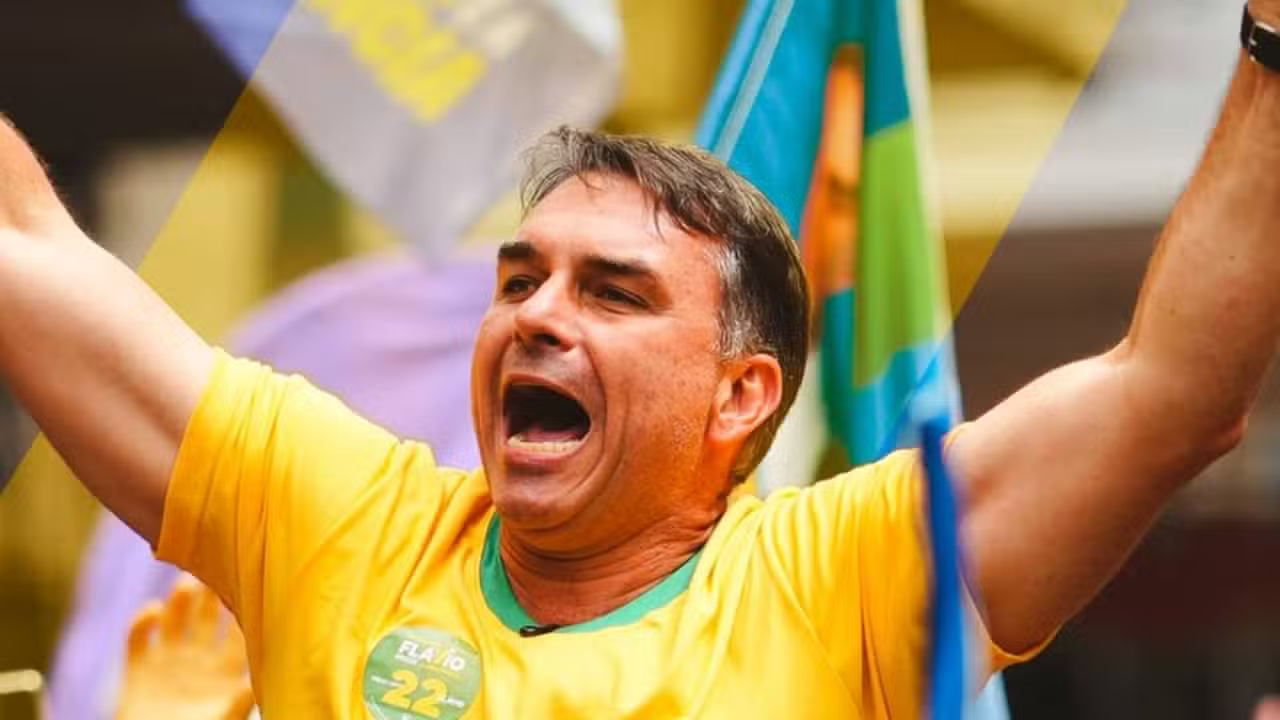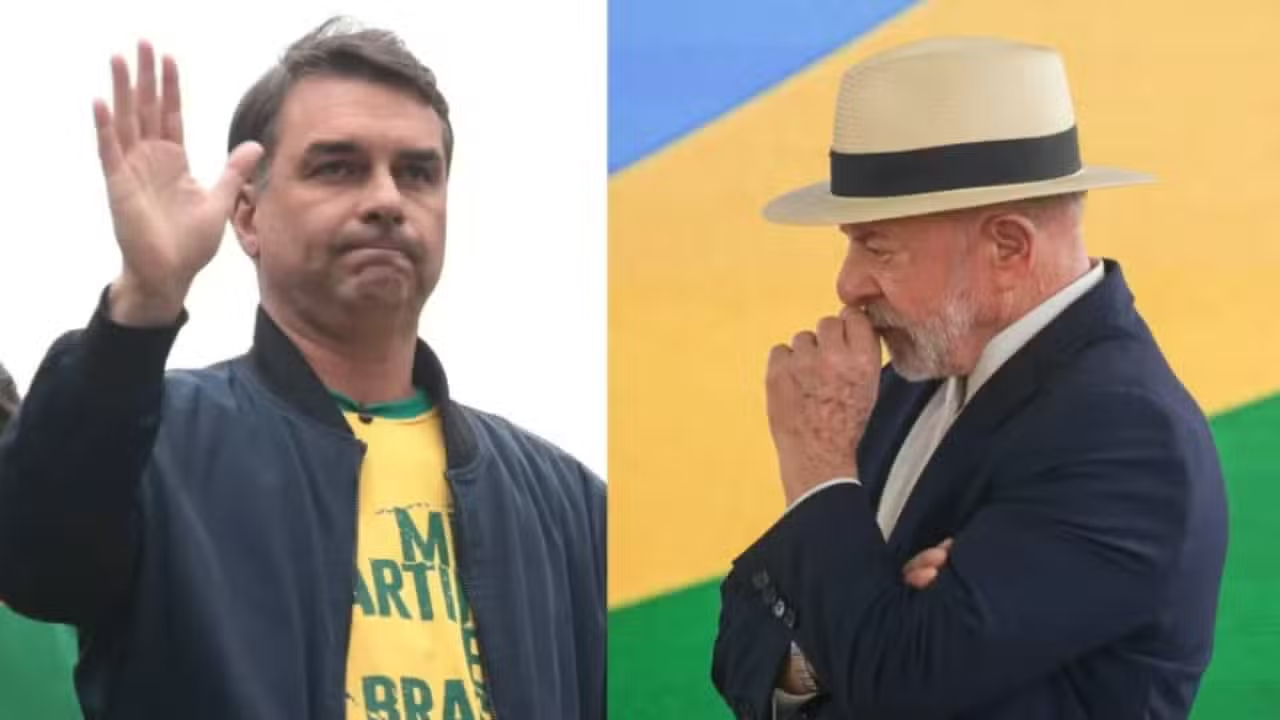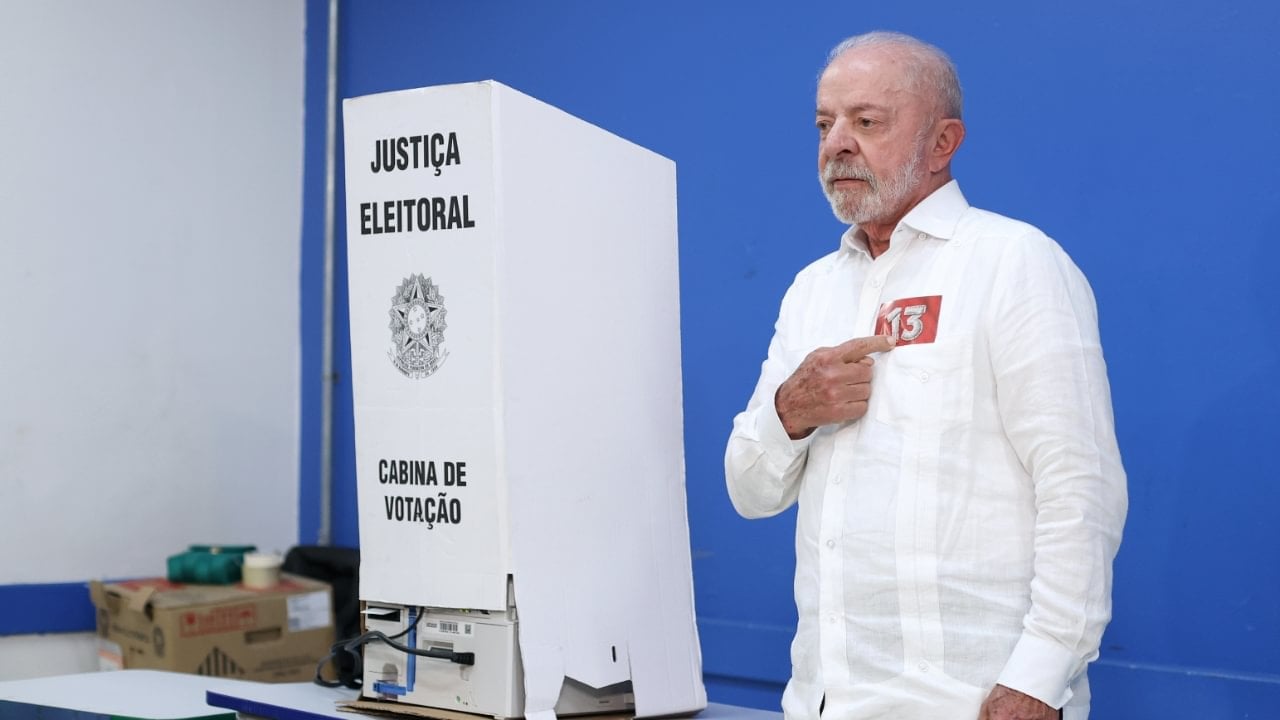
President Luiz Inácio Lula da Silva of the Workers’ Party (PT) secured a fourth term as head of state in Brazil’s presidential runoff on Sunday (25). With 91.95% of polling stations tallied by the Superior Electoral Court (TSE), Brazil’s highest electoral authority, at 9:03 p.m. Brasília time, the incumbent held 51.62% of valid votes, totaling 58,717,861 ballots. His challenger, Senator Flávio Bolsonaro of the Liberal Party (PL), had 48.38%, or 55,023,647 votes, leaving a margin of 3,694,214 votes between the two contenders.
The uncounted ballots remaining in the national system are insufficient to alter the outcome of the race. To overtake the president, Flávio Bolsonaro would need to capture approximately two-thirds of all remaining votes. A large share of the uncounted sections is concentrated in the Northeastern states of Bahia, Sergipe, Pernambuco, and Ceará, where Luiz Inácio Lula da Silva holds more than 68% of the vote. Formal proclamation of the result rests with the TSE upon the completion of the tally.
Moments earlier, at 9:02 p.m. Brasília time, when national tabulation stood at 90.35% of polling stations, the candidate on ballot number 13 had already reached 51.58% of the valid vote (57,625,060 votes). At that same mark, the senator running under ballot number 22 registered 48.42% (54,094,941 votes). The presidential election mobilized an electorate of 158,745,502 registered citizens eligible to cast ballots across Brazil and at diplomatic missions abroad.
Comeback from the October 4 first-round deficit
The runoff victory reverses the outcome of the first round held on October 4, 2026. In that initial vote, Flávio Bolsonaro, a 45-year-old lawyer and senator for Rio de Janeiro running alongside vice-presidential candidate Federal Deputy Alfredo Gaspar (PL), finished in first place with 47.03% of valid votes, or 56,104,268 ballots. Luiz Inácio Lula da Silva, age 80, finished second on that date with 45.16%, representing 53,876,617 votes, out of 119,300,788 valid ballots cast.
Over the three-week campaign between rounds, the Workers’ Party candidate erased his opponent’s advantage and moved into the lead. Even before 100% of polling stations were processed on Sunday night, the president had already added nearly 4.9 million more votes to his column than he received in the first round.
This victory grants a fourth presidential term to Luiz Inácio Lula da Silva, who previously governed Brazil for two consecutive terms from 2003 to 2010 and returned to the presidency in 2023. Former São Paulo Governor Geraldo Alckmin of the Brazilian Socialist Party (PSB) remains Vice President. Under Constitutional Amendment 111, which modified the schedule for federal inaugurations in Brazil, the swearing-in ceremony will take place on January 5, 2027.
Regional performance across Brazilian states and turnout rates
Electoral returns showed a sharp geographic division across the country’s regions. Luiz Inácio Lula da Silva won every state in the Northeast, surpassing 75% of valid votes in Piauí and 71% in Bahia. He also carried the Northern states of Pará, Amazonas, and Amapá, in addition to winning the battleground Southeastern state of Minas Gerais with 50.29%.
Flávio Bolsonaro won across the South and Center-West regions, while also carrying the Southeastern states of Rio de Janeiro, São Paulo, and Espírito Santo. The Liberal Party senator recorded his highest state percentages in the Northern region, reaching 72.45% of valid votes in Roraima and 69.61% in Rondônia.
Overall voter turnout in the runoff reached 80.96% of eligible voters, while the abstention rate stood at 19.04%. Blank ballots accounted for 1.11% of the total vote, and null ballots represented 2.10%.
Supreme Federal Court order extends voting hours and shifts count timeline
Official publication of the runoff numbers by the TSE was originally scheduled to begin after 5:00 p.m. Brasília time, when polls normally close across the country. However, counting was temporarily paused at 0.25% of tallied stations after Supreme Federal Court (STF) Justice Cristiano Zanin ordered voting hours extended until 7:00 p.m. Brasília time nationwide. The ruling responded to petitions from the Workers’ Party coalition citing reduced public bus fleets in Bahia municipalities—including Salvador, Feira de Santana, and Lauro de Freitas—and from the Liberal Party campaign reporting heavy rain, flooding, roadblocks, and power outages in other states.
Justice Cristiano Zanin clarified in a formal note that the two-hour extension applied strictly to polling stations that had not yet closed, allowing votes from already sealed electronic machines to be computed and totaled. TSE President Justice Kassio Nunes Marques—who had cast his own ballot at 8:00 a.m. in Brasília after verifying the zero-tape audit document—instructed remaining open polling places to stay operational until 7:00 p.m. in compliance with the Supreme Federal Court order. Once full tabulation resumed, the lead changed hands between the two candidates before the incumbent consolidated his advantage past the halfway mark:
- At 7:39 p.m. (10.40% of polling stations tallied): Luiz Inácio Lula da Silva held 50.46% of valid votes (6,567,952 votes) against 49.54% (6,449,165 votes) for Flávio Bolsonaro.
- At 8:05 p.m. (26.30% of polling stations tallied): Flávio Bolsonaro moved into first place with 50.46% of valid votes (16,385,358 votes), compared to 49.54% (16,087,378 votes) for Luiz Inácio Lula da Silva.
- At 8:30 p.m. (53.13% of polling stations tallied): Luiz Inácio Lula da Silva reclaimed the lead with 50.23% of valid votes (32,914,166 votes), while Flávio Bolsonaro registered 49.77% (32,614,651 votes).
- At 8:50 p.m. (75.87% of polling stations tallied): Luiz Inácio Lula da Silva widened his margin to 51.11% of valid votes (47,905,407 votes), leaving Flávio Bolsonaro with 48.89% (45,817,634 votes).
Overseas ballot progression from Asian time zones to European capitals
Among Brazilian citizens registered to vote outside the country, the earliest polling station bulletins released by the TSE showed an initial lead for the Liberal Party challenger. In the first partial report at 9:17 a.m. Brasília time, reflecting completed voting in Asian time zones, Flávio Bolsonaro led in six countries while Luiz Inácio Lula da Silva was ahead in five nations.
A subsequent TSE update at 11:26 a.m., compiling overseas returns received through 10:40 a.m. Brasília time, showed Flávio Bolsonaro with 33,642 votes and confirmed wins in seven countries, compared to 15,272 votes and five countries for the president. As returns from Europe and the Americas entered the system later in the afternoon, the overseas tally flipped in favor of Luiz Inácio Lula da Silva, who finished with 58.06% of the international vote and won 42 of 54 countries reported by 7:06 p.m..
In European polling stations alone, the incumbent received 141,263 votes (59.66%) against 95,499 votes (40.34%) for the senator. That performance included 16,549 votes (79.09%) for the president in Germany compared to 4,374 (20.91%) for his opponent, 1,178 votes (74.98%) to 393 (25.02%) in Austria, and 3,064 votes (58.72%) to 2,154 (41.28%) in Belgium.
Candidate voting schedules and police incidents in Minas Gerais and Goiás
Both presidential contenders cast their ballots during the morning hours in the Southeast region. Flávio Bolsonaro voted shortly after polls opened at the Barão Homem de Mello Municipal School in the Vila Isabel neighborhood, in the North Zone of Rio de Janeiro. Accompanied by Douglas Ruas, the senator called for change in the country after leaving the voting booth.
Luiz Inácio Lula da Silva voted around 10:00 a.m. in the state of São Paulo. The president cast his ballot at the Dr. João Firmino Correia de Araújo State School in the Assunção neighborhood of São Bernardo do Campo, in the metropolitan region of São Paulo.
Law enforcement and emergency services also recorded violent incidents and fatal accidents during the morning of the runoff vote. At 9:27 a.m., City Councilor Iara Pimentel suffered facial injuries after being attacked with stones and bottles in the municipality of Montes Claros, in the state of Minas Gerais. Ten minutes later, at 9:37 a.m., authorities in the state of Goiás confirmed the death of a 19-year-old man who fell from a truck during a motorcade held in support of Flávio Bolsonaro.