

The international artistic scene is mourning the loss of one of the most versatile names in the North American entertainment industry. Confirmation of his death occurred this Monday, February 23, marking the end of a journey that spanned decades and won over different generations of spectators. The news was officially announced by family members, who highlighted not only the professional legacy, but also the personal battles faced by the artist throughout his life.
His death at the age of 71 ends a cycle of significant contributions to cinema and television, where the actor skillfully moved between the slapstick comedy of the 1980s and the family entertainment of the 2000s. The family’s official statement highlights that, beyond the spotlight and red carpets, there was a silent and continuous fight against bipolar disorder, a condition with which he lived for more than two decades.
This farewell moment brings to light fundamental discussions about mental health inside and outside the entertainment industry. The transparent stance of family members when addressing the cause and context of the death aims to transform mourning into a platform for raising awareness, seeking to reduce the stigma that still surrounds mental illnesses in contemporary society.
The repercussion among professional colleagues and admirers was immediate, with tributes appearing on various platforms. His career, which began under the shadow of a strong surname in Hollywood, flourished independently, allowing the actor to build his own memorable identity, marked by his ability to give life to characters that oscillated between comic eccentricity and paternal tenderness.
Family confirms death and addresses battle for mental health
The official announcement was made with a request for privacy for family members at this delicate time, but also with a powerful message about human vulnerability. Keith Carradine, the actor’s brother and also a prominent figure in the artistic world, led the tributes and dissemination of information, emphasizing the courage needed to face bipolar disorder for so many years.
The decision to go public with the fight against mental illness reflects a desire for Robert’s journey to serve as a beacon for others facing similar challenges. The family hopes that, by openly discussing the topic, it will be possible to offer comfort and encourage the search for professional help, demystifying prejudices that often prevent adequate treatment and necessary support.
Keith’s statements celebrate the strength, soul and humor that characterized his brother, remembering him not only as a talented co-worker, but as a complex and beloved human being. Essa humanized approach resonates deeply in a period where mental health has become a priority issue globally, reinforcing the importance of empathy and family support in psychiatric clinical conditions.
Character Lewis Skolnick marked a generation in the 1980s
In 1984, comedy cinema was transformed by the release of “A Vingança dos Nerds”, a film that catapulted the actor’s career to stardom. By playing Lewis Skolnick, he defined the archetype of the cinematic “nerd”, creating a character who, despite being stereotypical, carried a message of resilience and intelligence that inspired young people around the world.
The film became an instant cultural phenomenon, generating sequels and securing a firm place in pop culture. The character’s characteristic laugh and leadership in the face of adversities in the university environment transformed the production into a cult classic, constantly revisited by new audiences and remaining relevant as a social satire about hierarchies and acceptance.
The acting was fundamental to the success of the franchise, balancing physical humor with moments of genuine camaraderie. The impact of “The Vingança of the Nerds” transcended the screen, influencing fashion, behavior and even the appropriation of the term “nerd”, which went from a pejorative to a symbol of intellectual pride in the following decades.
Success on television with the series Lizzie McGuire on Disney Channel
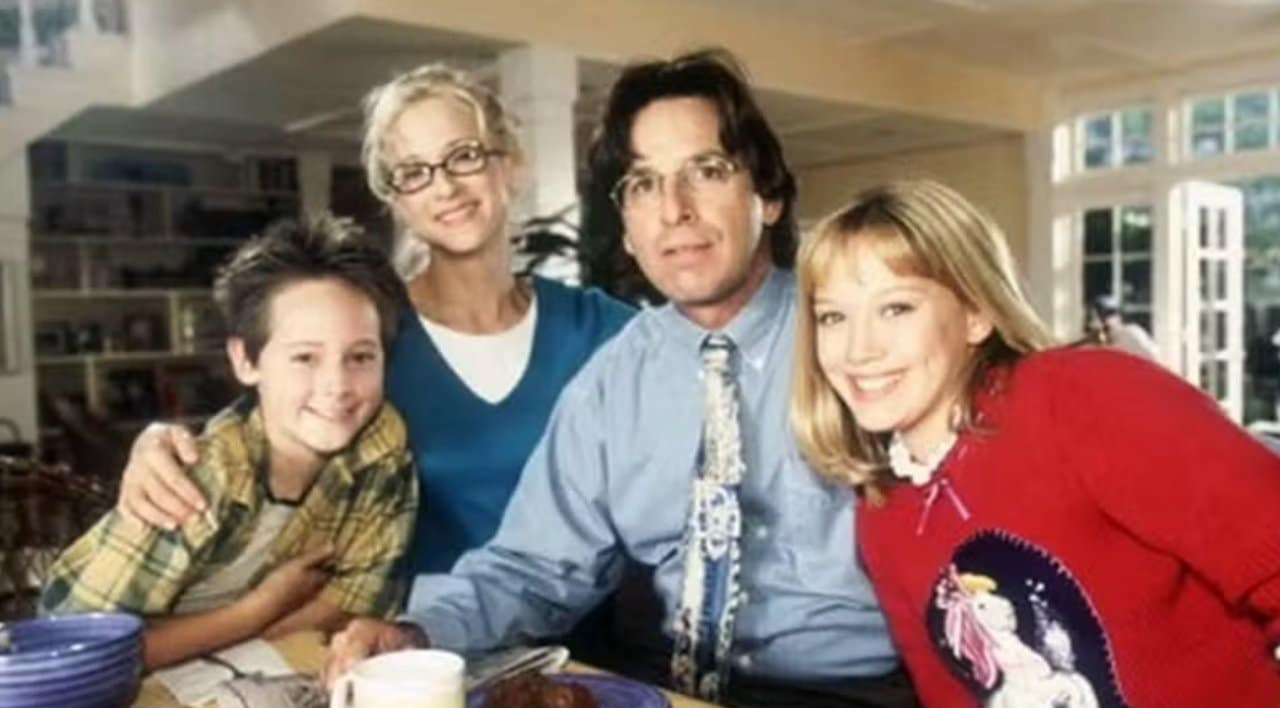
Demonstrating a remarkable capacity for reinvention, the actor gained a new fan base in the early 2000s when he joined the cast of the Disney Channel series “Lizzie McGuire”. In the role of Sam McGuire, he played the protagonist’s father, offering a performance that balanced eccentric humor with paternal affection, becoming a beloved figure for the millennial generation.
Participating in the series allowed him to show a different side of his talent, adapting to the family sitcom format naturally. Sam McGuire was not just comic relief, but a pillar of support for his teenage daughter, dealing with coming-of-age issues with lightness and understanding, which solidified his image as one of the most memorable fathers in children’s television.
The success of “Lizzie McGuire” significantly expanded the reach of his career, introducing him to an audience that may not have been exposed to his previous work in adult or independent film. The series remains a landmark in the channel’s programming and in the affectionate memories of millions of viewers, who now fondly remember the scenes he starred in.
Carradine dynasty and the trajectory of a family dedicated to art
Robert belonged to one of the most traditional and prolific families in Hollywood. Filho from the legendary actor John Carradine, he grew up immersed in the world of acting, following in the footsteps of his father and brothers, as David Carradine, known worldwide for his role in the series “Kung Essa artistic inheritance was both a privilege and a challenge, requiring him to prove himself individually.
The Carradine family’s contribution to the seventh art is immeasurable, with hundreds of credits in films, series and plays accumulated over decades. Robert honored this legacy, maintaining the tradition of excellence and dedication to the craft, but always seeking projects that defied expectations and allowed the human condition to be explored in its various nuances.
His body of work spans more than fifty years, including appearances in dramas, science fiction films, and critically acclaimed independent productions. Versatility was his trademark, allowing him to move between commercial cinema and more original projects with the same competence and dedication.
The legacy he left goes beyond film rolls and digital files; resides in the memory of laughter provoked, in the representation of its characters and, now, in the important conversation started by his family about mental health. The industry loses a singular talent, but his work lives on, continuing to entertain and inspire future generations of actors and viewers.



