
Total lunar eclipse of March 2026 colors Blood Moon in Brazilian dawn

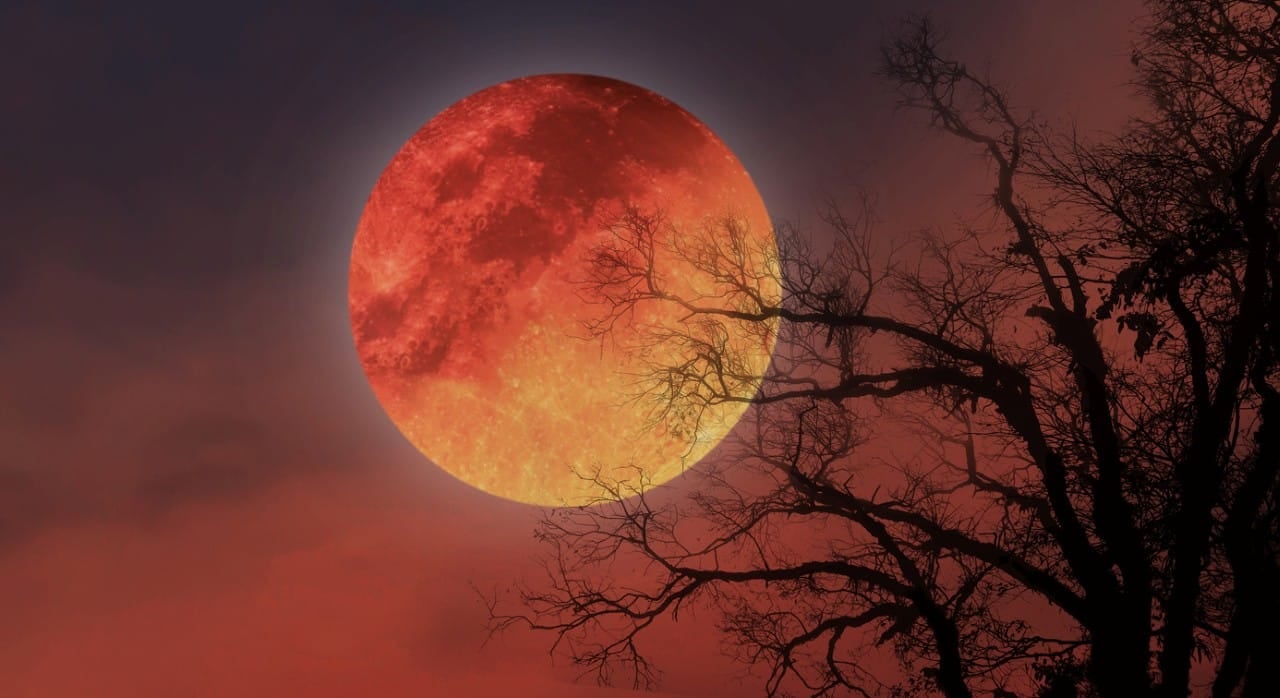
The total lunar eclipse of March 3, 2026, known as Lua of Sangue, occurs at dawn and promises to color the sky red in several regions of the planet. The phenomenon occurs when Terra is positioned between Sol and Lua, projecting its shadow over the natural satellite. The phase of totality lasts approximately 58 minutes, during which time Lua acquires a reddish hue due to the refraction of sunlight by the Earth’s atmosphere.
Astronomers highlight that the event is visible to the naked eye, without the need for special equipment, as long as weather conditions allow it. The observation takes place during the full Lua of March, perfectly aligned with the orbital plane. The complete eclipse lasts several hours, with penumbral, partial and total phases.
At Brasil, visibility remains limited due to the near-dawn time. Regiões from the extreme west of Amazônia have greater chances of following at least the beginning of the partial phase. In other areas of the country, such as Sul, Sudeste and Nordeste, only the subtle penumbral effect can be noticed before the rise of Sol.
- Start of the penumbral eclipse: 5:44 am (Brasília time)
- Start of partial eclipse: 6:50 am
- Start of totality: 8:04 am
- End of totality: 9:02 am
- Eclipse ends: 11:23 am
Eclipse phase details
The penumbral eclipse begins gradually, with a slight darkening of Lua. Terra’s outer shadow partially covers the satellite, but the effect remains inconspicuous to most observers. The transition to the partial phase occurs when the umbra, the darkest shadow, begins to invade the lunar surface.
During totality, Lua completely enters the umbra. The red color appears because sunlight passes through the Earth’s atmosphere, filtering blue wavelengths and leaving reddish tones. Essa central phase lasts 58 minutes, the highlight of the phenomenon.
The maximum eclipse occurs around 8:33 am at Brasília time. Lua reaches the point of greatest immersion in the shadow of Terra. Após this, the phases gradually reverse until the end of the event.
Global visibility of the phenomenon
Regions of Américas, especially América of Norte and Central, follow the eclipse during the local dawn. Eastern Ásia and Oceania observe the event at night or in the early morning hours. Austrália and Nova Zelândia see totality at nighttime times, with Lua high in the sky.
Europa and África do not record visibility of the eclipse. Partes of Ásia Central and América of eastern Sul accompany only partial or penumbral phases. Oceano Pacífico offers one of the best views, with the phenomenon throughout the night.
At the west end of América of Sul and east of Ásia, observers capture complete totality. Condições of clear skies expand opportunities in places with low light pollution.
Why does Lua turn red
The Earth’s atmosphere acts as an optical filter during a total eclipse. Raios solar cells pass through atmospheric layers, scattering blue and red light. The red light reaches Lua, giving it the characteristic tone.
Factors such as volcanic dust or particles in the atmosphere influence the intensity of the color. In some eclipses, Lua takes on darker or orange tones. The phenomenon occurs in all total lunar eclipses.
Tips for observing the event
Choose elevated locations away from urban lights for better viewing. Binóculos or telescopes increase details of the lunar surface during phases. Monitore weather forecasts to guarantee clear skies in the early hours of the morning.
Live broadcasts on specialized channels allow you to follow the eclipse in real time. Plataformas astronomical maps offer interactive visibility maps. The event does not pose a risk to vision, as Lua remains visible to the naked eye.
Upcoming lunar eclipses
The next total lunar eclipse after March 2026 only occurs in 2028. The interval highlights the rarity of the phenomenon in short cycles. Observadores plan ahead to capture images or record the event.
The March 2026 eclipse represents a unique opportunity for regions with favorable visibility. Astrônomos encourage the recording of the phenomenon for scientific contributions.



