

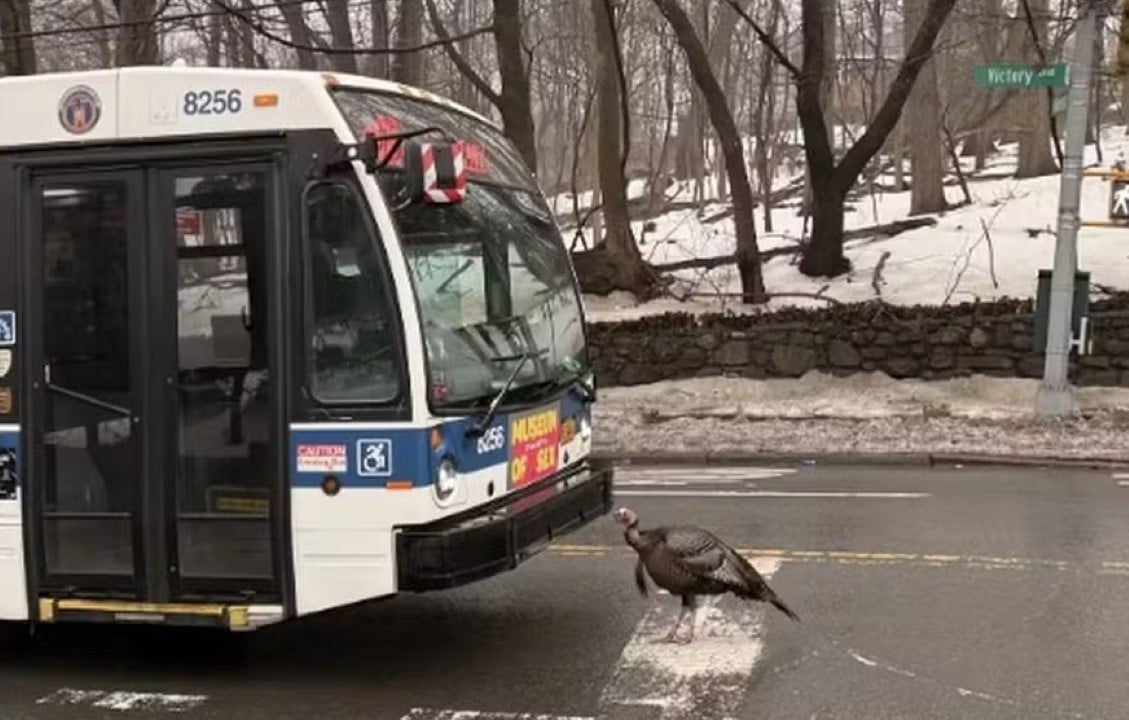
The flow of vehicles on Victory Boulevard, located at Staten Island, was interrupted on the morning of Wednesday, February 18, due to an unusual obstacle on the public road. A wild turkey positioned itself in a crosswalk around 10 a.m. local time and stared blankly at an MTA bus, forcing the driver of vehicle number 8256 to brake sharply to avoid a collision. The static confrontation lasted a few minutes, generating queues and different reactions among drivers and pedestrians traveling through the Costa Leste region.
Witnesses reported that the bird seemed hypnotized by an advertisement displayed on the bus’s bumper, remaining motionless despite the approach of the heavy vehicle. The driver had to wait patiently until the animal decided, on its own, to clear the path, which resulted in an average delay of five minutes for those traveling through the area. Remote monitoring carried out by traffic authorities confirmed the temporary obstruction, but did not require the sending of physical teams, as the situation was resolved without injury to the animal or material damage.
Incident details and animal behavior
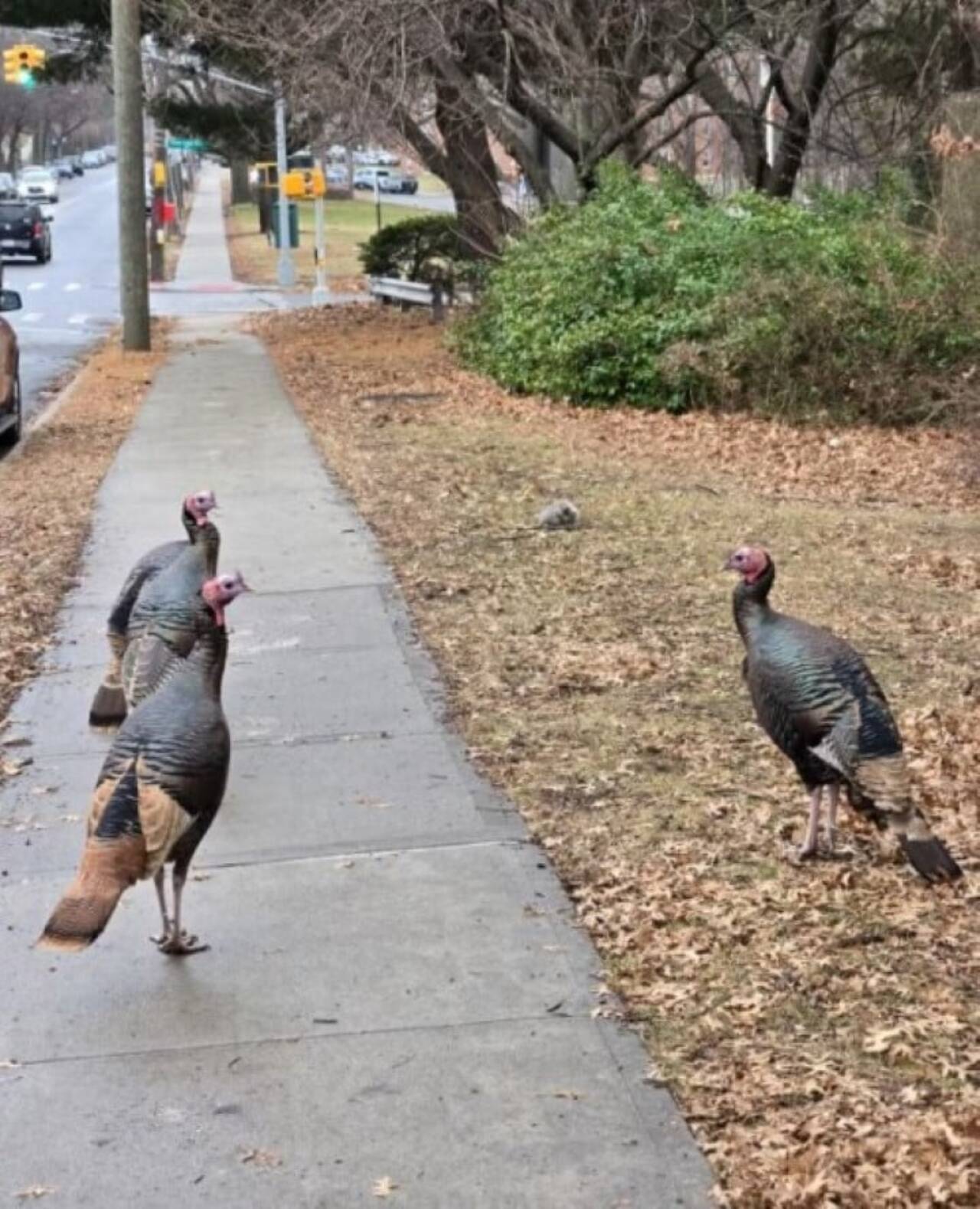
The presence of these birds in Staten Island dates back to the late 1990s, when a small domestic group was released near a local psychiatric center. The absence of natural predators and the ease of adaptation to the urban environment allowed accelerated reproduction, resulting in a population estimated today at around 100 individuals that roam freely through neighborhoods such as Dongan Hills.
Over the years, turkeys have developed territorial behaviors that directly impact residents’ routines, including blocking sidewalks and chasing pedestrians in residential areas. Especialistas point out that males tend to be more aggressive during the mating season, interpreting large objects, such as vehicles, as potential threats to their territory, which explains the defiant attitude recorded against the bus.
Recent history of interactions in the city
This was not an isolated case in the region, as in July 2025 a resident had to flee to his car after being chased by a bird that was protecting its eggs nearby. Outro significant record occurred in January this year, when an entire gang blocked a street in Astoria for almost ten minutes, forcing drivers to take unforeseen detours.
Delivery professionals also suffer from the presence of animals, as evidenced in a recent case involving a UPS employee who had his route interrupted by two aggressive turkeys near Branford. Logistics companies have instructed their drivers to adjust routes to minimize encounters, although they admit that this increases service time.
Control and monitoring measures
Departamento of Parques and Recreação of Nova York maintain active annual counting and camera surveillance programs to map the areas of greatest concentration of these animals in The initiatives seek to apply non-lethal methods to mitigate conflicts, focusing on installing physical barriers at critical traffic points and identifying urban migration routes that may pose risks to drivers.
Educational campaigns complement physical actions, advising the population not to feed animals, a practice that encourages bold behavior and excessive proximity. Dados officials indicate a 15% reduction in complaints in the last year thanks to these measures, although neighborhoods with a high population density of birds still face daily coexistence and mobility challenges.
Volunteers frequently attend workshops on how to deal with unexpected encounters, learning to keep a safe distance and using soft noises to disperse animals without causing stress. The results indicate growing community confidence in managing these everyday situations, balancing wildlife preservation with urban safety.



