

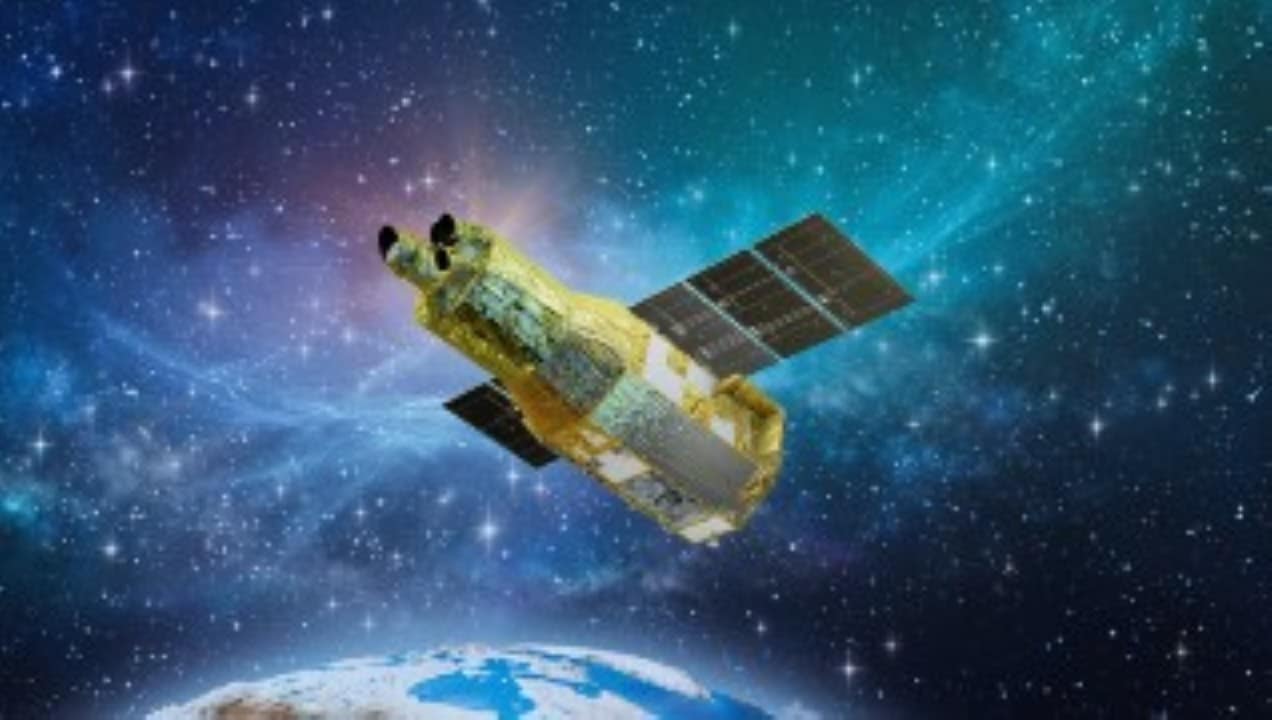
Recent observations from the XRISM satellite, developed by JAXA in partnership with NASA, have revealed unprecedented details about gas storms in galaxy clusters. Esses phenomena occur in the Perseu cluster, located 240 million light years from Terra, where supermassive black holes and dark matter influence complex movements. Data captured in February 2026 shows varying gas velocities, forming patterns that indicate interactions at different scales.
The satellite used its high-resolution spectrometer to map radial velocities of up to 200 km/s near the center and 80 km/s in intermediate regions. Essa V-shaped configuration suggests two main sources of agitation. The measurements were carried out during initial observations of the mission, launched in 2023 as a successor to Hitomi.
Comparisons with computer simulations confirm that the high speeds at the outer edge result from collisions with other clusters attracted by the gravity of dark matter. Já central turbulence derives from the activity of black holes that eject energetic jets and winds. Esses processes heat the gas, affecting star formation over billions of years.
- The Perseu cluster contains more than a thousand galaxies grouped across a diameter of millions of light years.
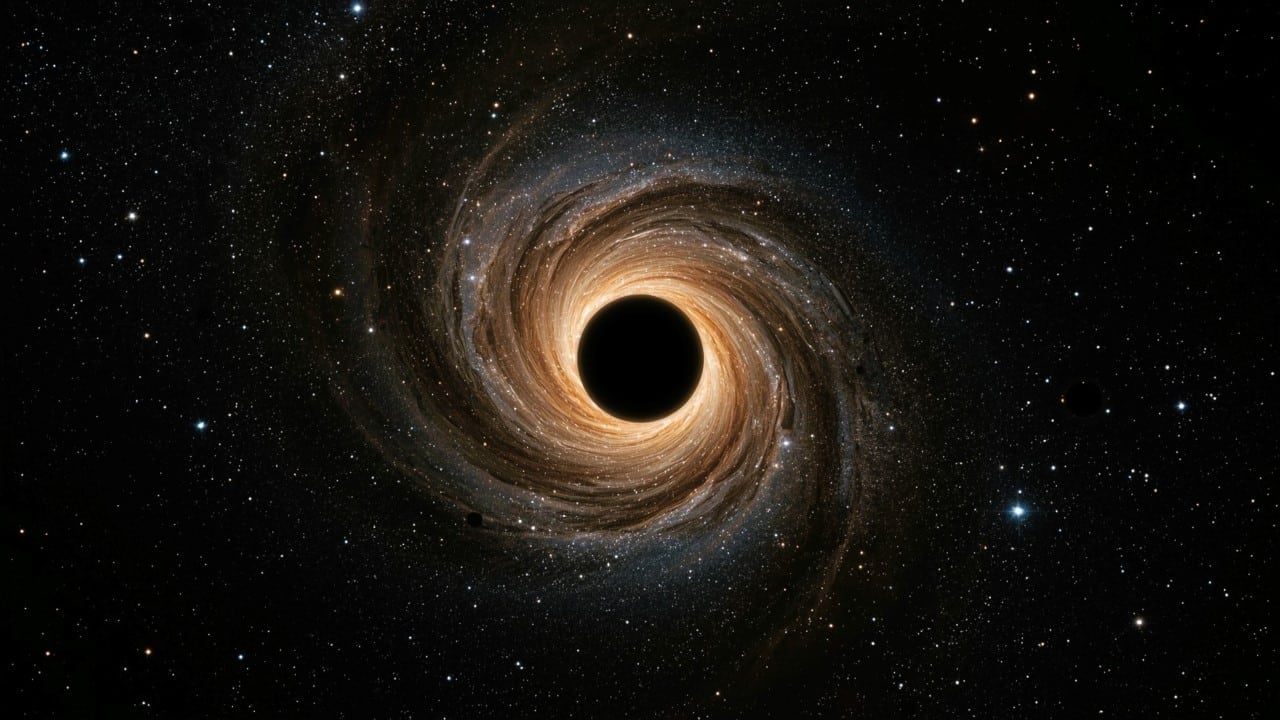
- The central galaxy NGC 1275 is home to a supermassive black hole that injects energy into the surrounding environment.
- Previous observations of Chandra complement the XRISM data by highlighting regions of high X-ray emission.
- Simulations indicate that these interactions contribute to the continuous growth of the clusters.
Details of XRISM observations
The images obtained by XRISM show areas with greater velocity dispersion close to the central black hole. Esses maps reveal how the gas moves chaotically, driven by intense gravitational forces. Scientists analyzed iron ion emission lines to determine precise velocities.
The spectral resolution of the Resolve instrument made it possible to separate signals from small- and large-scale movements. With this, it was identified that the supermassive black hole stirs gas at radii of up to 200 thousand light years. Essa distinction is crucial to understanding cosmic dynamics.
Historical evolution of space missions
The Hitomi satellite, launched in 2016, provided the first signs of intense movements at the center of Perseu, but a technical failure limited the data. XRISM expanded the scope to 800,000 light years, overcoming previous limitations. Essa Technological progression reflects advances in X-ray detectors.
Additional research with NASA’s Chandra confirms emission patterns that match the new measurements. The integrated results point to a balance between heating and cooling in intergalactic gas.
Implications for star formation
Supermassive black holes regulate the temperature of gas in clusters, preventing it from cooling enough to form new stars. Esse mechanism explains the decline in the rate of star formation since cosmic noon, 10 billion years ago. XRISM observations provide direct evidence of this process.
Dark matter, which dominates the mass of clusters, attracts external structures and causes mergers that generate large-scale turbulence. Essa continuous interaction shapes the evolution of clusters over cosmic time.
The observed V-shaped pattern suggests an overlap of effects, where the gravity of the dark matter amplifies the black hole’s jets. Modelos theorists predict that these phenomena keep the gas at temperatures of millions of degrees.
Numerical simulations reproduce these patterns, validating the observations and allowing predictions about other clusters. The data indicates that clusters like Perseu continue to grow through gravitational accretion.
Role of dark matter in galactic dynamics
Dark matter forms halos that surround clusters, exerting gravitational attraction on neighboring galaxies. No Perseu, this influence causes inflows that result in high speeds in the periphery. XRISM measurements quantify this contribution clearly for the first time.
Comparisons with clusters like Virgo show similarities in turbulence patterns, suggesting universality in these processes. Central black holes act as regulators, injecting energy to counteract radiative cooling.
Technological advances in the study of X-rays
XRISM’s Resolve instrument achieves wavelength resolutions that distinguish fine emission lines. Essa capacity allowed mapping speeds with km/s accuracy, overcoming limitations of previous satellites. International collaboration between JAXA, NASA and ESA made this technology possible.
Spectral data reveal chemical compositions of the gas, including abundances of heavy elements dispersed by supernovae. Essas information complements the understanding of matter cycles in clusters.
Integrations with observatories in other spectrum bands, such as optical and radio, enrich the analyses. For example, images of Hubble identify individual galaxies in Perseu, correlating them with gas maps.
Challenges in calibrating space instruments were overcome with rigorous testing before launch. Isso guarantees the reliability of data collected in extreme environments.
Comparisons with other clusters
The Virgo cluster exhibits similar turbulence, with speeds driven by central black holes. Observações from XRISM in this cluster confirm heating patterns that inhibit star formation. Essas similarities indicate common mechanisms in large cosmic structures.
Differences in mass and chemical composition between Perseu and Virgo highlight evolutionary variations. Modelos suggest that more massive clusters like Perseu experience more frequent mergers.
Studies on distant clusters reveal evolutions over cosmic time, with turbulence rates varying according to the density of dark matter. XRISM data contributes to catalogs that map these variations.
Contributions to modern cosmology
The observations reinforce the Lambda-CDM model, where dark matter and dark energy dominate the universe. No Perseu, the velocity distribution validates predictions about dark matter halos. Esses insights help refine cosmological simulations.
Suppression of star formation by black holes explains observed distributions of elliptical galaxies in clusters. Dados indicate that this feedback operates on scales of billions of years.
Future research with missions like ESA’s Athena will expand these studies to more clusters. Multimodal data integration promises revelations about the cosmic web.
Physical processes involved in storms
Relativistic jets ejected by black holes interact with the intergalactic medium, creating bubbles and cavities observed in No Perseu X-rays, these structures coincide with velocity peaks measured by XRISM. The transferred energy heats the gas, maintaining thermal equilibrium.
Shock waves propagated by galactic mergers amplify these turbulences, forming the V-shaped pattern.
Gas viscosity at extreme temperatures influences energy dissipation, affecting the longevity of storms. Medições indicate that turbulence persists for millions of years.
Tracer elements like ionized iron track flows, revealing histories of chemical enrichment. The XRISM spectra show split lines that confirm velocities.
Future observational perspectives
Companion missions like James Webb Telescope can observe infrared counterparts of these structures. Correlações between X-ray and infrared data will enrich models of galactic evolution.
Developments in artificial intelligence assist in the analysis of large volumes of spectral data. Algoritmos efficiently identify patterns in speed maps.
Global collaborations guarantee access to ground-based telescopes for follow-ups. Observatórios and Subaru provide optical images that contextualize the XRISM findings.
Influence on understanding the universe
These discoveries highlight the interconnected role of black holes and dark matter in cosmic structure. No Perseu, the observed processes exemplify universal dynamics. The data contributes to theories about the formation of large-scale structures.
The suppression of young stars explains why mature clusters have old stellar populations. Modelos predict that without this feedback, clusters would be denser in stars.
Studies in nearby clusters like Coma reveal variations, enriching the cosmological picture. XRISM opens avenues for investigations into more distant clusters.



