

The government of the province of Saitama and the municipal administration announced a significant advance in the infrastructure project that promises to transform mobility in the metropolitan region north of Tóquio. The plan involves the extension of Saitama Rapid Railway Line, also known as Linha 7 from
The official proposal details the construction of a new section of approximately 1.2 kilometers. The central objective is to establish a new station, provisionally named “Saitama Local authorities project that the work will not only improve spectators’ experience on game days, but also boost urban development in the surrounding areas.
According to the schedule stipulated by the authorities, the formal application for construction will be submitted this fiscal year. The expectation is that, after approval of construction plans and obtaining necessary licenses, physical works will begin around fiscal year 2029. The long-term horizon established by the project foresees the official opening and beginning of commercial operations in April 2041, marking a new era for local public transportation.
The financial impact and economic viability were central points in recent discussions. The total cost of the project was revised and estimated at 14.4 billion yen. Estudos of viability indicates a positive cost-benefit ratio, with an index of 1.2, which suggests that social and economic returns will exceed initial investments. The division of costs was agreed between the administrations, with the city of Saitama bearing 65% of the amount and the province covering the remaining 35%.
Technical details and economic viability
The budget review was a crucial step in securing the project’s approval. Inicialmente, cost estimates were higher, but efforts to optimize design and engineering allowed the budget to be reduced to the current 14.4 billion yen. Essa fiscal management seeks to balance the need for modern infrastructure with the responsible use of public funds, a recurring theme in Japanese administration.
Long-term financial projections point to the sustainability of the new operation. The business plan estimates that the railway extension will begin to generate an accumulated surplus 27 years after its opening. Isso means that, before completing three decades of operation, the investment will have paid off and the line will start to contribute positively to the railway operator’s revenues, guaranteeing maintenance and operation without excessively depending on continuous subsidies.
In addition to direct construction costs, the project includes improvements to signaling systems and electrical infrastructure to support increased demand. Integration with the existing network is essential, since Saitama Rapid Railway operates in a reciprocal service system with Linha Namboku of Metrô of Tóquio. Isso allows passengers coming from the center of the Japanese capital to reach the stadium without having to change trains, a convenience that will be expanded with the new terminal station.
Impact on access and passenger flow
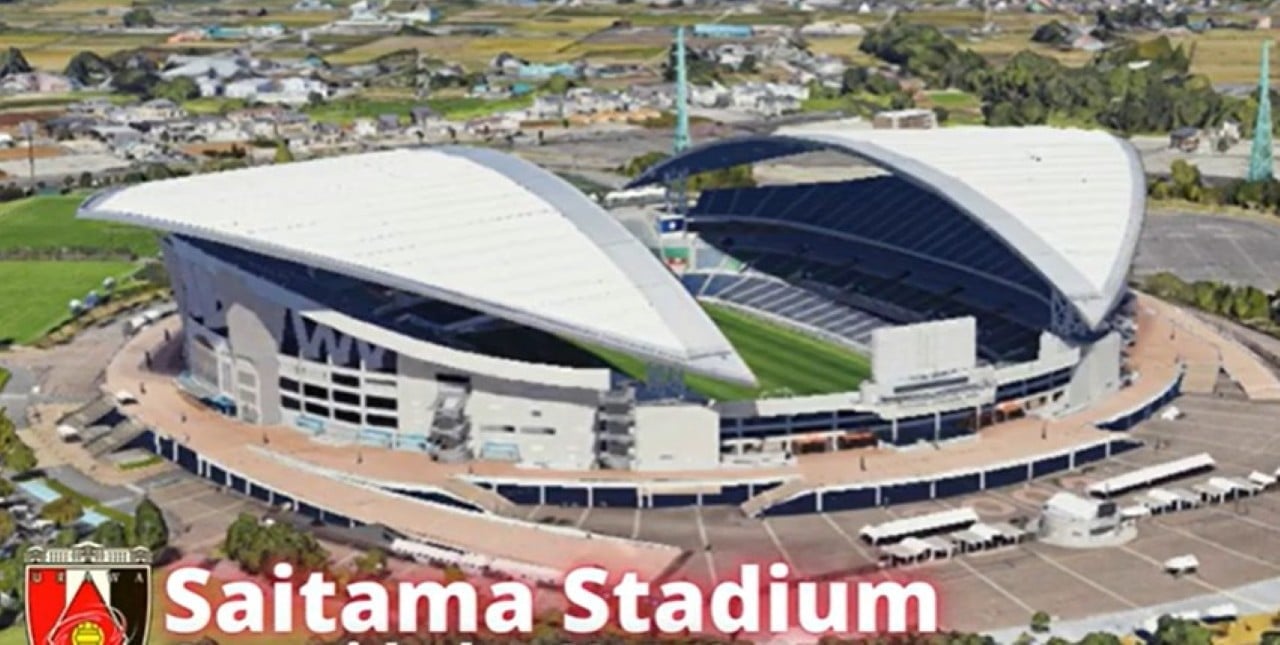
The main motivation for the work is crowd logistics. The Saitama Stadium 2002 has a capacity for 63,700 spectators and is a frequent venue for J-League and Seleção Japonesa and Futebol matches. Atualmente, the flow of tens of thousands of people walking 1.2 km from Urawa-Misono station creates bottlenecks and security challenges. The new station will allow the public to travel much faster and safer.
Traffic studies carried out for the project indicate significant changes in travel patterns:
- Drastic reduction in walking time, falling from 31 minutes (on busy days) to around 22 minutes in total door-to-door travel time.
- Elimination of the need for shuttle buses on smaller event days, reducing road traffic in the region.
- Increased accessibility for people with reduced mobility, who currently face the long distance to the stadium.
- Better distribution of passenger flow, avoiding immediate overcrowding on the platforms at Urawa-Misono station.
The additional convenience should encourage the use of public transport over private cars. On important game days, congestion on the roads leading to the stadium is a chronic problem. By offering a station on the doorstep of the sports complex, authorities hope to reduce the events’ carbon footprint and improve air quality in the region, aligning with broader environmental goals.
Future vision and expansion for Iwatsuki
While the current focus is on extending to the stadium, the project is seen as the first phase of a more ambitious plan. Existe a historic demand to extend the railway line further north towards the area of Iwatsuki, covering an additional distance of approximately 7.5 kilometers. The construction of the station at the stadium is considered a strategic step to enable this future connection.
The extension to Iwatsuki would allow connection with the Tobu Urban Park Line line (formerly Tobu Noda Line), creating a more robust rail network that would connect different parts of the Saitama province without the need to pass through Tóquio. Local officials see this expansion as vital to revitalizing the north of the city and combating population decline in more distant suburban areas.
However, the full extension to Iwatsuki faces greater technical and financial challenges. The current decision to prioritize the stretch to the stadium reflects a pragmatic approach, focusing on a stage that offers a guaranteed return due to the existing demand for sporting events, while studies and financing are prepared for the subsequent phase. The local government remains committed to periodically reviewing demand to justify continued investment.
Urban development and community benefits
The project is not limited to transporting fans. The area around the future station must undergo a reurbanization process. The arrival of a railway station generally attracts commercial and residential investment, increasing the value of adjacent land. The city of Saitama plans to integrate the new infrastructure with parks and leisure areas, creating a more attractive urban environment for local residents.
For residents of Urawa-Misono and surrounding areas, the new station will offer an additional daily transportation option. Embora the focus is on the stadium, the infrastructure will serve the community throughout the year, facilitating travel to work and schools. Improved connectivity is seen as an essential factor in attracting new families to the region, which has developed as a modern residential hub.
Collaboration between the public sector and the railway operator, Saitama Railway Corporation, is fundamental to the success of the project. The company, which is a tertiary sector (public-private) joint venture, has been working to increase operational efficiency and attract passengers during off-peak hours. The new station is a key piece in this long-term sustainable growth strategy.
Challenges and next steps
Despite optimism, the path to 2041 presents challenges. The construction industry in Japão faces chronic labor shortages and rising material costs. Manter budget within 14.4 billion yen will require rigorous management and possibly the adoption of new construction technologies to increase efficiency.
The environmental licensing process and negotiations with landowners along the route are also critical steps. The government will need to ensure that the impact of works on the local community is minimized, particularly in relation to noise and traffic disruptions during the construction phase. Transparency in communication with residents will be vital to maintaining public support for the project.
With the construction order scheduled soon, the project enters a decisive phase. Approval by Ministério of Terras, Infraestrutura, Transporte and Turismo will be the green light to turn the plans into reality. Para fans of Urawa Reds and for the population of



