
Today’s Moon: Unveiling the night sky: the waxing phase illuminates February 26th with 67% visibility

Observation of the night sky reveals a constant spectacle, with the position of Lua in its cycle playing a fundamental role in this celestial scenario. Nesta Thursday, February 26th, the natural satellite of Terra is in the crescent phase, a period of progressive luminosity that captivates eyes and marks the transition between the less illuminated phases and lunar fullness. With a visibility of 67%, the crescent moon offers a unique opportunity to admire its details and follow the evolution of the cycle.
Entender lunar dynamics are crucial for any observer, as each phase has distinct characteristics that influence everything from natural phenomena, such as tides, to the planning of various human activities. The regularity of the lunar cycle has been, throughout history, an essential guide for ancient and modern civilizations, demonstrating the deep connection between the Terra and its faithful celestial companion. Acompanhar Lua changes in the sky is not only an act of contemplation, but also a way of reconnecting with the rhythms of nature and the vastness of the universe that surrounds us, revealing the beauty and precision of cosmic movements.
Celestial movement and lunar dance
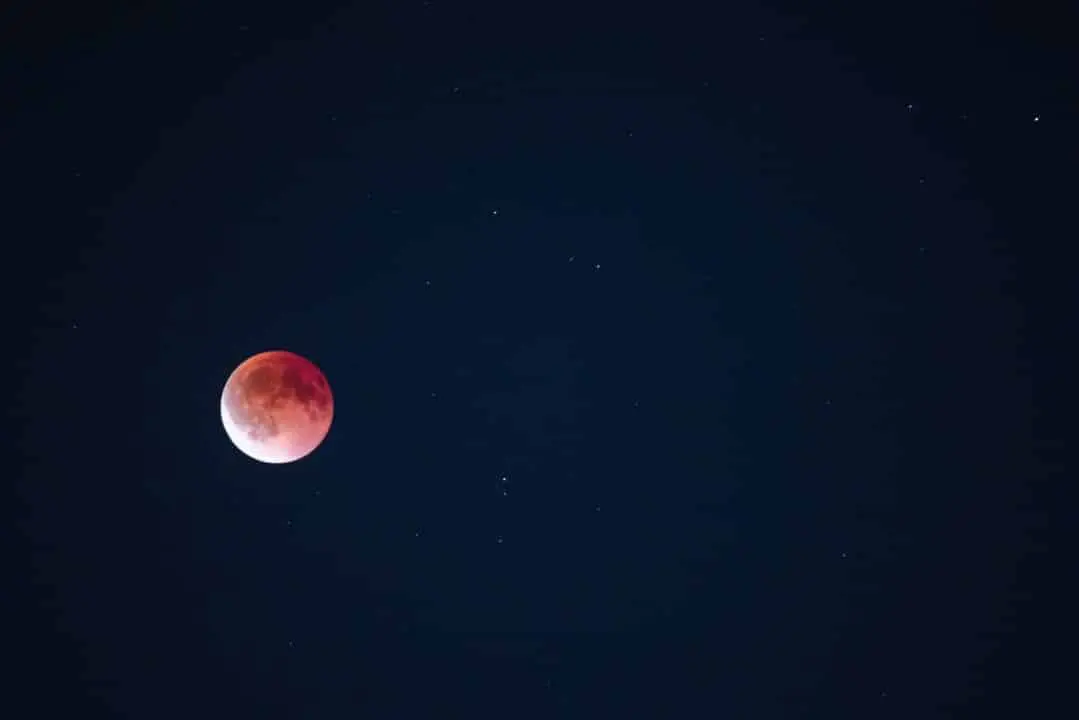
Lua, in its complex orbital journey, performs revolution movements around Terra and, simultaneously, translation movements around Sol, together with our planet. Essa double cosmic dance is the basis for the sequence of lunar phases, which manifest to us as different forms of satellite illumination over approximately 29.5 days, a period known as the synodic cycle. Cada phase represents a distinct portion of the lunar surface that is being illuminated by Sol and visible from Earth’s perspective, constantly changing due to the continuous change of solar angles relative to Lua and Terra.
The variation in light we see in Lua is not due to a change in its own luminosity, but rather to the constantly changing geometry of the Sol-Terra-Moon system. As the satellite orbits Terra, the portion of its face facing us that is illuminated by Sol gradually changes, creating the iconic shapes we see in the night sky. It is the projection of sunlight and the angle of observation of the Earth that define whether we see it as a thin crescent, a complete sphere or an in-between shape, in a meticulously orchestrated celestial ballet that repeats itself with precision every month.
Features of the waxing moon in February
The crescent phase, as the name suggests, is a period of gradual increase in the illuminated portion of Lua, visible from Terra after Lua Nova and before Lua Cheia. Para To observers from the southern hemisphere, it appears with the right portion illuminated, resembling an inverted “C”, while in the northern hemisphere the curve appears to the right, like a “D”. Este is a time of transition and increasing energy, symbolizing the beginning of a new cycle of light and preparation for maximum enlightenment.
Read also: What is the phase of the Moon today? 05/25/2026
Durante the crescent phase, Lua becomes visible in the sky at dusk and remains so until the early hours of the night, gradually ascending the horizon with each passing day. Sua presence marks the progressive filling of your face, making it more prominent and brighter in the sky every day. It is an ideal period for casual observations, as its luminosity is not yet as intense as that of Lua Cheia, allowing craters and seas to be distinguished with greater clarity using simple instruments or even with the naked eye.
Current visibility and phase calendar
Nesta Thursday, February 26th, Lua is in the crescent phase with a visibility of 67%, a figure that reflects the exact portion of its face illuminated by Sol and visible from Terra at a given moment. Essa percentage indicates that the satellite is at an advanced stage of its transition towards fullness, promising an increasingly bright nighttime spectacle in the coming days. Accurate observation of this phase is crucial to understanding the exact dynamics of the lunar cycle and anticipating upcoming changes.
The progression of Lua Crescente does not extend indefinitely. Conforme astronomical calculations and observational data, this phase will continue to develop until March 3, when the satellite will reach the Lua Cheia phase. Lunar fullness will occur precisely at around 8:39 am, marking a culmination in the cycle where the lunar face facing Terra will be fully illuminated by Sol. Este event is always one of the most anticipated on the celestial observation calendar due to its beauty and visual impact.
The month of February 2026 featured a lunar calendar with a well-defined sequence of phases, allowing observers to follow our satellite’s journey from the beginning of the month. The cycle began with a fullness and progressed through the different stages until the current crescent, a testimony to the regularity of celestial phenomena. Essa trajectory is a constant reminder of the precision of celestial movements.
Learn more: What is the phase of the moon today, July 23rd: check the lunar calendar
Segue the record of the February phases, according to astronomical data:
- Moon Cheia: started on February 1, 2026, at 7:10 pm.
- Moon Minguante: started on February 9, 2026, at 9:44 am.
- Moon Nova: started on February 17, 2026, at 9:03 am.
- Moon Crescente: started on February 24, 2026, at 9:28 am.
The transition to the full moon in March
The transition from Lua Crescente to Lua Cheia is one of the most spectacular periods of the lunar cycle, culminating in a night of maximum illumination. Durante this passage, the visible portion of Lua increases continuously, until its face facing Terra is completely bathed in sunlight. Essa progression is a visual reminder of the constant change and renewal in the cosmos.
Lua Cheia is often associated with various phenomena, both natural and cultural, and its arrival marks the midpoint of the synodic cycle, before Lua begins its phase of decreasing light. Observar this transition is to accompany nature in its grandest and most regular manifestation.
The intermediate phases of the cycle
Além of the four main phases — Lua Nova, Crescente, Cheia and Minguante — the lunar cycle also includes four intermediate phases that mark the gradual transitions between them, providing a continuous change in the appearance of Essas additional phases are essential to accurately describe the progression of enlightenment and help understand the fluidity of the approximately 29.5 day cycle. Elas ensure that the lunar journey is an uninterrupted spectacle with smooth transitions.
The intermediate phases encompass Quarto Crescente, which is located between Lua Nova and Crescente, with half of its face illuminated and expanding. Crescente Gibosa follows Crescente and precedes Lua Cheia, with more than half of the face illuminated and still increasing. Minguante Gibosa comes after Lua Cheia and before Minguante, also with more than half illuminated, but decreasing. Finally, Quarto Minguante precedes Lua Nova, marking the last visible illuminated portion of its decline phase.
On the same topic: What is the phase of the Moon this Monday (25/05)? check the lunar calendar in May
Moon’s impact on Earth’s tides
Lua exerts a significant gravitational force on Terra, being the main factor responsible for the phenomenon of ocean tides, which are periodic variations in sea level. Essa gravitational attraction causes a bulge in the waters on the side of Terra closest to Lua, and another bulge on the opposite side, due to inertia, creating the system of high and low tides. Lunar phases play a crucial role in the intensity of tides, directly influencing the height of the waters at different times of the month.
Durante the phases of Lua Nova and Lua Cheia, when Sol, Terra and Lua are practically aligned, the gravitational forces of Esse alignment results in the so-called spring tides, which are characterized by being the highest and lowest of the month, with a maximum amplitude. Já in the phases of Quarto Crescente and Quarto Minguante, the Sol and Esse arrangement generates neap tides, which are less intense and have a reduced amplitude.
Astronomical observation and ancient fascination
Desde the beginnings of humanity, the Lua has been an object of fascination and study, guiding calendars, browsers and rituals in diverse cultures around the world. Observing its phases allowed our ancestors to understand the passage of time and organize their lives according to natural cycles, influencing agriculture, fishing and hunting. Essa deep connection with the satellite is a testimony to the importance of astronomy in the formation of the first civilizations and their development.
Para amateur astronomy enthusiasts, following the phases of Lua offers an accessible gateway to the universe, not requiring sophisticated equipment for a rewarding observation. With simple binoculars or even the naked eye, it is possible to discern details of the lunar surface, such as craters and mountain formations, and appreciate the beauty of its daily changes. Each night, Lua reveals a new perspective, inviting contemplation and deepening knowledge about our solar system and the vast cosmos.
The moon in ancient culture and rituals
In many ancient civilizations, Lua was venerated as a deity or mystical guide, with her cycles associated with fertility, harvests, birth, and even human mood and behavior. Lunar calendars were essential tools for organizing social and religious life, marking important festivals and rituals that celebrated abundance or transition, reflecting the belief in a direct influence of the celestial body on earthly life.
Understand the case: Earth’s shadow will cover 93% of the Moon in a major eclipse visible in Brazil
Essas cultural associations, although based on empirical observations and ancient beliefs, reflect the deep connection that human beings have always had with celestial phenomena. The Lua continues to inspire art, poetry and song, perpetuating its legacy as a universal symbol of change, renewal and mystery, even in the age of science and technology that allows us to understand its mechanisms with greater precision.
Clarifying reflected glare
One of the most fundamental astronomical facts about Lua is that it does not have its own light, unlike Sol and stars, which are luminous celestial bodies. The brightness we perceive from Lua in the night sky is, in fact, a reflection of sunlight that falls on its surface and is subsequently re-emitted towards Terra, acting as a natural mirror in space. Essa characteristic is what allows the existence and variability of lunar phases, a spectacle of light and shadow.
The intensity and area of Lua that we see illuminated depend directly on the position of the satellite in relation to Sol and Terra. Quando to Lua is between Sol and Terra, its illuminated face is facing away from us, resulting in the phase of As it orbits, more of its illuminated face becomes visible from Terra, culminating at Lua Cheia, when Terra is positioned between Sol and Lua, and the face facing us is completely bathed in sunlight.
More news in News (EN)
See more → Samsung releases new system update with new features for Galaxy Watch 4 users
 Digital retail reduces the value of the Galaxy S25 5G smartphone with bank bonuses and device exchange
 Amazon’s wireless CarPlay adapter has a 50% discount and high approval ratings from drivers
 Zach Cregger’s new Resident Evil ignores games and focuses on an unprecedented story with new characters
 Rumor suggests that Nintendo is preparing a special edition of the Switch 2 with a remake of Ocarina of Time
 Apple accelerates production of the iPhone 17e and develops new Air model with dual camera system
 Epic Games platform releases twelve high-budget games at no permanent cost for PC users
 PlayStation 5 Pro price drop accelerates digital retail sales and eliminates global stocks
 New Galaxy Watch 9 firmware appears on server and confirms progress in software development
 Apple’s commemorative project tests cell phone with 1.1 millimeter edge and curved screen for 2027
 New Apple system update optimizes urgent task management for iPhone users
 Leak details hardware of the new portable PlayStation with superior graphics to the Xbox Series S
More news on Mix Vale
- 1Colby Minifie confirms Ashley Barrett’s powers in The Boys season five
- 2Napoli x Milan in Serie A with confirmed lineups and where to watch live
- 3New battery test puts Galaxy S26 Ultra ahead of iPhone 17 Pro Max in global ranking
- 4Research reveals that parents are unaware of how their children use artificial intelligence
- 5Oppo officially launches the Find X9 Ultra worldwide with Hasselblad lenses and robust battery
- 6Tim Cook reveals new iPhone and iPod prototypes in celebration of Apple’s fiftieth anniversary
- 7New edition of foldable smartphone brings gold finish to Winter Games competitors
- 8Android system receives native Gemini Nano 4 integration for offline processing on smartphones
- 9Samsung updates QuickStar module and expands visual control of the panel in the One UI 8.5 interface
- 10Leak reveals Lords of the Fallen and Sword Art Online in April’s PS Plus Essential catalog