

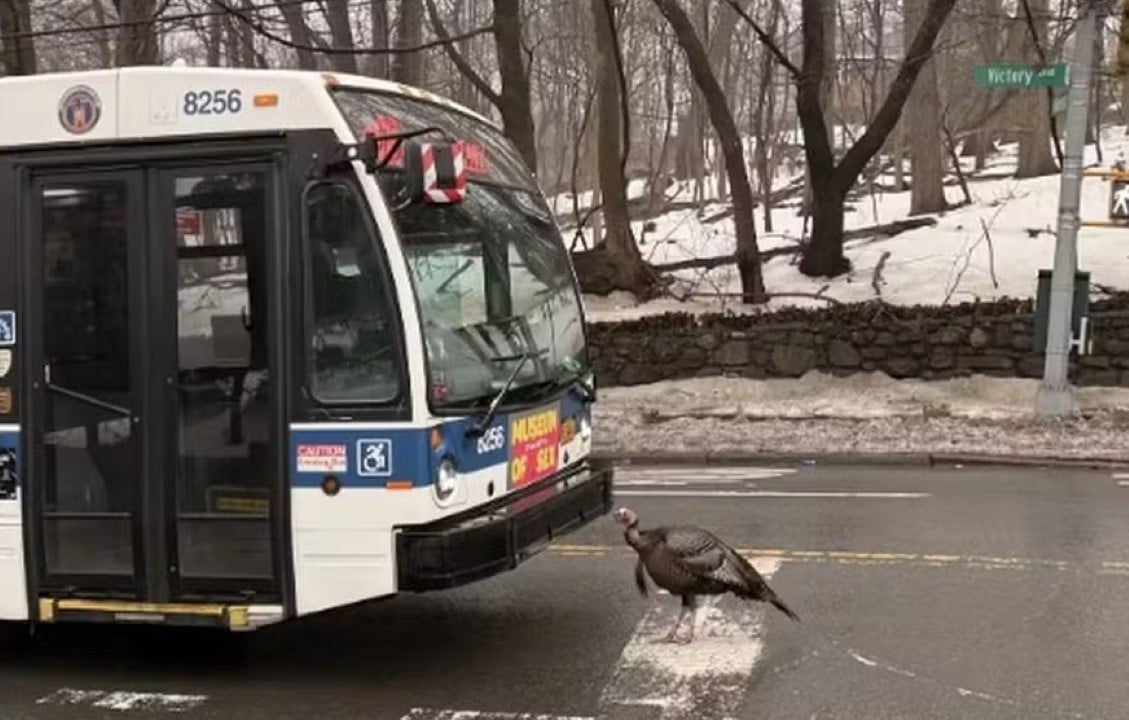
A peculiar scene interrupted the usual flow of Victory Boulevard, at bumper of public transport vehicle. The incident occurred in Costa Leste, an area where interaction between wildlife and the urban environment has become increasingly frequent, requiring patience from drivers and pedestrians traveling through the region.
The vehicle, which followed its regular route through the Silver Lake area, remained immobilized while the animal appeared to examine an advertisement posted on the front of the bus. Testemunhas reported that the bird showed no fear, maintaining an assertive posture that prolonged the standstill and generated curiosity among passengers and passersby.
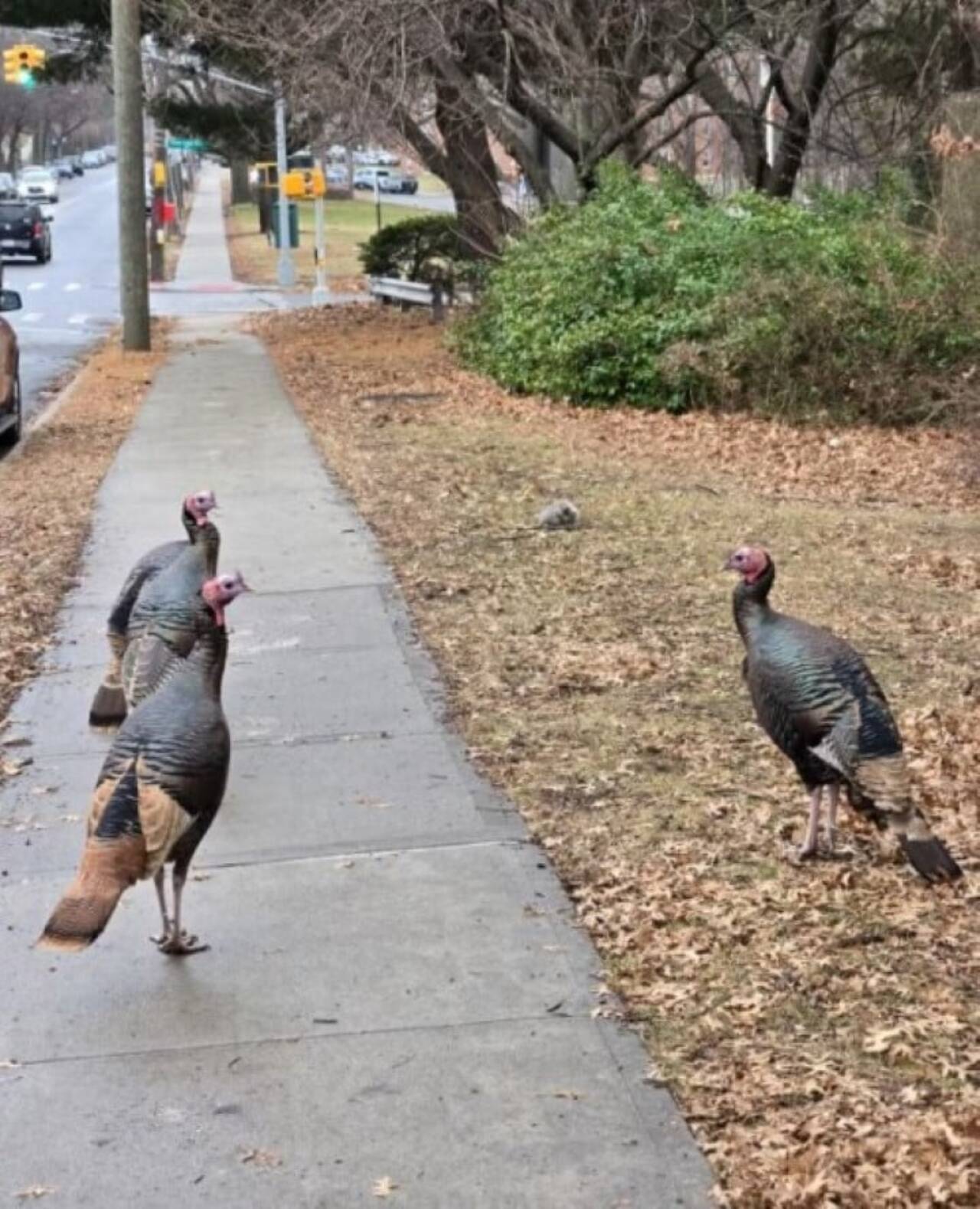
The situation resulted in temporary congestion on the busy road, affecting vehicles following behind and causing delays estimated at five minutes in local traffic. Autoridades traffic personnel monitored the incident remotely, but there was no need for immediate physical intervention, as the turkey ended up moving away naturally, allowing traffic to return to normal shortly afterwards.
Origin and expansion of the avian population
The established presence of wild turkeys in Staten Island dates back to the late 1990s, when a small group of domestic birds were released in the vicinity of a local psychiatric center. What began as an isolated incident turned into an environmental management issue, with population growth turning these birds into common residents of the district. Current Estimativas points to the existence of around 100 individuals spread across neighborhoods like Dongan Hills, adapting surprisingly well to the urban scenario.
Originally introduced without structured ecological planning, turkeys have benefited significantly from the absence of natural predators in the urbanized region. Essa biological advantage allowed their colonies to expand into residential streets and main thoroughfares, integrating into the local ecosystem in unforeseen and often conflictual ways.
Over time, these animals developed territorial habits that directly interfere with the daily lives of residents. Bloqueios of sidewalks and pedestrian chases became common reports. Esforços Initial attempts to control proliferation involved relocation attempts, which achieved limited results due to the birds’ high resilience and ability to adapt to the city’s environment.
Currently, coexistence reflects a precarious balance between wildlife and accelerated urbanization. Relatos frequencies of interactions range from the curious to the problematic, requiring ongoing management strategies on the part of the city’s environmental authorities to mitigate the risks of accidents and disruptions.
Recent incidents and pattern of behavior
This Wednesday’s episode is not an isolated case, but part of a series of occurrences that demonstrate the growing boldness of these animals. Apenas In recent months, several clashes have been recorded, highlighting a pattern of territorial behavior:
* In July 2025, a man was chased by a wild turkey as he tried to get into his car in a residential neighborhood in Staten Island, forcing him to run for cover.
* In January 2026, a group of turkeys blocked a street in Astoria, forcing drivers to detour and causing commercial deliveries to be delayed for nearly ten minutes.
* In February 2026, a UPS delivery man faced two turkeys in an area close to Branford, having to wait for the animals to disperse before continuing his work route.
Official control and monitoring measures
Authorities in Nova York, through Departamento of Parques and Recreação, have implemented population monitoring programs that include annual counts and the use of cameras to track the movements of turkeys in Staten Island. Essas initiatives aim to identify areas of high concentration and apply non-lethal methods to reduce negative interactions with the public, such as installing barriers at critical traffic points.
Furthermore, partnerships with environmental organizations promote educational campaigns for residents. The focus is on teaching coexistence techniques, such as avoiding direct feeding, which encourages the birds’ bold behavior. Relatórios indicate that these actions reduced the number of complaints by 15% in the last year, although challenges persist in the hardest-hit neighborhoods.
Impact on daily life and community reactions
Residents of Staten Island express divided opinions about the presence of birds. Enquanto some appreciate the rural touch that birds bring to the urban district, reporting daily observations that add variety to the local routine, others highlight the practical inconveniences. Danos gardens and traffic disruptions especially affect families with young children and service logistics.
Delivery companies face recurring delays due to blockages caused by turkeys in narrow streets. Profissionais have adjusted routes to minimize encounters, but admit that this increases service time. On the other hand, tourists visiting the area report positive experiences, capturing photos of the animals as an unusual attraction, contributing to Staten Island’s unique appeal as a destination with wildlife elements.
Biological and territorial characteristics
Wild turkeys exhibit intense territorial traits, especially males during mating season when they defend wide areas against perceived intruders. Esse behavior explains confrontations with vehicles, as birds often interpret large objects — or their own reflection on shiny surfaces like bumpers — as threats or rivals.
Their urban adaptation allows them to explore varied sources of food, from natural seeds to human waste, which strengthens their presence in modified environments. Observações show that they move in family groups for greater protection, which can magnify the impact of their actions when they decide to occupy a public road.
Comparison with other urban contexts
In other parts of Nova York, such as Bronx, wild turkeys cause similar disturbances in parks and byways, although on a smaller scale compared to Staten Island. Autoridades record around 20 incidents per month in these regions, mainly involving temporary blockages.
Cities like Boston face similar problems with adapted bird populations, where measures include signage to alert drivers to risk areas. Esses examples help Nova York refine your management strategies. Programas relocation in Massachusetts, which moved birds to remote forests, reduced urban conflicts by 25%, suggesting that similar approaches could be tested locally.
Experiments in Connecticut show that community education decreases intentional eating, which in turn reduces aggressive behavior. Aplicar this locally could mitigate impacts on daily traffic, promoting a more harmonious coexistence between urban development and the remaining fauna.



