


The Argentine star’s successful career, marked by unattainable records and global titles, hides a personal frustration that transcends the four lines. In recent statements that surprised the sporting scene, the current captain of Inter Miami admitted to missing a solid academic base, recognizing that talent with the ball at his feet does not fill all the gaps in adult life. Essa vulnerability, rarely exposed by superstars, brings to light a crucial debate about the comprehensive preparation of high-performance athletes, who often sacrifice intellectual development in favor of an early sporting career.
The star, who is preparing for the challenges of the 2026 Mundial cycle, revealed that he feels unprepared in situations that require more than sporting intuition. The language barrier and lack of formal knowledge became tangible obstacles in negotiations, corporate events and social interactions outside the locker room bubble, especially after his move to América from Norte.
Communication and cultural adaptation challenges
The transfer to Estados Unidos football represented much more than a geographical change for the player’s family. Daily life at Miami imposed the immediate need to master the English language, a skill that the athlete admits he did not develop during his formative years or during his long stay at Europa. Sua difficulty communicating fluently in a global language limits his direct participation in strategic decisions and keeps him dependent on interpreters and advisors, creating a layer of isolation that he now classifies as uncomfortable.
In the current sporting scenario, where athletes are multinational brands, career management requires knowledge that touches on economics, marketing and public relations. The Argentine’s confession highlights how the lack of an educational base generates a feeling of impotence in the face of complex contracts and brand expansion strategies. Mesmo Surrounded by the best professionals on the market, the lack of an understanding of certain business dynamics is felt as a failure in his construction as an adult and independent individual.
This scenario serves as a practical example for the discussion about youth training in football clubs. Enquanto academies invest millions in physical and tactical improvement, the educational part is often treated as secondary. The Argentine team captain’s report reinforces that an athlete’s longevity and quality of life after retirement depend directly on their ability to reinvent themselves and act in other spheres of society, something that formal education facilitates immensely.
Absolute priority in the formation of heirs
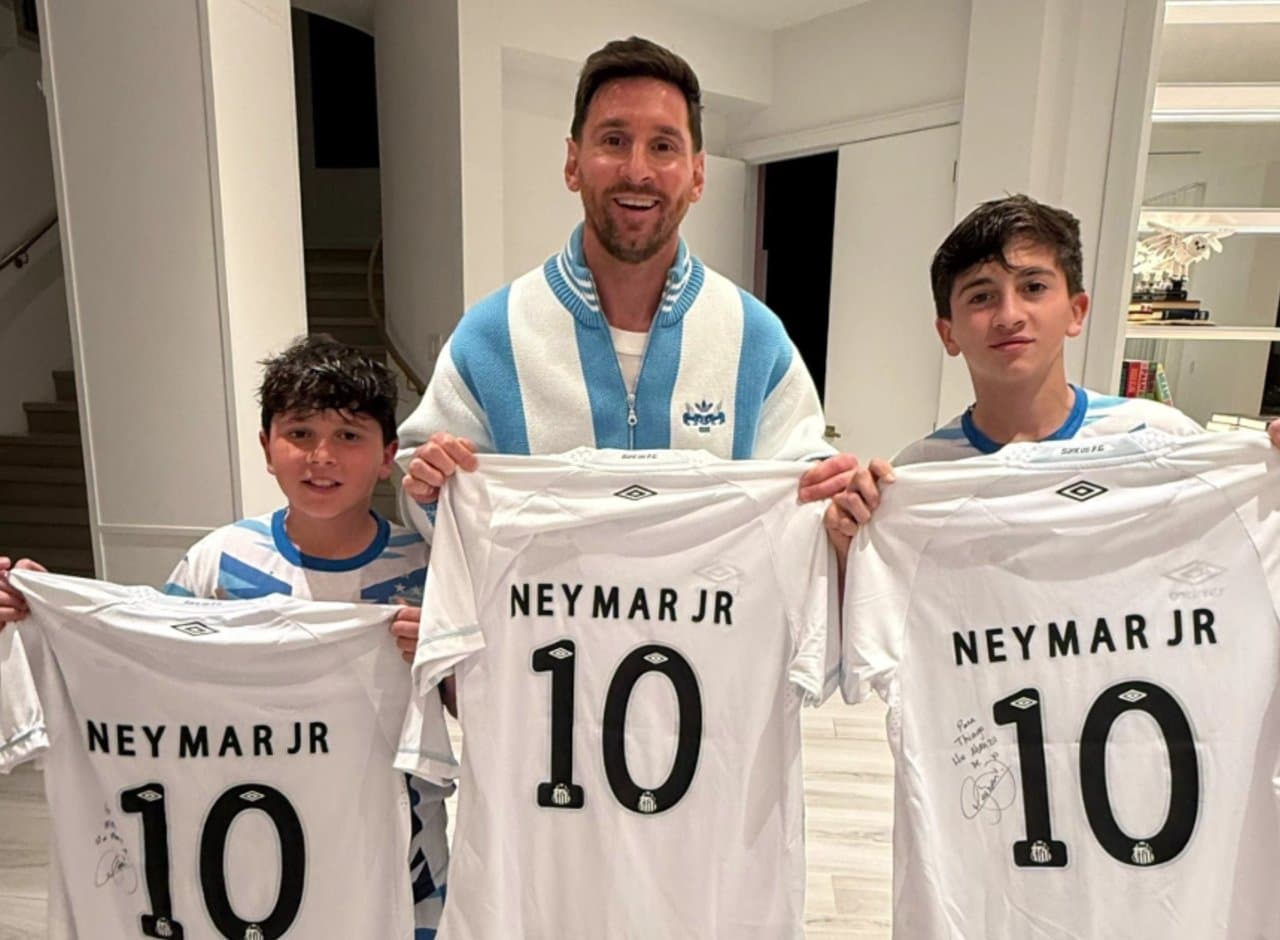
Faced with his own limitations, the player’s attitude towards his three children — Thiago, Mateo and Ciro — underwent a radical transformation. The focus, which could naturally lean towards sporting succession, turned with full force to academic excellence. The determination is that children do not repeat the cycle of school neglect that marked their father’s youth, ensuring that they have life options that are independent of sporting talent.
The family’s routine in the Estados Unidos prioritizes school activities and language learning above football training. The objective is clear: to offer young people the intellectual freedom that their father feels was taken away from him by the demands of high-level sport since childhood. The vision is that football should be a choice, and not the only route to social advancement or personal fulfillment, allowing them to move through different environments with the security that knowledge provides.
The role of ambassador in Copa of Mundo
The proximity of Copa to Mundo, which will be jointly hosted by Estados Unidos, México and Canadá, puts the player in front of a responsibility that transcends technical performance. Aos 38 years old, his presence at the tournament is expected not only as a leader on the field, but as the global face of the event. Essa diplomatic function requires oratory skills, cultural understanding and political articulation that further highlight the importance of intellectual preparation.
To act as a true sports ambassador for América, it is necessary to engage with different audiences, from investors and sponsors to the region’s diverse fan base. Linguistic limitations and educational insecurity become barriers to the full exercise of this leadership off the field. The effort to overcome these difficulties at this stage of his career demonstrates admirable resilience, but also serves as a case study on the demands of modern sport.
The reality of the market and post-career life
The concern shown by the Argentine idol echoes a harsh reality of the job market, which applies to both athletes and ordinary workers. In an increasingly competitive world, qualification is the difference that allows social mobility and financial security. Dados indicate that remuneration and career opportunities are intrinsically linked to the level of education, a rule that, although there are exceptions in elite sport, applies to the absolute majority of the population.
- A professional athlete’s career is short, lasting on average 10 to 15 years.
- The lack of planning for the “second half” of life leaves many former players in financial difficulties.
- The development of cognitive skills helps preserve accumulated assets.
- Formal education offers tools to deal with psychological pressure and fame management.
When looking to the future, the player understands that his image will be his main source of income and influence in the coming decades. Sem the protection of a club or the training routine, it will be your ability to articulate and your worldview that will dictate your success as a businessman or public figure. Recognizing that you “don’t know” is the first step towards learning, and this intellectual humility could be, in the long run, one of your greatest achievements off the field.



