
Adventurous version of the Volvo EX30 overcomes snow challenge and highlights all-wheel drive in test in Japan By Luís Henrique Costa
4 min read
 |
The mountains of the province of Niigata, in the Japão, served as the stage for a rigorous demonstration of technical capacity and automotive resistance in adverse conditions. The scenario, marked by low temperatures and accumulation of snow, was chosen to evaluate the performance of one of the most recent launches in the electric vehicle industry aimed at mixed use. The test put Swedish engineering to the test in an environment that demands precision, control and strength, challenging common perceptions about the fragility of battery-powered compact utility vehicles in difficult terrain.
The protagonist of this evaluation was the Volvo EX30 Cross Country Ultra Twin Motor Performance, a variant that distinguishes itself from the conventional model by structural modifications designed for adventure. The journey began at Estação Joetsu Myoko, following winding routes towards Monte Kurohime. Durante the journey, the thermometers registered around 3°C, creating an icy asphalt surface interspersed with patches of snow, ideal conditions for testing the grip and response of the electronic stability systems.
Mechanical adaptations and low temperature performance
The main technical difference that separates this adventurous version from the standard urban model is the height from the ground. The automaker’s engineering team applied an increase of 20 millimeters to the suspension, a change that, although it seems subtle in the numbers, transforms the vehicle’s ability to overcome obstacles and face uneven surfaces without compromising the lower part of the chassis. Essa feature proved to be essential when driving on mountainous roads, where the accumulation of ice and debris is frequent.
The propulsion system, made up of two electric motors — one on each axle — guarantees permanent and intelligent all-wheel drive. In situations of low grip, such as those found in the shaded curves of Niigata, the distribution of torque between the wheels occurs almost instantly. Essa immediate response, typical of high-performance electric motors, provides a heightened sense of safety, allowing the driver to maintain directional control even when the ground friction coefficient varies sharply.
In addition to mechanics, thermal comfort and cabin insulation were highlights. Vehicle energy management in cold climates is one of the biggest challenges for electric cars, but the model demonstrated efficiency by maintaining a pleasant internal temperature without excessively draining the batteries, thanks to an optimized heating system. The recalibrated suspension also helped to filter imperfections in the frozen asphalt, preventing excessive vibrations from reaching the occupants.
Design inspired by Swedish geography
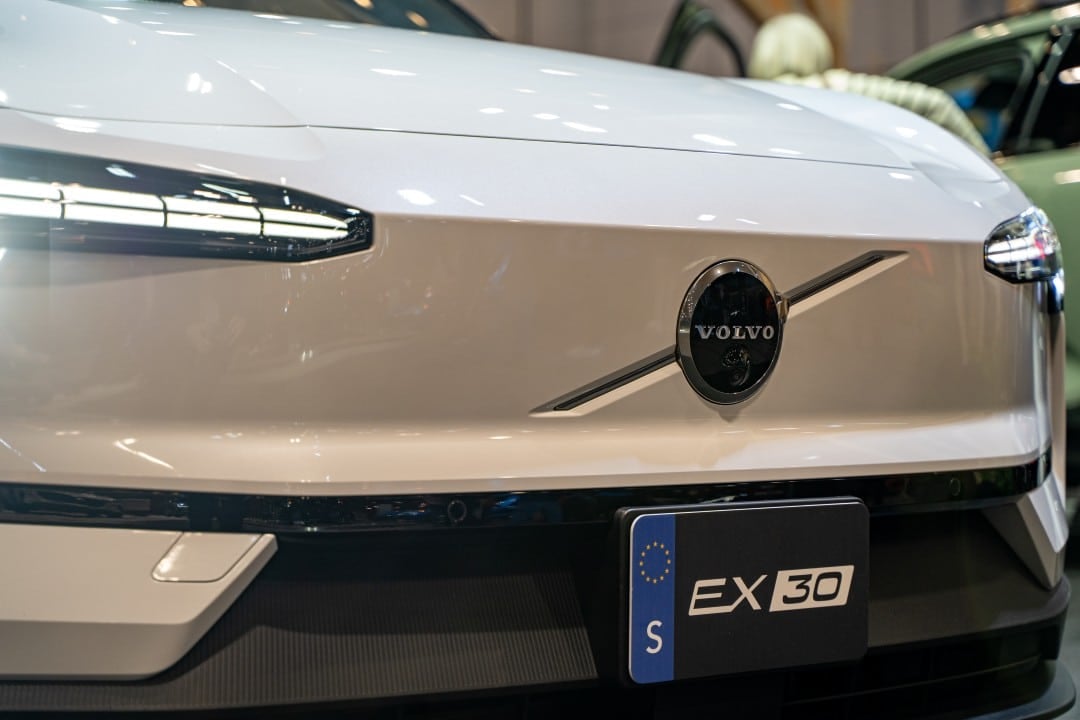
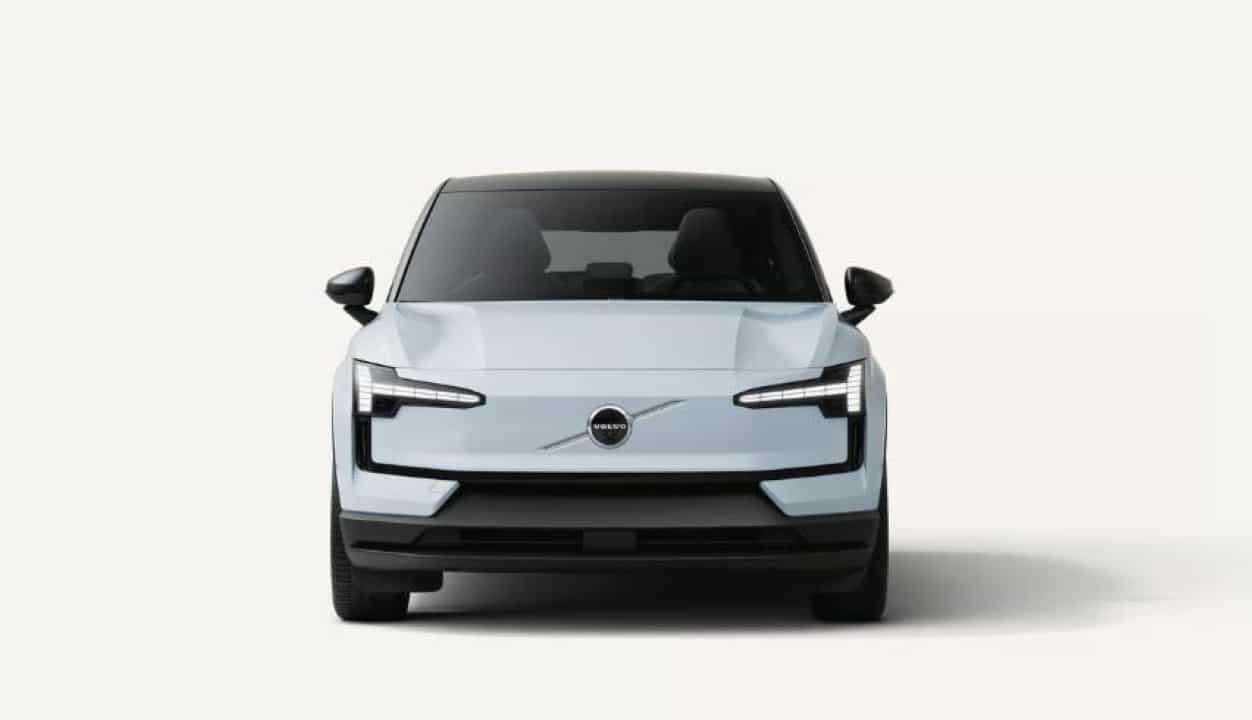
Visually, the Cross Country version adopts an aesthetic that communicates robustness and preparation for the outdoor environment. The Scandinavian minimalism, the manufacturer’s trademark, was preserved, but gained functional elements that reinforce the SUV’s adventurous identity. Painéis in matte black were fitted to the front and rear sections as well as the wheel arch extensions. Essas additions function as protective shields against scratches and stones, common on weekend getaways to preserved nature sites.
A design detail caught our attention due to its sophistication and homage to the brand’s origins. The plastic moldings on the front bumper feature engravings that reproduce the topographic map of the Kebnekaise mountains, the highest geographical point in Suécia. The inscription includes the altitude of 2,103 meters and the exact coordinates of the location. The Essa reference creates an interesting symbolic parallel with the Japão test site, the Monte Kurohime, reinforcing the model’s global connection to high-altitude and exploration environments.
Dynamic behavior and versatility
The driving experience revealed a remarkable balance between the agility required for urban traffic and the stability required on highways and light trails. The positioning of the batteries on the floor keeps the center of gravity low, which compensates for the high suspension height and prevents excessive body sway in tight curves. The vigorous acceleration allowed for safe overtaking and agile restarts on inclines, essential characteristics for those traveling in mountainous regions.
The vehicle’s set of attributes includes raised suspension for overcoming obstacles, all-wheel drive guaranteed by engines on the front and rear axles, and an exclusive finish with specific wheels for mixed use. Essa combination results in a car that not only looks robust, but delivers real functionality. Onboard electronics act as an invisible copilot, managing driving force to prevent skidding in transition zones between dry asphalt and residual snow.
At the end of the journey, it became clear that electrification imposes no limits on versatility of use. The test in Niigata proved that the combination of a well-designed chassis with the instant torque of electric motors can surpass, in comfort and control, many equivalent combustion vehicles. The model is positioned as a tool adapted to the modern lifestyle, meeting both the daily needs of the city and the desire to explore new horizons in nature.











