

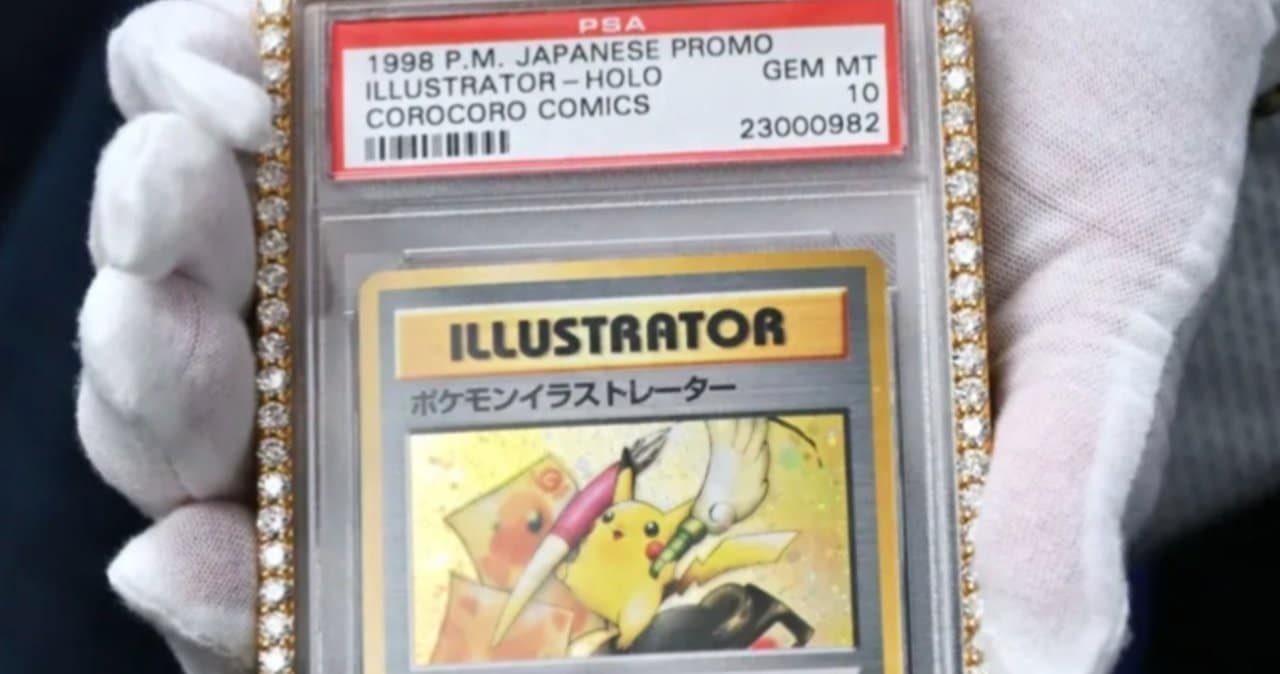
The global collectibles market witnessed a historic moment this Monday, February 16, with the completion of a sale that redefines the value parameters for pop culture items. The auction house Goldin, internationally recognized for selling sporting goods and memorabilia, officially auctioned off a unit of the “Pikachu The amount, which exceeds the 2.5 billion yen mark in direct conversion, establishes a new ceiling for transactions involving Trading Card Games (TCG).
The deal not only surpasses all previous records, but also elevates the status of these objects to the category of luxury financial assets, comparable to classical works of art and precious stones. The event attracted the attention of institutional investors and private collectors, consolidating the trend of exponential appreciation of rare and well-preserved nostalgic items.
Financial sector analysts note that the liquidity demonstrated in this auction reflects a change in the profile of buyers, who now see these pieces as a safe store of value against the volatility of traditional markets. The extreme rarity of the item, combined with the certified provenance, created a scenario of fierce competition that culminated in the multimillion-dollar final value.
The determining factors for the figure achieved include: – The absolute scarcity of the product on the global market; – The state of conservation attested by graduation companies; – The historical relevance of illustration to the media franchise.
Comparison with previous records and appreciation
The transaction carried out in 2026 represents a significant quantitative leap in relation to the record that has been in force since 2021. Naquele year, influencer and businessman The purchase of Paul was widely publicized and was recorded by Guinness World Records as the most expensive private sale in history for an Pokémon card.
Ao analisar os dados das duas negociações, observa-se uma valorização superior a 300% em um intervalo de apenas cinco anos. The nominal difference of more than 11 million dollars between the two events illustrates an aggressive growth curve, rarely seen in conventional commodities or traditional stock indices. Esse performance reinforces the thesis that “Blue Chip” collectibles — a term used to describe items of high reliability and value — operate in their own supply and demand dynamics.
Experts suggest that the publicity generated by the 2021 purchase helped educate the market about the existence and historical importance of the “Illustrator” card. With the maturation of the sector and the entry of investment funds specialized in alternative assets, the capital available for this type of acquisition increased considerably, allowing prices to reach previously unimaginable levels.
History and exclusive origin of the letter
The astronomical value attributed to “Pikachu Illustrator” is directly linked to its unique origin and restricted distribution method. Diferente of the common cards, which were sold in booster packs or themed decks in toy stores, this copy was never sold directly to the public. Sua’s existence is the result of an illustration competition promoted by the Japanese magazine CoroCoro Comic in 1998.
The competition challenged readers to submit their own drawings of Pokémon characters. The winners, selected for artistic quality and creativity, received the letter as a trophy of recognition. The illustration printed on the card is by Atsuko Nishida, the original graphic designer responsible for the visual creation of Pikachu. The artwork depicts the mascot holding drawing utensils, such as a brush and quill, symbolizing the nature of the contest.
Historical records from the time indicate that only 39 copies were officially distributed to the winners of the three editions of the contest held by the magazine. Anos later, the appearance of two additional units brought the total number of known examples to approximately 41 worldwide. Essa Extreme scarcity makes owning one of these cards an almost impossible feat, even for the wealthiest collectors on the planet.
Another detail that gives the item exclusivity is the text “Illustrator” at the top of the card, replacing the traditional classification of “Trainer”. Além Furthermore, the fountain pen symbol in the bottom right corner is unique to this edition, serving as a mark of immediate visual authenticity for connoisseurs of the franchise.
Strict technical evaluation criteria
For a piece of printed cardboard to reach millions of dollars, the physical condition of the object must be impeccable. The collectibles market operates based on rigorous grading systems, driven by third-party companies such as Professional Sports Authenticator (PSA) and Beckett Grading Services (BGS). Essas companies use magnification equipment and special lights to detect tiny imperfections.
The grade assigned, which generally ranges from 1 to 10, is the final value multiplier. A card in “Gem Mint 10” condition can be worth ten or twenty times more than an identical copy in “Mint 9” condition. In the case of the Goldin auction, certification of the letter’s integrity was essential to provide assurance to the anonymous buyer that the asset will maintain its physical characteristics over time.
Experts analyze four main pillars during technical graduation:
– Centralização: The image must be perfectly aligned in relation to the edges, without deviations up, down or sides.
– Cantos: The four corners of the letter must be sharp and free from any wear or “bleaching” of the paper.
– Bordas: The sides must be smooth, without industrial cutting burrs or dents resulting from handling.
– Superfície: The hologram and print must not contain scratches, smudges, fingerprint marks or discoloration.
Impact on the tangible assets market
The record sale of Pikachu Illustrator is not an isolated event, but rather a reflection of a macroeconomic transformation in the behavior of high net worth investors. The search for portfolio diversification has directed capital flows towards so-called “passion assets” or tangible investments. Essa category, which traditionally encompassed rare wines, luxury watches and classic cars, now definitively embraces pop culture items and video games.
Digital auction platforms play a crucial role in this new market configuration. The technology allows buyers from any continent to participate in disputes in real time, with transparency and security. The traceability guaranteed by graduation companies eliminates the risk of counterfeiting, one of the biggest obstacles to the entry of institutional money in the past.
With the consolidation of this new price level in 2026, a ripple effect is expected across the entire TCG segment. Outros rare items, both from the Pokémon franchise and games such as Magic: The Gathering and Yu-Gi-Oh!, may undergo value corrections in the short term. The visibility brought by global headlines attracts new interested parties, increasing liquidity and market depth for collectibles of all price ranges.



