

Ford Motor Company issued an official statement this Thursday, February 26, 2026, confirming a large-scale security operation covering millions of cars in circulation in the United States. The automaker identified a critical technical inconsistency in the trailer management system, specifically in the software that controls the integrated brake module. Essa operational failure can result in the sudden interruption of braking and lighting signals on coupled trailers, substantially increasing the risk of incidents on the roads.
The technical problem affects a wide range of models manufactured between 2021 and 2026, totaling approximately 4.3 million units that require immediate corrective intervention. The company clarified that the definitive solution will be implemented through a remote software update, eliminating the need for physical attendance at dealerships for the vast majority of owners. Official notifications will begin to be sent in the coming weeks, instructing drivers on whether to schedule or automatically accept a digital repair.
Internal investigations showed that the failure occurs predominantly during the vehicle’s ignition cycle, when the control module may not establish correct communication with the car’s central system. Administração Nacional of Segurança in Até To date, Ford has recorded 407 incident reports related to the defect, although there is no confirmation of accidents with victims or bodily injuries resulting from this specific failure.
The operation covers some of the brand’s most popular vehicles, including the F-Series pickup truck line and large SUVs, fundamental to the Estados Unidos automotive market. The automaker’s engineering estimate indicates that, despite the large volume of recalled cars, only around 1% of the units have the active defect. Como immediate preventive measure, the recommendation is that owners carry out manual checks of electrical connections whenever using trailers before updating the system.
Technical details of the inconsistency
The root of the problem lies in the intermittent inability of Módulo Integrado and Reboque to maintain a stable communication protocol via the CAN-bus network immediately after engine start. Quando this connection fails, the system is unable to transmit the driver’s commands to the trailer’s brake lights and direction indicators. In specific situations, the trailer’s own assisted braking system may also be compromised, requiring greater stopping distance and increased attention from the driver.
Engineers at Ford detected that the vulnerability is more frequent in vehicles equipped with higher specification modules, where the complexity of data exchange is greater. Proprietários reported that, in some cases, an error message is displayed on the instrument panel when connecting the trailer, warning of the communication failure. The fix developed by the software team adjusts the response time and digital “handshake” protocol between modules, ensuring that the connection is automatically reestablished in the event of an initial failure.
List of models and years of manufacture
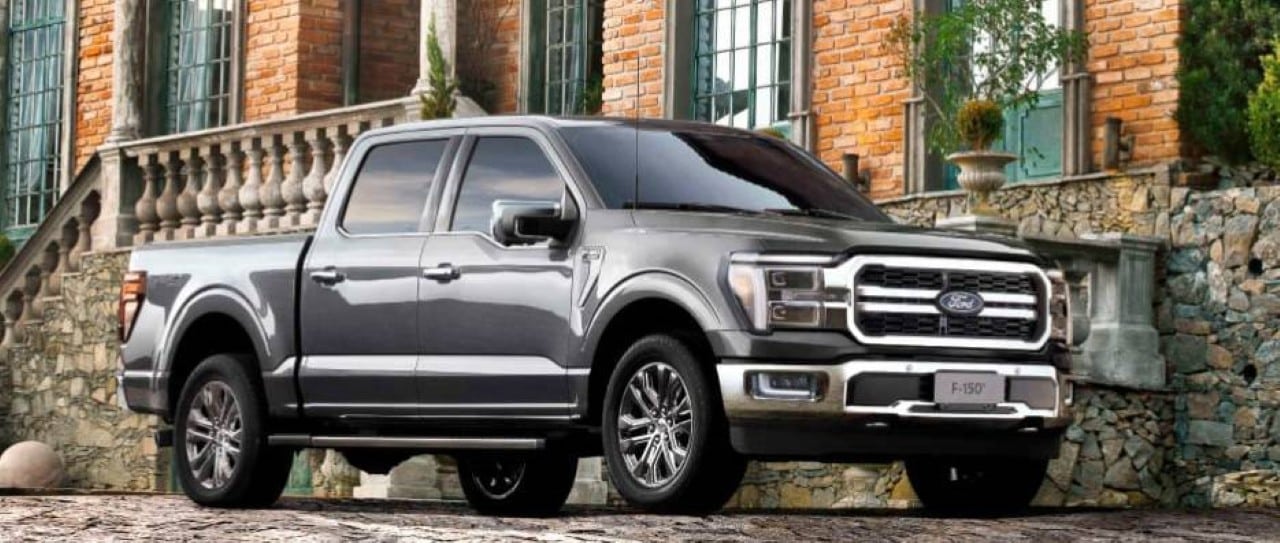
The scope of this safety campaign reflects the automaker’s shared platform strategy, affecting several market segments. The Ford F-150 pickup truck, the brand’s best-selling vehicle, leads the list with units produced between 2021 and 2026, totaling more than 2.2 million impacted copies. The heavy-duty F-250 Super Duty line, manufactured from 2022 to 2026, is also included, representing approximately 1.1 million vehicles that are frequently used for towing duties.
In addition to traditional pickup trucks, the campaign includes luxury SUVs and commercial utility vehicles. The Ford Expedition and its equivalent in the luxury division, the Lincoln Navigator, both with model years from 2022 to 2026, number hundreds of thousands of units in the recall. The compact utility vehicle Maverick, produced in the same period, contributed 412 thousand units, demonstrating that the defective module was widely used in different vehicle architectures.
The list is completed with the Ranger pickup truck, models 2024 to 2026, and the 2026 E-Transit electric van. Embora the concentration of vehicles is in the Estados Unidos, units exported to other markets may receive specific notifications according to local regulations.
Update and patch logistics
The repair strategy adopted by Ford highlights the industry’s transition to software-defined vehicles. From March 2026, owners will begin to receive formal notifications. Para vehicles equipped with onboard connectivity, the update will be sent “over-the-air” (OTA), allowing the repair to be carried out in the owner’s garage, without any physical mechanical intervention. The process is similar to updating a smartphone and takes about 30 minutes to complete.
For vehicles that do not have an active internet connection or owners who prefer in-person service, the dealership network will carry out the service free of charge. Ford is also mobilizing mobile service units in strategic regions to serve commercial fleets and customers in rural areas, minimizing vehicle downtime. The company emphasizes that any previous repairs paid by the owner related to this specific defect will be fully refunded.
Impact on commercial and rural operations
The nature of the vehicles involved in this recall suggests a potential impact on economic activities, as models such as the Super Duty and E-Transit are essential work tools. Setores such as construction, agriculture and short-haul logistics depend on safe towing capacity for their daily operations. Failure of trailer lighting and braking systems can legally prevent these vehicles from circulating, causing delays in construction and delivery schedules.
Fleet geolocation data indicates that a significant portion of affected models operate in rural and suburban areas, where the use of trailers is an everyday practice. Diante In addition, fleet management experts recommend that companies perform rigorous manual inspections before each departure until the software update is confirmed. In critical cases, the use of temporary adapters or replacement vehicles may be necessary to safely ensure business continuity.
Historical context and industry trends
This episode is not isolated in the recent trajectory of the automotive industry, which faces increasing challenges with the digitalization of automobiles. Ford previously ran similar campaigns in 2024 to fix electronic control modules, demonstrating that remote updates have become the norm for resolving non-mechanical issues. NHTSA has stepped up its monitoring of software failures since 2020, recognizing that the complexity of embedded codes introduces new types of road safety risks.
Comparatively, other major automakers such as Toyota and General Motors also reported challenges with software integration in 2025, signaling a sectoral trend. The transition to electric and connected vehicles amplifies this dependence on robust digital systems. In response, Ford has invested heavily in automated testing and virtual validation infrastructure to reduce the incidence of programming errors in future releases.
Safety protocols for drivers
Until the update is applied, the responsibility for the safety check lies with the drivers. It is imperative that, when coupling a trailer, the driver requests assistance to visually check whether the brake lights, flashlights and turn signals are responding to the towing vehicle’s commands. Testes in a safe location, away from heavy traffic, are recommended to confirm the actuation of the trailer’s electric brakes.
- Check the recall status by entering the chassis on the manufacturer’s portal.
- Keep the FordPass app updated to receive real-time alerts.
- Avoid making unauthorized modifications to the electrical wiring of the hitch.
- Report any operating anomaly immediately to the dealer.
Adherence to these preventive practices is essential to mitigate risks until the campaign is concluded. Ford maintains customer service channels operating 24 hours a day to answer questions about the update procedure and provide emergency technical support.
Evolution of repair technologies
The ability to correct critical safety flaws without physically moving the vehicle represents a significant logistical advance. Desde 2022, Ford leads the implementation of large-scale OTA updates, which reduces operational costs and increases the recall compliance rate. The technology allows the automaker to act proactively, identifying failure patterns through telemetry and sending corrections before defects become widespread.
However, the success of this modality depends on the connectivity infrastructure. Desafios persist in areas with limited cellular network coverage, requiring hybrid solutions that combine digital with physical support. Para the future, the industry is moving towards redundant software architectures, where safety-critical systems have independent backups, guaranteeing operation even in the event of a main module failure.
Validation of these new systems is an expanding field, with increasing investments in artificial intelligence to predict anomalous software behavior. Ford plans to integrate more advanced predictive diagnostics into 2027 models, aiming to anticipate maintenance needs and avoid massive recall campaigns like the current one. Security increasingly depends as much on lines of code as on mechanical components.



