
Capacitor failure forces BYD to recall almost 90,000 units of the Qin Plus DM-i hybrid in China


Administração Estatal of Regulação of Mercado of China announced a safety campaign involving one of the world’s largest new energy vehicle manufacturers. The measure directly affects thousands of owners due to a vulnerability identified in energy management systems, which requires immediate intervention to guarantee the physical integrity of occupants and road safety. The preventive action highlights the rigor of Chinese authorities in relation to quality standards in the automotive industry, which is growing exponentially in the Asian country.
The focus of this call is the Qin Plus DM-i plug-in hybrid model, one of the brand’s flagships in terms of sales volume. According to the official statement, around 87,762 units are included in the call. The affected vehicles were manufactured over a specific period spanning nearly three years of production, extending from February 4, 2021, to December 26, 2023. The range of dates suggests that the failure may be related to a specific batch of components used on the assembly line during this time frame.
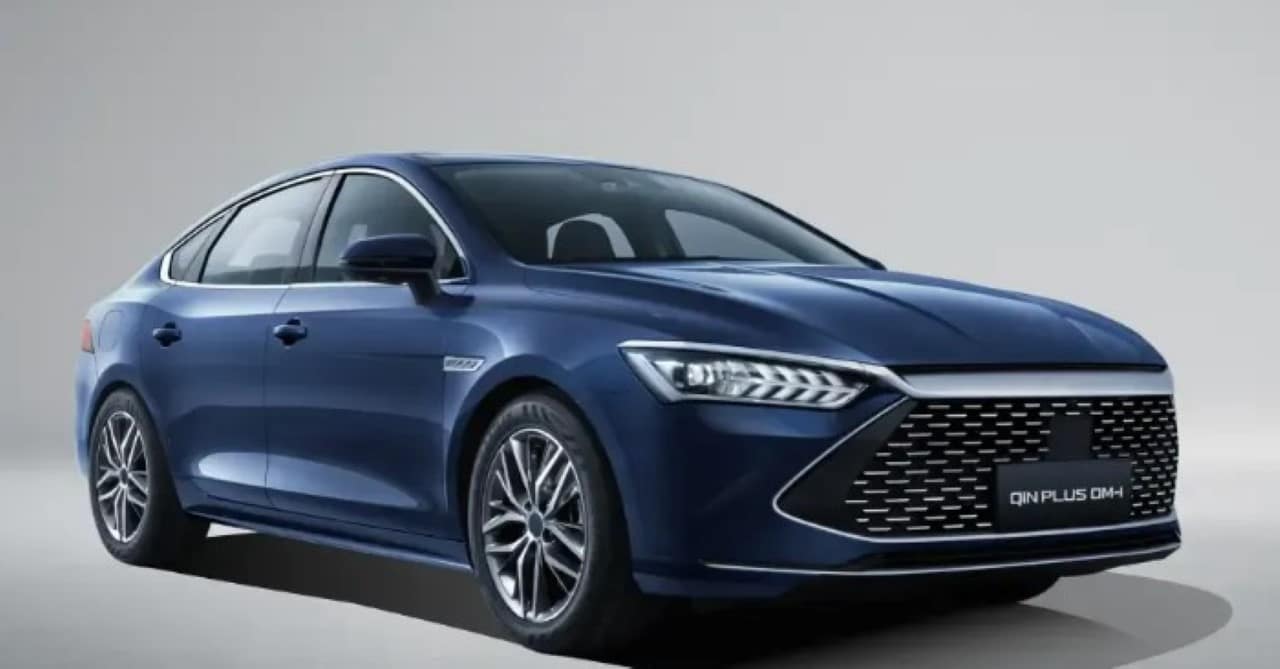
The recall and repair initiative came from the automaker itself in cooperation with the regulatory body, following the consumer protection protocols in force at China. The company has already started the procedures to notify the owners of the listed vehicles, establishing a schedule for applying the necessary corrections. The procedure aims to eliminate any potential risk before serious incidents can occur, demonstrating a proactive stance in the face of complex technical challenges involving vehicle electrification.
This episode occurs at a time when the global automotive industry is closely watching the movements of Chinese manufacturers, who are leading the energy transition. The ability to respond quickly to manufacturing problems is considered a vital indicator of industrial maturity. By calling the recall, the company reaffirms its commitment to transparency and safety, fundamental elements for maintaining consumer trust in a highly competitive and technologically advanced market.
Risks associated with the battery controller
Technical investigation revealed that the source of the problem lies in the power battery controller, a critical component for the safe operation of electrified vehicles. Especificamente, the possibility of microcracks in the capacitors on the circuit board of this controller was detected. Essas cracks, although microscopic, can expand over time due to continuous use of the vehicle and the natural vibrations of travel.
The imminent danger associated with this structural failure in the capacitor is instability in the system’s electrical voltage. Caso microcracks develop, they can cause short circuits or localized overheating. In extreme scenarios, this condition can lead to a thermal runaway event, where the heat generated exceeds the system’s dissipation capacity, resulting in fire risks in the battery compartment. Electrical safety is, therefore, the central point of this corrective action.
Expert engineers point out that thermal and electrical management is at the heart of safety in hybrid and electric cars. A defective capacitor not only compromises the efficiency of charging or energy delivery, but also puts the entire safety architecture of the vehicle into question. Therefore, replacing or repairing these components is not just a recommendation, but an urgent necessity to avoid accidents that could have severe consequences.
Correction strategy via remote technology
To solve the problem, the manufacturer opted for a hybrid approach that uses cutting-edge technology. The first step of the recall involves an “Over-the-Air” (OTA) software update. Isso means that owners don’t necessarily need to take the car to a dealership immediately for initial diagnosis. The new software will be able to monitor the behavior of capacitors and identify anomalies in real time, offering an extra layer of electronic surveillance.
If the updated system detects that the battery controller presents risks or operational failures, a warning light will be activated on the vehicle’s dashboard, instructing the driver to seek technical assistance. In Nessas situations, the manufacturer will physically replace the battery controller completely free of charge. Essa methodology reduces inconvenience for owners whose vehicles do not have the physical defect, while ensuring immediate exchange for compromised units.
Using OTA updates to manage recalls is a growing trend in the smart vehicle industry. Essa technology allows automakers to act quickly, rolling out software fixes to thousands of cars simultaneously. However, as demonstrated in this case, the digital solution often serves as a diagnostic tool to determine the need for mechanical intervention, combining the convenience of software with the robustness of hardware repair.
Market impact and brand reputation
Despite the significant number of almost 90 thousand vehicles, the recall represents a small fraction of BYD’s total sales volume, which recently surpassed the mark of 500 thousand units sold in a single month. The Qin Plus DM-i model, in particular, is one of the most popular hybrid sedans on the Chinese market, known for its fuel efficiency and competitive price. The quick action to correct the defect is seen by analysts as an essential maneuver to preserve the model’s reputation.
Transparency in conducting recalls is valued by consumers, especially in the new energy segment, where the technology is still perceived as new by the public. Problemas with batteries are particularly sensitive, given the historical fear of fires in electric vehicles. By addressing the problem head on and offering an advanced technological solution, the company seeks to mitigate damage to the image and reinforce the perception of quality of its products.
The electric and hybrid vehicle market in China is the largest in the world, and competition is fierce. Manter high security standards are crucial not only for the protection of users, but for the long-term sustainability of the business. Este recall serves as a reminder that even with rapidly advancing technology and mass production, rigorous quality control over sensitive electronic components remains a fundamental pillar of the modern automotive industry.



