


The geopolitical landscape of the Oriente Médio underwent a seismic change on the morning of this Sunday, March 1st, with the state confirmation of the death of the highest authority of the República Islâmica. Comunicados officials from Teerã attribute the death to a series of precision air strikes carried out by foreign forces, specifically pointing to military coordination between Estados Unidos and Israel. The event ends decades of centralizing leadership and throws the Persian nation into a period of institutional uncertainty, as the country’s armed forces enter a state of maximum readiness to prevent internal unrest or immediate external threats.
Sources linked to the Iranian government reported that the bombings hit strategic command and control complexes, resulting in a fatal outcome for the regime’s central figure. Although operational details remain under strict secrecy for reasons of national security, the official narrative has already mobilized the support base of the theocratic system. Capitais Westerners observe the situation with extreme caution, anticipating possible reprisals in a scenario where indirect conflicts have been progressively escalating in recent months, turning the region into a powder keg ready to explode.
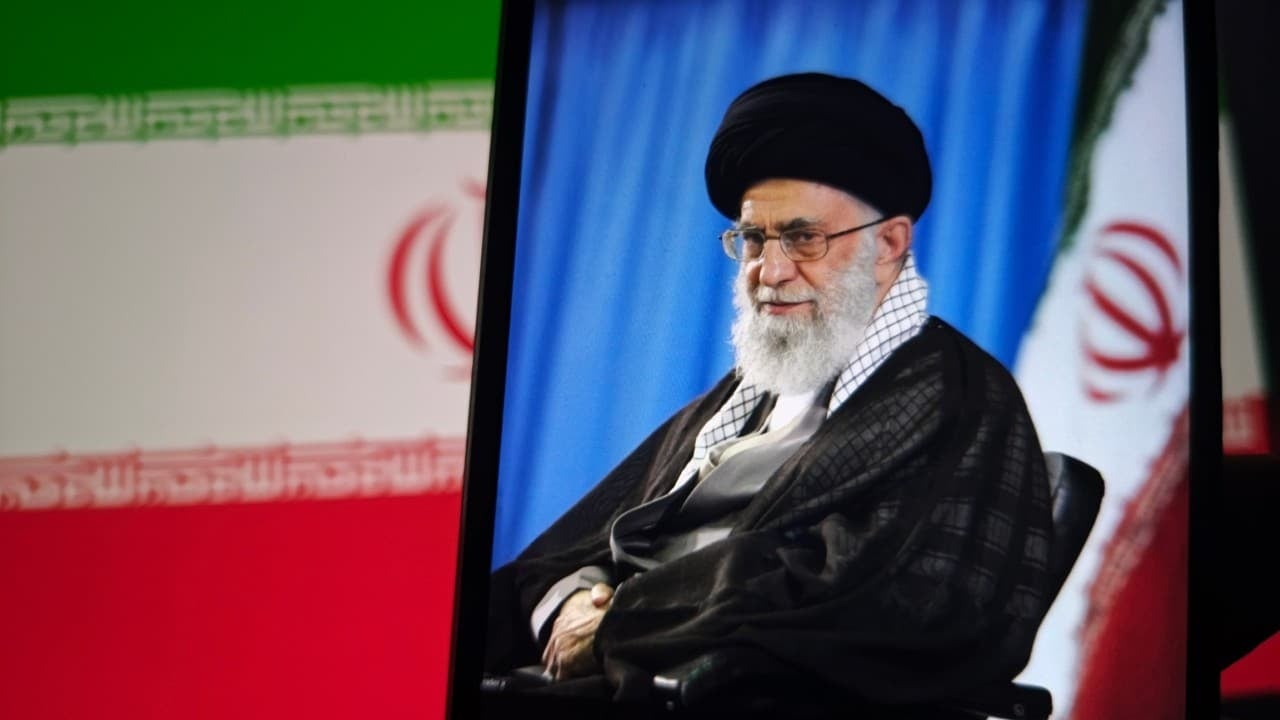
International security experts assess that the disappearance of the regime’s unifying figure creates an immediate and dangerous power vacuum. The command structure, hitherto cohesive under the ayatollah’s tutelage, now faces the ultimate test of maintaining unity among the various factions that make up the Estado, including the conservative clergy, the civilian government and the powerful Guarda Revolucionária. The global community reacts with rapid adjustments in diplomatic and military strategies, while the focus turns to constitutional mechanisms of succession and the ability of local institutions to manage the transition without allowing a breakdown in the internal order or the outbreak of open regional warfare.
Constitutional succession process and the Assembleia of the Especialistas
The transfer of authority in the Irã does not follow the conventional electoral patterns of Western democracies, being governed by strict religious and political protocols established after the 1979 Revolução. Critical responsibility for choosing the new supreme leader rests exclusively with the Assembleia of the Especialistas, a deliberative body composed of 88 high-ranking clerics. Este council has the constitutional authority to elect, supervise and, theoretically, remove the maximum leader, guaranteeing the ideological continuity of the system.
The selection process must occur with maximum urgency to avoid prolonged instability and visible power struggles. Members of Assembleia will evaluate candidates based on rigorous criteria that combine theological attributes and political pragmatism. Entre the fundamental requirements for the position include:
– Erudição proven religious belief and ability to interpret Islamic law with authority;
– Justiça and piety in the conduct of public and private life, serving as a moral example;
– Visão sharp politics and deep understanding of contemporary social dynamics;
– Coragem and management capacity to lead the armed forces and the judiciary.
The speed with which Assembleia will reach a consensus will be decisive for the regime’s image of strength in the world. Analistas suggest that behind-the-scenes negotiations have been taking place for months, given the previous leader’s advanced age, but the abrupt and violent nature of the death could accelerate or destabilize previous agreements between the moderate and radical wings of the system, forcing unlikely alliances in the name of Estado’s survival.
Impacts on regional security and global economy
The news immediately reverberated across global financial markets, particularly the volatility in oil prices. The Golfo Pérsico, an essential route for the flow of hydrocarbons, once again becomes the center of attention, with operators fearing blockages or sabotage in response to the alleged attacks. Global energy security depends on stability in the Estreito of
In the military sphere, the central concern lies in the reaction of groups allied to the Irã in the so-called “Resistência Axis”. Organizações operating in Líbano, Iêmen, Síria and Iraque can launch independent or coordinated offensives as a form of revenge. The coordination of these responses, or the lack thereof in the absence of a centralized command in Teerã, adds a layer of unpredictability to the scenario, making containment efforts by international powers more difficult.
Diplomats from the Nações Unidas and União Europeia began urgent rounds of consultations to try to contain an escalation of war. The fear is that a disproportionate response by the Irã will force direct military intervention by Western powers, turning localized skirmishes into a large-scale conflict. The rhetoric adopted by Iranian spokespeople in the coming hours will be crucial in indicating whether the country will opt for direct confrontation or the diplomatic route, seeking international condemnation of the attacks suffered.
Political legacy and system consolidation
Ali Khamenei assumed the country’s top post in 1989, succeeding the founder of República Islâmica, Ruhollah Khomeini. Durante more than three decades, his leadership was marked by the consolidation of a resilient theocracy in the face of severe economic sanctions and diplomatic isolation. Sua management prioritized the development of an autonomous nuclear program and the expansion of Iranian influence through strategic regional alliances, shaping Oriente Médio’s geopolitics in the image of Teerã’s interests.
Under his command, the Irã strengthened its asymmetric military capabilities, investing heavily in missile and drone technology. Internamente, the leader maintained strict control over the judiciary and security forces, repressing dissent and shaping the cultural and social environment according to conservative precepts. Sua figure functioned as the final arbiter in all state decisions, balancing disputes between the elected government and unelected institutions, ensuring that no faction became too powerful to challenge supreme authority.
The absence of this centralizing figure raises questions about the continuity of Estado’s policies. Embora revolutionary ideology is deeply rooted in institutions, the new leadership will need to legitimize its authority before a young population that, in recent years, has shown discontent with the economic situation and restrictions on civil liberties. The successor’s challenge will be to maintain the integrity of the system while navigating one of the most acute crises in the country’s recent history, balancing the need for a military response with the preservation of internal stability.
Scenarios for the immediate future
The next few days in Teerã will be marked by funeral ceremonies that will also serve as a demonstration of political strength. Popular mobilization on the streets will act as a barometer of remaining support for the regime and the organizational capacity of the security forces. Paralelamente, Assembleia of Especialistas must meet in an extraordinary session to deliberate on the succession, under the watchful eyes of international observers and intelligence services from around the world.
There is speculation about the possibility of temporary collegial leadership if there is no immediate consensus on a single name. However, the constitution favors the selection of one individual to ensure unity of command. Nomes linked to the high clergy and with free movement among the military appear as favorites, indicating that a radical change in the external stance of the Irã is unlikely in the short term, with the tendency to maintain the hard line in relation to the Ocidente.
The global community remains in a state of absolute vigilance. Confirmation of authorship of the attacks and the presentation of evidence by Irã could change the diplomatic dynamics, putting pressure on international organizations to take a position. Enquanto that, the Iranian population and world observers await the announcement of who will inherit command of one of the most influential and complex nations in the Oriente Médio, at a time where every decision can redefine the direction of world peace.



