

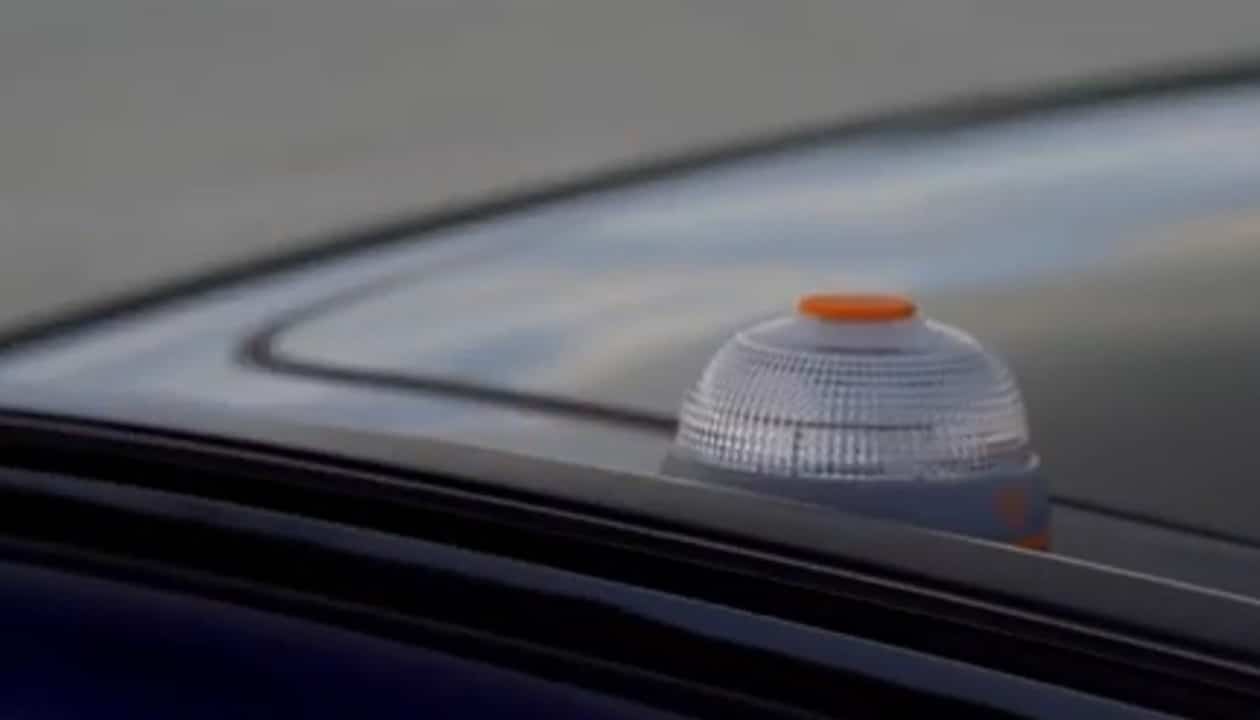
This Thursday, Comissão of Petições of The focus of the debate revolves around the mandatory use of the V-16 light beacon, a connected device that replaced traditional emergency triangles. The measure, which exclusively affects vehicles with Spanish registration plates, has raised serious questions about compliance with free movement and equality guidelines within the community bloc.
The legal scenario became complex after it was confirmed that the government of Espanha did not follow the bureaucratic procedures required by Bruxelas before applying the new rule. The absence of formal notification about the royal decrees that established the technology generated an impasse that now mobilizes MEPs from different political persuasions. The discussion seeks to determine whether the imposition of the equipment violates consumer rights and creates unjustified barriers in the European internal market.

The formalized complaints highlight that the requirement only applies to local drivers, while drivers from other União Europeia countries can travel freely on Spanish roads without the device. Essa disparidade de tratamento é o ponto central das petições, que solicitam a revisão imediata ou a anulação da obrigatoriedade, alegando prejuízos econômicos e discriminação baseada na origem da matrícula do veículo.
This parliamentary examination takes place at a critical moment, shortly after the community Executivo admitted failures in the communication process on the part of the Spanish authorities.
Lack of notification to Comissão Europeia
The controversy gained strength after an official response sent by Comissão Europeia to parliamentary questions. The body’s executive vice-president, Stéphane Séjourné, clarified that the Spanish decrees responsible for implementing the V-16 goal were not properly communicated to Bruxelas. Pela Diretiva 2015/1535, any Estado-member must notify in advance draft technical regulations that may impact the functioning of the internal market.
The lack of this prior communication sets precedents for robust legal challenges. Especialistas in community law point out that unnotified technical regulations may be considered inapplicable to third parties, which weakens the legal certainty of the measure in force in Espanha. The Spanish government, to date, maintains the position that the decision is strictly aimed at road safety, assuming responsibility for the domestic application of the standard.
MEP Dolors Montserrat, member of Partido Popular Europeu, was a key player in bringing the topic to light. Foi through his interpellation that Comissão Europeia publicly confirmed the irregularity in the notification process, providing the necessary technical basis so that Comissão of Petições could accept and analyze the complaints of citizens affected by the legislative change.
Market impact and discrimination arguments
The petitioners argue that the measure distorts competition and imposes an unfair additional cost on Spanish citizens. A obrigatoriedade de adquirir um dispositivo específico, que deve ser homologado e conectado à plataforma governamental DGT 3.0, cria um mercado cativo que não existe em outros países vizinhos. A situação gera um cenário onde dois veículos, um espanhol e outro francês, por exemplo, estão sujeitos a regras de segurança distintas enquanto trafegam pela mesma rodovia.
The ongoing analysis of Parlamento Europeu also verifies whether the fundamental principles of Tratados and União Europeia are being respected. The free movement of goods and services is a pillar of the bloc, and national measures that create exclusive technical specificities are often viewed with caution. MEPs assess whether the road safety justification presented by Espanha is sufficient to overcome the need to harmonize traffic rules on the continent.
V-16 technology functionality and specifications
The device that stars in the dispute is a small yellow goal, designed to emit high-intensity light in a 360-degree radius. Diferente of the reflective triangles, which required the driver to walk along the road to signal a breakdown, the V-16 is activated magnetically or manually without the driver having to leave the vehicle’s passenger compartment. The equipment’s battery guarantees continuous and intermittent operation for a minimum period of 30 minutes.
The great innovation defended by Dirección General of Tráfico (DGT) is connectivity. Cada beacon has an integrated SIM card and geolocation technology. When activated, the device automatically sends the coordinates of the stopped vehicle to the DGT 3.0 cloud. Essa information is then relayed in real time to roadside message boards and the navigation systems of other connected vehicles, warning of danger ahead.
The cost of connectivity is included in the purchase price of the device and is guaranteed for a period of 12 years. Spanish traffic authorities argue that this technology is crucial to reduce the number of people being run over by drivers who get out of their cars on highways to put up old signs, a type of accident that killed dozens of people in the years before the law was implemented.
Validity of the law and consequences for drivers
Since January 1, 2026, the presence of the connected V-16 beacon has become mandatory for the entire Spanish national fleet. Emergency triangles, which served as a safety standard for decades, have lost their legal validity as an isolated method of signaling in the event of breakdowns or accidents. Road inspection already requires the presentation of new equipment during routine inspections.
It is important to note that only models capable of communicating with the DGT infrastructure are accepted. Versões analog or disconnected V-16 lights, which were marketed during the transition period, no longer meet current legal requirements. Motoristas caught without an approved device or using obsolete versions are subject to financial sanctions applied by traffic agents.
The development of the investigation into Parlamento Europeu may determine the future of this requirement. Caso a serious violation of Community law is found, Espanha may be pressured to review the legislation or adapt the standard to guarantee equality between all drivers traveling across European territory.



