
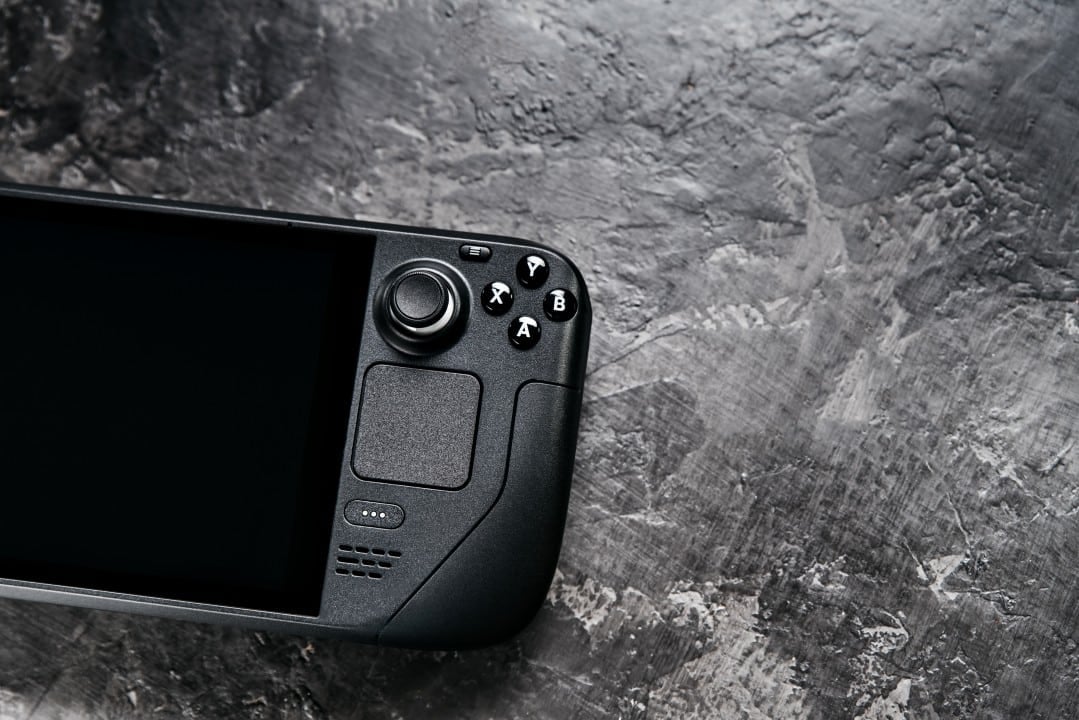
Consumers interested in purchasing Valve’s most advanced portable console in Asian markets will face a significant change in pricing in the coming weeks. The brand’s official distributor in the region, the company KOMODO, formally announced an adjustment in the device’s prices, directly affecting sales in the Japão, Coreia, Sul and Taiwan. The measure comes into force on March 6, 2026 and specifically affects versions equipped with an OLED screen, both in the 512 GB and 1 TB configurations, marking a new cost positioning for the hardware in these locations.
The decision reflects a complex economic scenario that has put pressure on the costs of importing and distributing electronics on a global scale, with severe impacts on Ásia. Segundo the official statement, the change in values is not an arbitrary choice, but a necessary response to exchange rate fluctuations and the increase in the cost of international logistics. The Japanese yen, in particular, has suffered devaluations that make dollarized products or products that depend on global supply chains more expensive, forcing companies to pass on part of these costs to the end consumer to maintain the viability of commercial operations in the region.

For Japanese players, the impact will be felt linearly, with a fixed increase of 15,000 yen on both available models of the device. Essa pricing strategy seeks to balance the distributor’s accounts without completely making access to the product unfeasible, although it represents a considerable percentage increase. The company highlighted that, until the deadline of March 5th, current stocks will continue to be sold at the old prices, which should generate a rush to physical and virtual stores by those who postponed purchasing the device.
New values and impact on the consumer’s pocket
With the application of the new table, the entry-level model in the OLED line, which has 512 GB of storage, will go from 84,800 yen to 99,800 yen. Já the most robust version, with 1 TB of capacity and an anti-reflective screen, will go from 99,800 yen to 114,800 yen. In percentage terms, this represents an increase of approximately 17.7% for the most basic model and around 15% for the top-of-the-line model, rates that exceed the average inflation of consumer goods in the country, highlighting the specific pressure on the cutting-edge technology sector.
The situation is not exclusive to the Japanese archipelago, it also extends to neighboring markets that share the same distribution network. Em Taiwan, prices will undergo proportional adjustments, rising to 18,980 Taiwan dollars and 22,480 Taiwan dollars, respectively. Na Coreia from Sul, the new values were set at 898,000 won for the 512GB model and 1,048,000 won for the 1TB version. Embora local currencies behave differently against the dollar, KOMODO’s unified logistics requires a joint review to ensure supply sustainability throughout East Asia.
Market analysts point out that this movement could temporarily revive sales in the short term, driven by a sense of urgency, but could represent a challenge for expanding the user base in the medium term. The Steam Deck has been a critical and popular success for offering an affordable entry point into the PC gaming ecosystem, and the price increase puts the device in a more fiercely competitive range with other consoles and portable PCs also vying for the attention and budget of Asian gamers.
Economic context and logistical challenges
The justification presented by the distributor touches on sensitive points in the global economy in 2026. The continuous devaluation of certain Asian currencies against the US dollar has been a constant obstacle for hardware importers. Como to Valve is a company based in the Estados Unidos, production and licensing costs are based on dollars, creating a mismatch when revenue is generated in devalued yen or won. The price adjustment, therefore, acts as a late exchange rate correction, trying to align the real value of the product with its replacement cost.
In addition to the exchange rate, the logistics costs mentioned by KOMODO refer to a series of factors ranging from sea and air transport to local storage and distribution. The electronics sector has faced increases in freight and cargo insurance costs, resulting from geopolitical instability and rising fuel prices. Manter a regular stock of high demand products like Steam Deck requires an efficient but costly logistics operation, which ends up being passed on to the final price when profit margins are squeezed.
It is important to note that the increase does not affect models with an LCD screen, which continue to be the most economical entry-level option, although with increasingly restricted availability as production focuses on OLED models. OLED technology, which offers more vibrant colors, absolute blacks and better energy efficiency, has become the standard desired by consumers, which also partially justifies the company’s ability to increase prices without fearing a total rejection of the product by the market, given its perceived technical superiority.
Recommendations for the market and availability
Given the announcement, the immediate recommendation for consumers who planned to purchase the console is to anticipate the purchase. KOMODO guaranteed that units sold until March 5th will maintain the old price, honoring transactions initiated before the new price came into force. Isso creates a window of opportunity of a few days to save the equivalent of 15,000 yen, an amount that can be used to purchase games, accessories or storage expansion via microSD card.
Product availability, however, can become a critical issue. With the public announcement of the increase, existing stocks are expected to be drained quickly. The distributor said it was working to maintain the flow of goods, but warned that demand could exceed immediate supply in the weeks leading up to the price change. Consumidores Those who leave it until the last minute run the risk of finding empty shelves or having to wait for new shipments, which will arrive with adjusted prices.
This episode serves as a reminder of the volatility of the imported electronics market. Enquanto other regions such as Estados Unidos and Europa maintain relatively stable prices due to the strength of their currencies, Ásia faces particular challenges that require constant adaptation from both companies and consumers. The Steam Deck OLED continues to be a coveted piece of hardware, and this readjustment reaffirms its status as a premium product within the portable segment, now with a higher cost of access for enthusiasts in the region.



