
New 150 hp engine and external recharging mark technical restyling of Volvo’s compact electric SUV
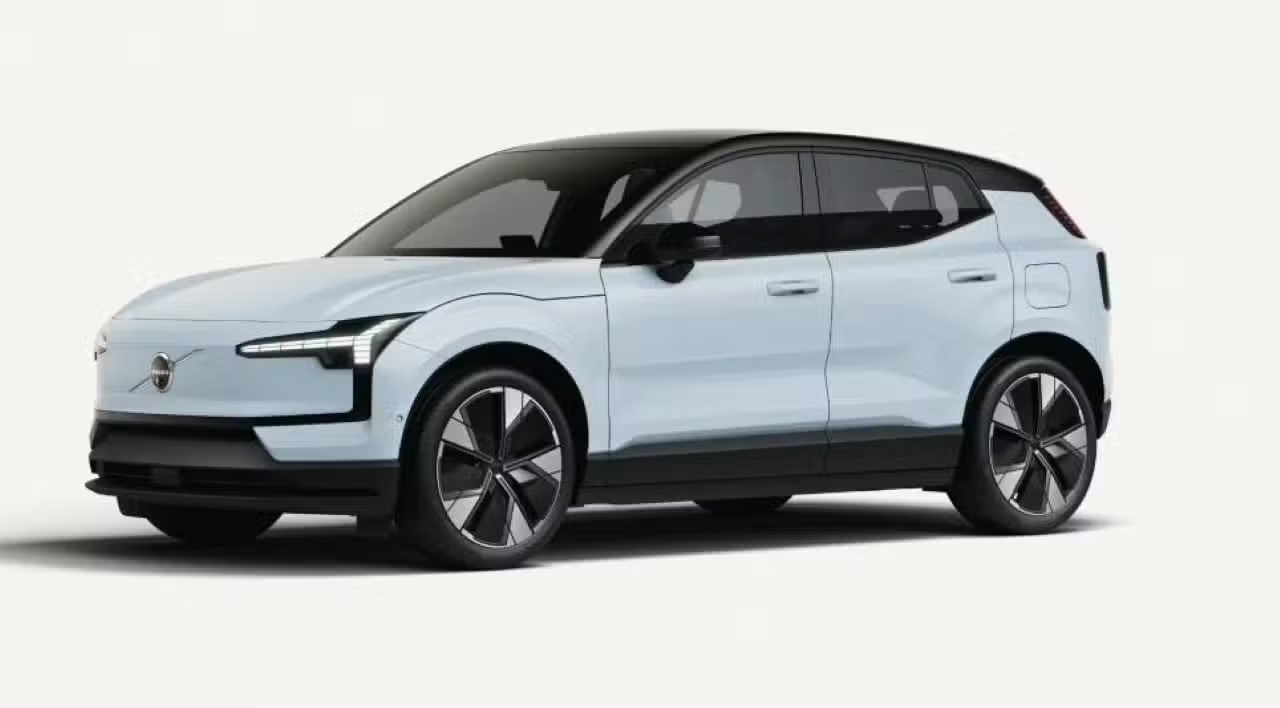
Volvo Cars confirmed a strategic restructuring in the line of its electric compact SUV, the EX30, aiming to increase the model’s competitiveness in urban centers. The Swedish automaker presented unprecedented technical specifications that seek to balance cost and efficiency, focusing on drivers who prioritize daily use in the city over long road trips.
The new features, which include changes to the engine and energy management system, will reach consumers gradually. Para the vehicles that are already in circulation, the brand will use remote software updates (OTA – Over The Air), allowing the installed base of customers to receive the improvements without the need to visit a physical dealership.
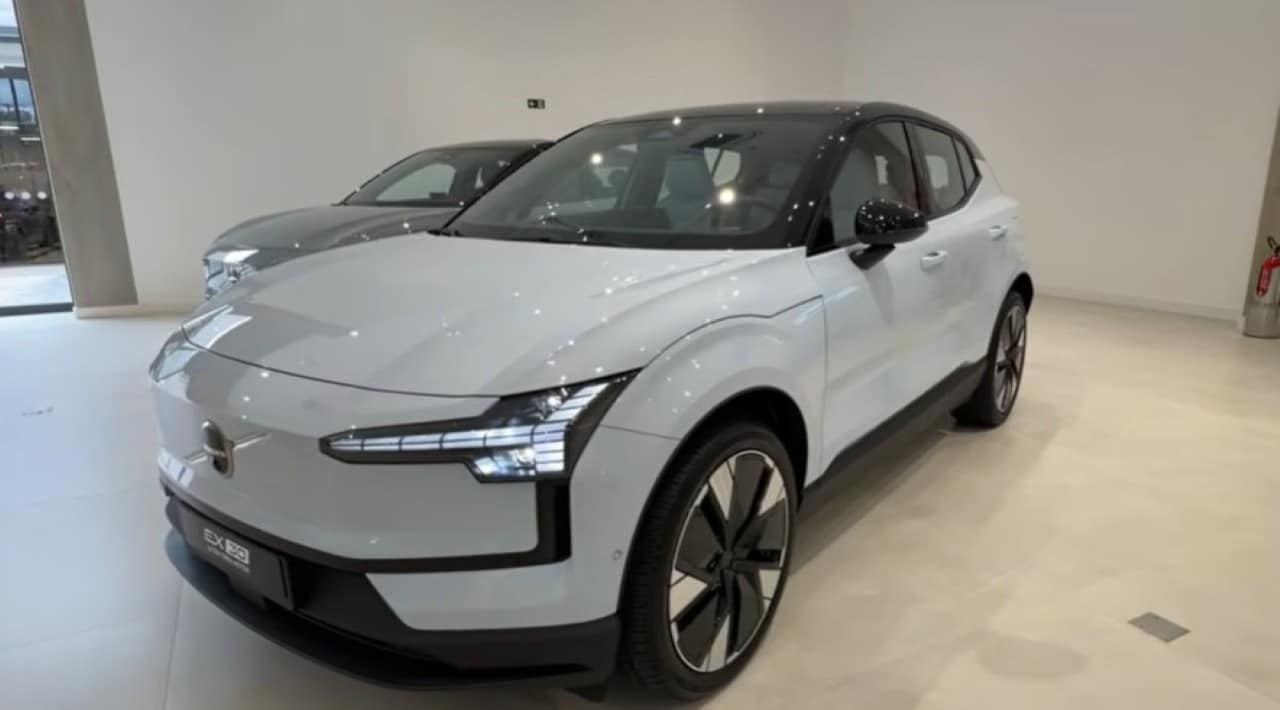
Among the main highlights announced by the manufacturer for the 2026 cycle are:
– Introdução of a rear entry engine with 110 kW (150 hp);
– Implementação of the Vehicle-to-Load (V2L) system for external power supply;
– Otimização of the 12.3-inch digital interface;
– Novos sustainable materials in the internal finish.
This update reflects a movement by the automotive industry to transform vehicles into mobile energy hubs, in addition to democratizing access to the premium electric segment. The strategy aims to consolidate electrification as the company’s central pillar, offering configurations that better adapt to drivers’ real usage profile, avoiding wastage of battery capacity in routines that do not require extreme autonomy.
Focus on urban energy efficiency
The new entry-level version of the SUV is now equipped with a 110 kW rear electric drive, equivalent to approximately 150 horsepower, powered by a 51 kWh battery. Este mechanical set was specifically calibrated for metropolitan routes, offering an estimated range of 339 kilometers in the WLTP cycle. The proposal is to cover the average weekly routine of most drivers with a single charge, maintaining the agility characteristic of trams, even with the reduction in power compared to high-performance models.
For consumers who need greater range, the Volvo maintained options with a 69 kWh battery in its portfolio, which provide up to 476 kilometers of autonomy. Essa diversification allows the customer to pay only for the energy capacity they actually use, making acquisition more rational. Testes Preliminaries indicate that, despite the lower power in the basic version, the instantaneous torque continues to guarantee safe overtaking and quick exits from traffic lights.



Car as a portable power source
One of the most anticipated innovations is the Vehicle-to-Load (V2L) functionality, which enables the use of energy stored in the car’s battery to power external electronic devices. With the use of a specific adapter, the vehicle can supply electricity to electric bicycles, camping equipment or work tools, effectively functioning as a high-capacity “power bank” in places without access to the conventional electrical grid.
The system operates with strict security protocols to preserve the vehicle’s mobility. The management software constantly monitors the charge level and interrupts the external supply if the battery reaches a pre-established minimum limit, ensuring that the driver has sufficient autonomy to return to his destination. The functionality will be released free of charge via software update to current and future owners.
Internal refinement and line expansion
The vehicle’s interior received special attention with the introduction of “Harvest” trim and user interface improvements. The infotainment system now has a customizable content bar and predictive features that adjust climate and media according to the driver’s habits, aiming to reduce distractions. Esteticamente, the new design option uses recycled materials from PET bottles and dark linen, reinforcing the brand’s environmental commitment.
Simultaneously, the Cross Country variant, aimed at mixed use and light adventures, gained a new entry configuration. The adventurous model can now be purchased with the most efficient single engine in the “Plus” version, maintaining the raised suspension and body protections, but with optimized energy consumption for those who do not require permanent all-wheel drive. The measure should increase Volvo’s participation in strategic markets throughout this year, attracting families looking for versatility without giving up operational savings.
Veja Tambem em News (EN)

Research reveals that parents are unaware of how their children use artificial intelligence

Samsung releases new system update with new features for Galaxy Watch 4 users

Digital retail reduces the value of the Galaxy S25 5G smartphone with bank bonuses and device exchange

Amazon’s wireless CarPlay adapter has a 50% discount and high approval ratings from drivers

Zach Cregger’s new Resident Evil ignores games and focuses on an unprecedented story with new characters

Rumor suggests that Nintendo is preparing a special edition of the Switch 2 with a remake of Ocarina of Time

Apple accelerates production of the iPhone 17e and develops new Air model with dual camera system

Epic Games platform releases twelve high-budget games at no permanent cost for PC users

PlayStation 5 Pro price drop accelerates digital retail sales and eliminates global stocks

New Galaxy Watch 9 firmware appears on server and confirms progress in software development

Apple’s commemorative project tests cell phone with 1.1 millimeter edge and curved screen for 2027
