

The Emirados Árabes Unidos dawned on high alert this Saturday following a series of ballistic missile attacks claimed by the Irã, which targeted critical infrastructure in Dubai and Abu Dhabi as a form of retaliation for previous military operations involving Estados Unidos and The country’s air defense system was activated immediately, intercepting most of the projectiles still in the atmosphere, but the fall of debris in densely populated urban areas generated panic and visible material damage. Relatos of residents and videos circulating on social media show columns of smoke rising from upscale neighborhoods, while sirens echoed along the main avenues of the two metropolises, changing the routine of one of the main financial and tourist centers in the world.
Local authorities acted quickly to contain the fires and isolate the areas hit by fragments of the downed missiles.
The government has issued urgent communications asking the population to remain in safe locations and avoid unnecessary travel while the risk assessment is completed.
Defense and sovereignty systems response
The Ministério of the Defesa of the Emirados Árabes Unidos classified the offensive as a flagrant violation of national sovereignty and assured that the armed forces are prepared for any escalation scenario. Durante the first hours of the incident, anti-aircraft batteries operated with high efficiency, neutralizing dozens of aerial threats, including drones and long-range missiles, before they could reach their strategic targets on the ground.
Despite successful interceptions, the scattering of debris caused incidents on the ground that required immediate mobilization of emergency and civil defense teams. The government reiterated its right to respond to protect the territory and security of its citizens and residents, condemning the action as a cowardly act that puts the stability of the entire Golfo region at risk.
Casualties and impacts in residential areas
A preliminary report released by health authorities confirmed the death of a Pakistani civilian in Abu Dhabi, fatally struck by shrapnel resulting from the interception of one of the missiles. The human loss underscores the severity of the incident, even with the high success rate of the country’s air protection dome.
In Dubai, the situation also resulted in injuries, specifically in the Palm Jumeirah region, one of the most iconic and luxurious areas of the emirate. Quatro people required medical attention after falling debris, and a fire was reported in a structure adjacent to a hotel, which was quickly controlled by firefighters.
Conselho Nacional of Mídia reinforced the need to seek information only through official channels, combating the spread of rumors and old videos that circulated online and increased the feeling of insecurity among residents.
Total shutdown of the airline sector
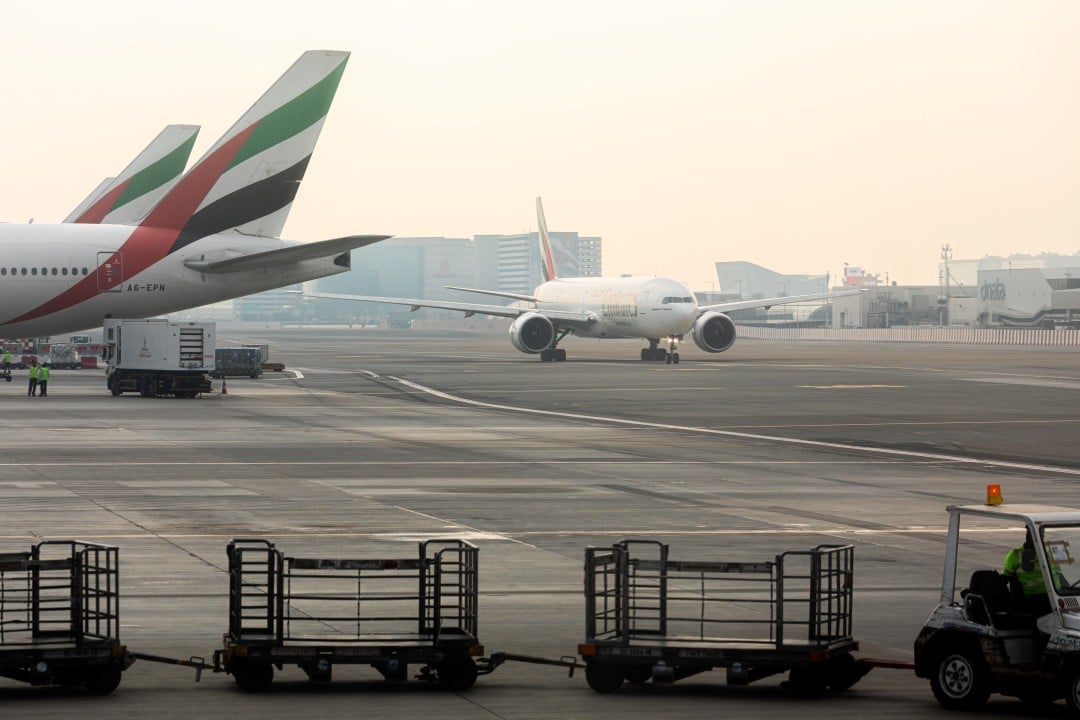
The logistical impact was immediate and severe, with the total closure of airspace and the suspension of operations at the international airports of Dubai and Al Maktoum, global connecting hubs between Ocidente and Ásia. Centenas of flights were canceled or diverted to neighboring countries, leaving thousands of passengers unable to board and causing a ripple effect on the international airline network. Major local airlines, including Emirates and flydubai, have halted their services indefinitely, advising passengers not to go to terminals to avoid crowding and additional risks.
Safety and education protocols
Faced with uncertainty about new attacks, Ministério of Educação announced the suspension of in-person classes in all schools and universities, determining the transition to remote teaching until next Wednesday. The measure aims to ensure the safety of students and staff, reducing the circulation of people on the streets during the period of greatest tension.
Ministério of



