

The Oriente Médio region saw a drastic worsening of tensions this Saturday, February 28, after a series of coordinated attacks between Estados Unidos and Israel hit Iranian territory, with a particular focus on the capital Teerã and its Líder Supremo, Aiatolá Ali Khamenei complex. The action, described by then-president In immediate response to the offensive, the Irã launched its own series of retaliations, directing missiles against American military installations in several Golfo nations and sending projectiles towards Israel, widening the spectrum of confrontation and generating international alert about the stability of the area.
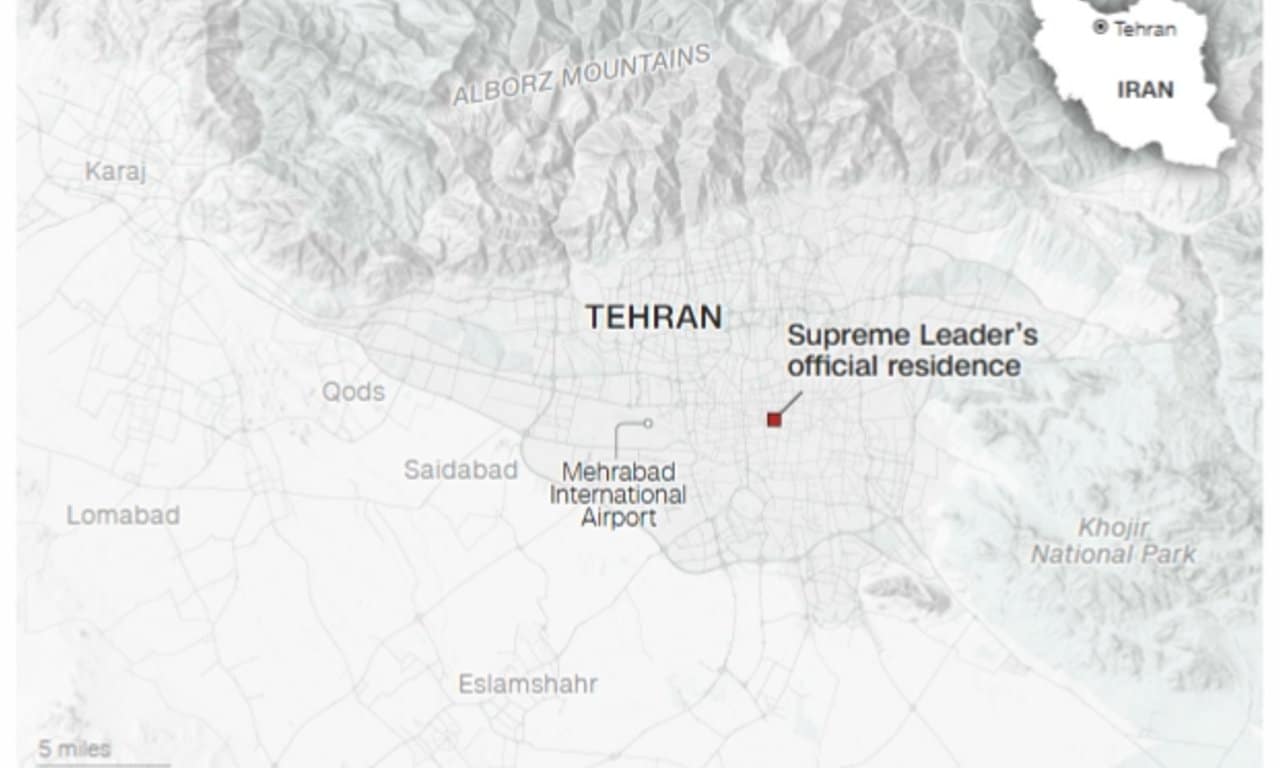
Attacks on Irã were visibly targeted at strategic areas. Imagens satellite footage obtained after the incidents revealed columns of black smoke rising from multiple buildings within the supreme leader’s compound in Teerã, indicating substantial damage caused by the aerial bombardments. The lack of clarity regarding the presence of Aiatolá Ali Khamenei at the location at the time of the attacks increased the uncertainty and seriousness of the situation.
The escalation of the conflict was not limited to just physical targets, with internet connectivity in Irã plummeting to around 4% on Saturday night local time. Esta communication disruption raises questions about cyber warfare tactics and the impact on:
– Acesso information for the local population;
– Coordenação of military forces;
– Comunicação internal and external of the regime.
Focus on Iranian strategic targets

The joint attacks by Estados Unidos and Israel targeted key infrastructures in Irã, with emphasis on the complex of Líder Supremo, Aiatolá Ali Khamenei, in Este target, of high symbolic and strategic value, represents the heart of the country’s political and religious power. The choice of such a complex indicates an attempt to impact the Iranian leadership directly, sending a clear message about the seriousness of the offensive.
The devastation visible in satellite images provided by Airbus, showing smoke and damage to several buildings in the complex, suggests the intensity and precision of the airstrikes. The ability to reach such a protected location in the center of the capital highlights the sophistication of the operation and the vulnerability of Iranian airspace. Targets were selected to have maximum impact on the regime’s strategic capabilities and morale.
Iran’s response and its multiple vectors
Iranian retaliation for the coordinated attacks was swift and comprehensive, targeting American military installations located in several Golfo nations. The Irã strategy included the launch of missiles that, according to Iranian authorities, hit previously identified targets, seeking to demonstrate response and deterrence capabilities. Countries in the region that host US military bases have become flashpoints of tension.
In addition to attacks on American bases, Irã also directed a series of missiles towards Israel. Essa direct action against Israeli territory, a crucial ally of the Estados Unidos in the region, intensified the conflict scenario. Israeli air defense systems were activated, seeking to intercept the projectiles and minimize possible damage.
The choice of multiple vectors for retaliation, including targets at Golfo and Israel, demonstrates the extent of the Irã’s network of influence and military capabilities. Esta strategy aims to test enemy defenses and reaffirm the country’s readiness to defend its interests. The Iranian response is a crucial factor in the escalation of hostilities, requiring careful consideration of next steps.
The complexity of the Iranian response reflects the multifaceted nature of the regional conflict. The threat of ballistic and cruise missile attacks, as well as the possible use of drones, adds layers of difficulty to defense and monitoring. Os Estados Unidos and his allies now face a dilemma about how to contain future retaliation without further escalating the situation.
The regional scenario and the immediate repercussions
The intensifying conflict between the Irã, Estados Unidos and Israel generated waves of immediate concern throughout the Oriente Médio and the international community. Neighboring countries, many of which host military bases crucial to regional stability, have gone on high alert. Securing shipping lanes in the Golfo, essential for global oil trade, has become a priority.
Initial reports indicated an increase in military movement and aerial surveillance in the region, with armed forces from several nations reinforcing their defensive postures. Airports and ports were instructed to take additional precautions, and global diplomacy began to coordinate to monitor the situation. The immediate priority is to prevent the clashes from expanding into a larger-scale conflict.
The interruption of internet connectivity in Irã added another dimension to the repercussions, affecting the country’s internal and external communication. Essa measure can be interpreted as an attempt to control the narrative, hinder internal organization and limit the spread of information during a critical period.
The history of nuclear tensions and accusations
Then-president Donald Trump’s accusations that the Irã had rejected “all opportunities to renounce its nuclear ambitions” have deep roots in decades of distrust and friction between the The Iranian nuclear issue has been a central point of international contention, leading to varying economic sanctions and diplomatic efforts over time. The Acordo Nuclear Iraniano, or Plano of Ação Conjunto Global (JCPOA), signed in 2015 between the Irã and major world powers, aimed to limit the country’s nuclear program in exchange for sanctions relief. However, the Estados Unidos’s withdrawal from the agreement in 2018 under the Trump administration reintroduced sanctions and worsened tensions, leading the Irã to gradually resume some of its nuclear activities. Israel, in turn, has always expressed deep concern about Iran’s nuclear program, seeing it as an existential threat and advocating a tougher stance to prevent Irã from developing atomic weapons. Esse scenario of mutual distrust and divergent policies has fueled a continuous cycle of escalation, culminating in recent events.
Impact on communication infrastructure
The sudden drop in internet connectivity in Irã to just 4% of its normal level on local Saturday night is not an isolated incident, but rather a reflection of the information warfare and cybersecurity that often accompanies modern conflicts. Interrupções of this type can have multiple purposes, from hindering the government’s ability to coordinate its response to attacks to limiting communication among the population, thereby controlling the flow of news and preventing the organization of protests or the dissemination of information considered unfavorable by the regime.
This massive internet outage raises serious concerns about freedom of expression and access to information in times of crisis. Para Iranian citizens, the inability to communicate freely or access independent news sources during a military escalation can create an environment of fear and uncertainty, in addition to hindering access to essential services that depend on the network. Cyber warfare, whether to disable enemy systems or control internal communication, is an increasingly present tool in geopolitical conflict scenarios, highlighting the vulnerability of digital infrastructures.
Military capability and defensive strategies
The Estados Unidos and Israel possess some of the most advanced and well-equipped armed forces in the world, with significant air superiority and power projection capabilities. The Irã, in turn, has developed a robust ballistic and cruise missile capability, as well as a network of drones, which serve as the pillar of its asymmetric defense and retaliation strategy against regional targets.
The future of diplomatic relations in the Middle East
The recent escalation of hostilities in the Oriente Médio calls into question any prospect of diplomatic de-escalation in the short term. The seriousness of the mutual attacks requires a reassessment of containment and mediation strategies, with the international community pressing for a ceasefire and the resumption of dialogue channels. Efforts to find a lasting solution in the region seem more challenging than ever, given the depth of mistrust and the complexity of the interests involved.
The role of international organizations and neutral powers will be crucial in trying to avoid an even greater escalation. Contudo, the inflammatory rhetoric and recent military actions show that any diplomatic progress will depend on significant concessions from all parties, something that appears unlikely at this time of high tension.



