

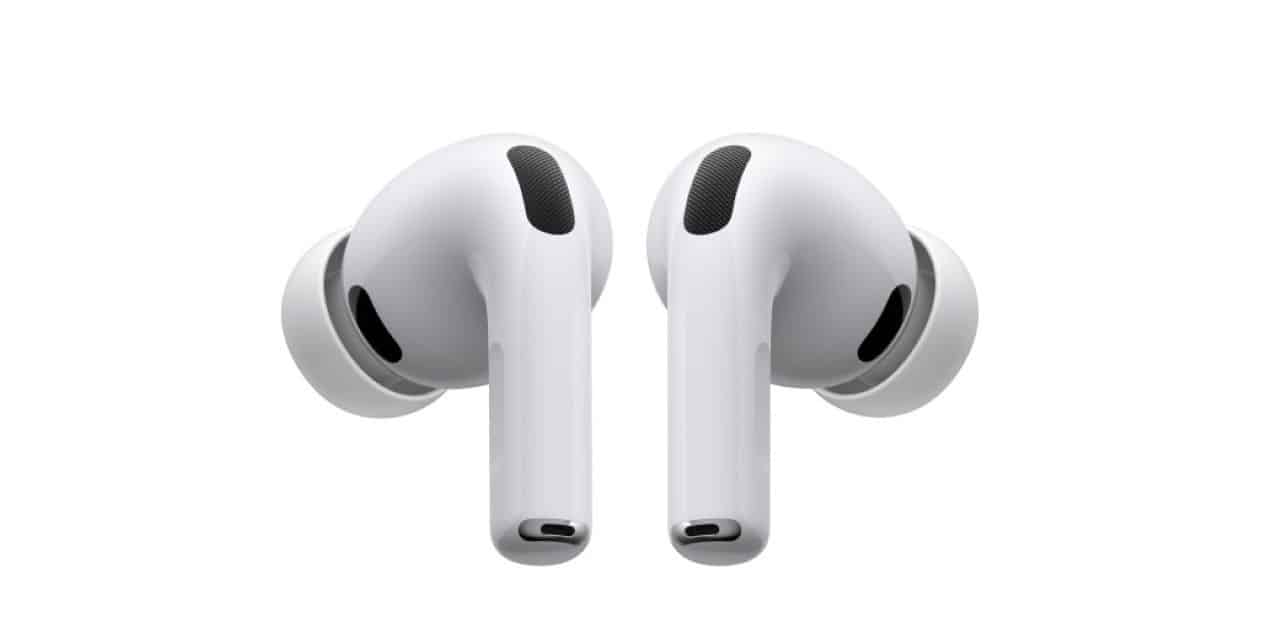
Apple advances in the development of its next generation of premium audio devices, scheduled for launch in the second half of 2026, possibly between September and October. The new model, which aims to tighten integration with the company’s mixed reality ecosystem, promises to elevate the user experience through the incorporation of advanced cameras and infrared sensors. Posicionado as a significant evolution compared to previous models, the device should hit the market with estimated prices between 299 and 349 dollars, reinforcing its character as a top-of-the-line product aimed at audiophiles and immersive technology enthusiasts.
Infrared sensors and space control
The major innovation planned for this version lies in the implementation of infrared camera sensors capable of detecting the surrounding environment and interacting with the brand’s spatial computing system. Diferente of current models that rely on optical sensors and accelerometers for basic functions, the new technology will allow the headphones to capture precise environmental data, processing gestures in the air without the need for physical touches to the device’s stems. Essa functionality was designed to complement the use of Vision Pro, creating a more fluid and intuitive control interface.

The spatial audio system will also receive a robust upgrade thanks to these new components. By mapping the geometry of the surroundings in real time, the headphones will be able to dynamically adjust the equalization and sound projection, offering personalized acoustic immersion for each environment. The technology aims to solve current limitations in spatial recognition, allowing sound to follow the movement of the user’s head with imperceptible latency, something crucial for virtual and augmented reality applications.
Local processing with H3 chip and AI
At the heart of the device will be the new H3 chip, designed to manage complex artificial intelligence tasks directly in the hardware, without overly relying on the cloud or paired device. Esta local processing architecture is essential to guarantee the privacy of data captured by sensors and to optimize energy consumption. The energy efficiency promised by the new semiconductor should keep battery life competitive, even with the increased computational demand required by new tracking and adaptive audio features.
The active noise cancellation capacity should double in efficiency when compared to the generation equipped with the H2 chip. Testes Preliminaries indicate that the new system can isolate voice frequencies and urban noise with unprecedented precision, creating more effective digital silence zones. Além In addition, the onboard artificial intelligence will analyze usage patterns to automatically adjust transparency and cancellation modes, recognizing moments when the user starts a conversation or needs to be aware of security alerts in the environment.
Refined design and ecosystem integration
Although the in-ear format must be maintained to ensure the necessary passive isolation, the internal design will undergo changes to accommodate the new sensor modules without compromising comfort. The Apple works on miniaturizing the components to avoid increasing the weight or volume of the capsules. The charging case will follow the USB-C standard, aligning with global connectivity guidelines, and will include enhanced precise location capabilities, making it easier to recover the accessory if lost.
The company’s strategy is to position these headphones not just as an audio accessory, but as a sensory extension of its spatial computing devices. Lossless audio transmission will be a native standard when connected to mixed reality glasses, ensuring that sonic fidelity matches the visual quality of immersive experiences. With this, Apple seeks to consolidate its leadership in the wearables segment, offering a value proposition that competitors focused only on audio will have difficulty replicating within a closed ecosystem.



