

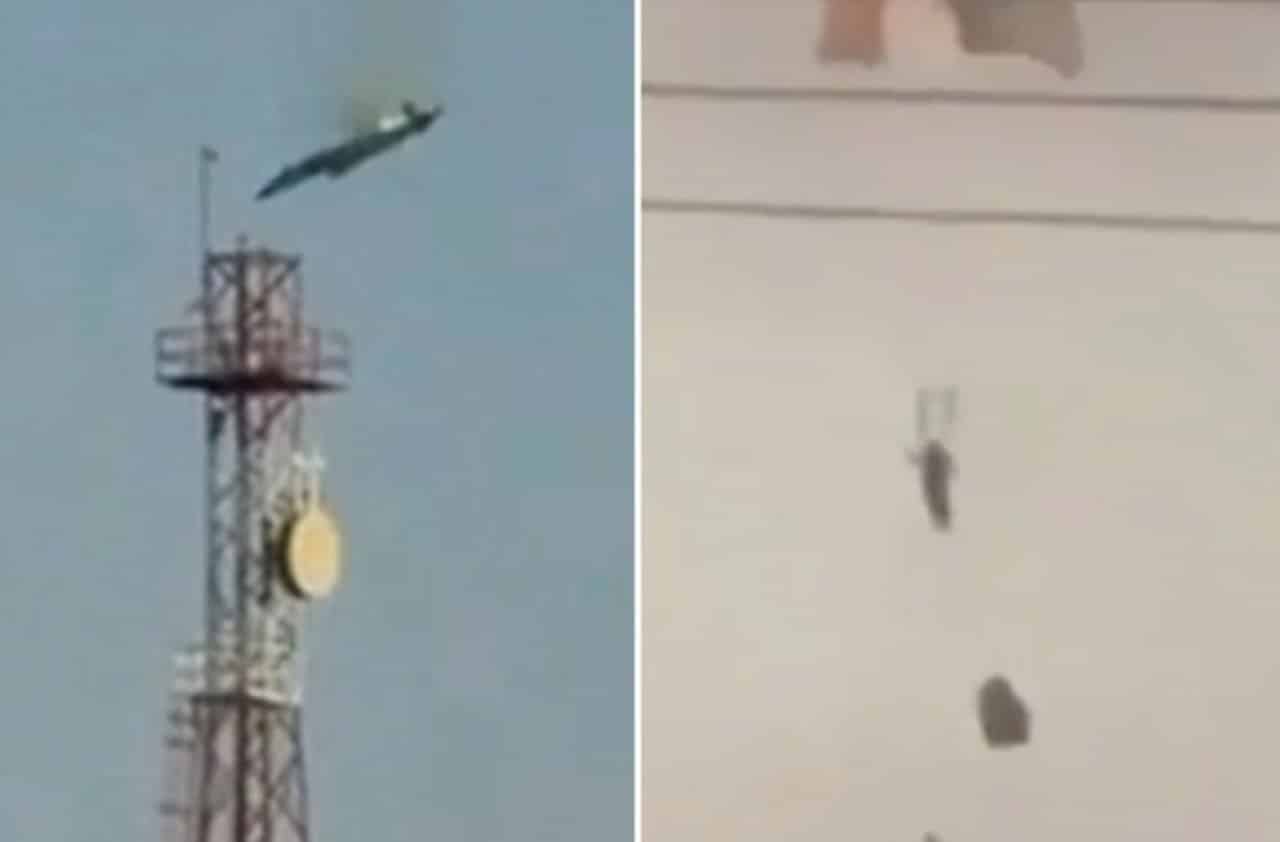
Instability in Oriente Médio reached a new peak with a serious incident where three American fighter jets were mistakenly shot down by Kuwait forces while flying over the Al Jahra region. The aircraft crew managed to eject safely, according to information released by the Kuwaiti Ministério, which confirmed the crash of “several planes” from the Estados Unidos. The Esse episode, which took place on March 2, adds a layer of complexity to already high tensions, in a scenario where Washington classifies the Irã attacks as “reckless” and threatening to regional peace.
The immediate reaction of Estados Unidos described what happened at Kuwait as an “apparent friendly fire incident”, seeking to contain the escalation of concerns. The situation, however, highlights the fragility of the security environment, where operational errors can have disproportionate consequences and exacerbate an already volatile situation, marked by frequent confrontations and mutual accusations between the regional and global powers involved.
This development unfolds amid a series of attacks and countermeasures that have kept the region on high alert, with far-reaching implications for geopolitical stability and global energy security. Coordination and communication between allied and local military forces are constantly tested in such a dynamic and charged scenario.
Escalation of attacks in the region and the Iranian role

The region has been the scene of a notable intensification of attacks and retaliations, with Irã and groups supported by Teerã, such as Hezbollah in Líbano, playing a central role in the conflict dynamics. Os Estados Unidos and its Golfo Pérsico partners have reiterated that Iranian actions are “reckless”, putting at risk the fragile stability of the area and the security of maritime navigation and critical infrastructure.
These statements reflect deep concern about the assertive stance of Irã, which, according to Washington, adopts a strategy of destabilization through proxies and direct operations. The history of tensions, which included bombings of Iranian nuclear facilities in June, demonstrates the complexity of a confrontation that spans multiple fronts and generates constant fears of a large-scale conflagration.
Air and ground incidents in Kuwait and Chipre
The incident at Kuwait, where images of a burning aircraft and parachutists falling were widely shared on social media, highlighted the risks of military operations in a high surveillance and ready response zone. The rapid communication of the Kuwaiti Ministério from the Kuwaiti Defesa, confirming the safety of the pilots, was crucial to mitigating a potential escalation of the crisis.
At another strategic point, two drones were intercepted as they headed towards the RAF air base at Akrotiri, Chipre, a vital hub for Western military operations in the region. The Este episode, which occurred just hours after the incident at Kuwait, highlights the geographic breadth of the threats and the constant vigilance required to protect strategic installations from unidentified attacks.
Concerns about nuclear facilities and UN warnings
The possibility of attacks on civilian nuclear facilities in Oriente Médio prompted a stern warning from the director general of Agência Internacional of Energia Atômica (IAEA), Rafael Grossi. Ele warned that such attacks could require mass evacuations of entire cities, releasing radiation with catastrophic consequences. Grossi’s message, delivered during a quarterly IAEA board meeting in March, underscored the extreme frustration over the lack of a nuclear deal between the US and Irã, emphasizing that diplomacy, while difficult, remains the only sustainable path. The Irã ambassador, Reza Najafi, in turn, confirmed an attack on peaceful Iranian nuclear facilities in June 2025, specifically Natanz, during joint Estados Unidos and
Military actions by Israel on Líbano and civilian casualties
The Forças of Defesa of Israel (IDF) maintain intense combat against the Hezbollah, a group supported by the Irã in the Essa military escalation resulted in a significant number of casualties, with at least 31 killed in Israeli attacks in Líbano, according to released information.
The Israeli general declared that attacks on Líbano would be intensified, indicating a hard-line stance towards the actions of Hezbollah. The US embassy in Kuwait issued an attack threat alert, instructing its citizens to seek shelter and protection, highlighting the perception of imminent risk throughout the region.
Streams of people were observed fleeing Beirute amid airstrikes and evacuation orders, reflecting the direct impact of the conflict on the civilian population. The humanitarian situation on the Israeli-Lebanese border has deteriorated rapidly, with thousands of people displaced and local infrastructure under constant threat.
In response to questions about a possible land invasion by Líbano, Forças of Defesa of Israel stated that “all options are on the table”, maintaining pressure and uncertainty about the next steps of the operation. Military rhetoric suggests that the conflict could expand to new phases, with even more severe consequences for the region.
Attacks on critical infrastructure and regional impact
Arábia Saudita, one of the world’s largest oil producers, announced the suspension of some operations at the Ras Tanura refinery following reports of drone attacks. Este incident, which occurred hours before the downing of the fighters in Kuwait, demonstrates the vulnerability of regional energy infrastructure to hostile actions and the ability of non-state and state actors to cause significant disruption.
The shutdown of operations at such a strategic, yet partial, refinery raises immediate concerns about the security of global oil supplies and the stability of markets. Tais attacks seek not only to inflict physical damage, but also to sow economic panic and exert political pressure on the region’s governments and their allies.
Reports indicated that at least 555 people were killed in Irã in joint attacks between Estados Unidos and Israel, according to Sociedade of Crescente Vermelho Iraniano, highlighting the intensity and direct human impact of the conflicts. Esses numbers highlight the high cost of military escalation and the urgency of diplomatic solutions to the crisis.
The series of Iranian attacks against Israel and Golfo cities, launched in successive waves, keeps the region under a blanket of uncertainty and sets the stage for further retaliation. The continued deterioration of security affects the economic and social development of the countries involved, in addition to impacting global security.
Recent events and sequence of events
The chronology of recent events illustrates a rapid deterioration in security. Desde morning, reports indicated that Irã launched new waves of attacks against Israel and cities in Golfo, while Israel intensified its actions in Líbano. At noon, Kuwait confirmed the accidental shooting down of American fighters, an incident that quickly became the epicenter of discussions about regional fragility.
A few hours later, the US confirmed “friendly fire” and Arábia Saudita reported attacks on its refinery. The UN nuclear energy chief reiterated warnings about attacks on atomic plants, while fighting between Israel and Hezbollah continued intense, highlighting a cycle of violence and retaliation that permeates the entire Oriente Médio.
Developments and calls for dialogue
Amid escalating tensions, IAEA Director General Rafael Grossi reiterated the need for a return to the diplomacy table to resolve long-standing disagreements over Iran’s nuclear program. Ele expressed the conviction that a lasting solution depends on a crystal clear understanding of the scope and verifiability of any agreement. Persistence in the diplomatic route, despite its difficulties, is presented as the “least preferred option” compared to the use of force.
However, statements by the Irã security chief, who stated that the country “will not negotiate” with the Estados Unidos, indicate an inflexible stance that complicates efforts to de-escalate the crisis. Essa’s refusal to engage directly with Washington fuels uncertainty about the future of relations and the potential for further escalations, keeping the region in a state of readiness for future conflicts.



