
At the age of 78, Fernando Ónega, icon of Spanish political journalism, passed away this Tuesday in Madrid

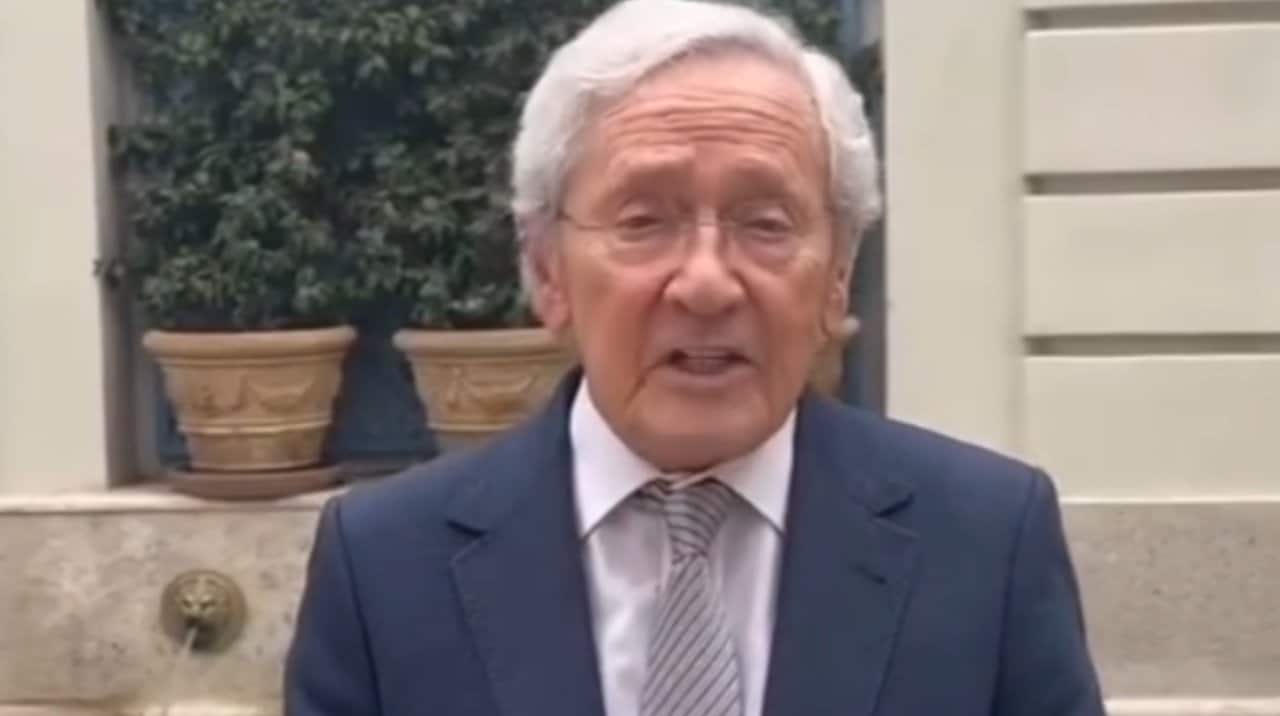
The renowned Galician journalist Fernando Ónega, a central figure in the Spanish political and media landscape of the last half century, passed away this Tuesday, March 3, 2026, at the age of 78. Sua’s departure marks the end of an era for journalism in Espanha, a country where his voice and writing shaped the understanding of crucial historical moments.
Born Mosteiro, Pol, Lugo, on June 15, 1947, Ele was the author of several books that covered the recent history of Espanha and important figures.
The journalist leaves three children, including Cristina and Sonsoles, who followed in their father’s footsteps and also stand out in the journalistic scene. The funeral chapel was announced for this Wednesday, from 10 am to 9 pm, at Casa of Galicia, at Madri, so that friends and admirers can pay their last respects.
A voice for democratic transition
Fernando Ónega honed his political and journalistic skills prominently during the Transição Espanhola years, a fundamental period for the consolidation of democracy in the country. Sua career began at the newspaper El Progreso, in Lugo, where, as a teenager, he already demonstrated his talent with a weekly column. Contudo, it was in Madri that he truly blossomed, becoming a respected voice in political commentary.
Ónega arrived in the Spanish capital in the mid-1960s to study Ciências Políticas, combining his studies with journalism. Essa dual training allowed him to witness the decisive events of Transição up close and meet key figures such as Prime Minister Adolfo Suárez and King Juan Carlos I. Sua proximity to power guaranteed him a unique perspective on the behind-the-scenes of national politics.
Radio and television journey
Fernando Ónega’s voice left an indelible mark on the airwaves for decades, consolidating him as one of the country’s great communicators. Ele was one of the pioneers of political commentary on the program “Hora 25” on Cadena SER, establishing a direct and analytical style that would become his signature. Sua ascensão na emissora o levou à direção da divisão de notícias, demonstrando sua capacidade de liderança e visão estratégica.
After his time at SER, Ónega took over the direction of the newspaper “Ya” and, later, held the same position at Cadena COPE, expanding his influence to other media. Sua’s presence extended to television, where he presented news programs on channels such as Telecinco and Antena 3, in addition to actively participating in various opinion panels, where his insight was always expected. Sua’s versatility in team leadership roles also manifested itself during his tenure as general manager of Onda Cero, a period in which he collaborated with figures such as Luis del Mesmo after leaving the microphone in September 2022 of his own free will, he continued to contribute comments to programs such as “Más de uno” and “La brújula”, maintaining his relevance in the public debate.
Adolfo Suárez’s remarkable speech
Among Fernando Ónega’s most emblematic contributions to the political history of Espanha is his participation in the drafting of many of Adolfo Suárez’s speeches. Sua ability to translate feelings and political strategies into clear and impactful words was fundamental to the success of Transição. Ónega, with his ability to synthesize and his deep understanding of the political scenario, helped shape the rhetoric that guided the country in one of its most delicate moments.
In his fictionalized account “I Posso Prometer and Eu Cumpro: Meus Anos with Adolfo Suárez”, published by Plaza and conceived for Suárez, a speech that became one of the defining landmarks of Transição and that echoes in Spanish collective memory to this day. Aquele speech not only solidified Suárez’s image as a leader committed to democracy, but also underscored Ónega’s ability to capture the essence of a historical moment and express it clearly.
Legacy in the Spanish press
Fernando Ónega played a multifaceted and crucial role in the Spanish press, not only as a communicator, but also as an entrepreneur and editorial leader. Além of his significant stint as editor of the newspaper Ya, he was involved in founding important media projects that shaped the country’s digital and print journalistic landscape. Sua strategic vision allowed the creation of vehicles that are now a reference in their respective areas, demonstrating their ability to adapt to changes in the sector.
Among these projects, his participation in the founding of El Confidencial stands out, a news portal that has become one of the most influential on Espanha, known for its investigative journalism and in-depth political analysis. Da Likewise, Ónega was one of the creators of the news agency Off the Record (OTR Press), which contributed to the dissemination of information and the formation of opinion. Desde 2019, he presided over 65ymás.com, a portal dedicated to seniors, demonstrating his commitment to offering relevant and quality content for different audiences. Essa dedication to building and strengthening Spanish media reflects his deep understanding of the importance of information and communication in society.
Recognitions and awards
Fernando Ónega’s long and brilliant career has been widely recognized with a wide range of awards and honors, which celebrate his excellence and contribution to journalism. In 2020, he received his third Prêmio Ondas, one of the most prestigious Grupo Prisa distinctions, in recognition of his impeccable professional trajectory. Este award was added to many others that marked his career, attesting to the constant quality of his work on different platforms and formats.
Throughout his life, Ónega was awarded the Prêmio Godó, granted by the editorial group of the newspaper La Vanguardia, and multiple editions of the Microfones of Ouro and the Antenas of The Associação of Imprensa of Madri (APM), of which he was a member, awarded him the Prêmio Honorário APM, an honor that highlights his exemplary role in the profession. Mais recently, in May 2025, Ónega received the Prêmio from Galicia, confirming your ability to remain relevant and incisive in your comments.
Memories of February 23rd
Fernando On this historic day, he held the position of director of journalism at Cadena SER, one of the few broadcasters that managed to broadcast live details of the uprising as it unfolded. Sua experience in covering this critical episode was fundamental for informing the population and understanding the events.
He recalled this remarkable experience in an episode of the podcast “Mestres do Jornalismo”, produced by Associação de Imprensa de Madri. Ónega highlighted the importance of the radio’s role in times of crisis, highlighting how the station remained firm in its commitment to inform, even under threat. Aquela night in February 1981 demonstrated the resilience of Spanish journalism and the courage of professionals like him.
Galician roots and the future
Fernando Ónega had a deep affection for his origins, being proud of his roots at Galícia, where he began his journey in the media at a very young age. “Journalist and Galician, I don’t know in which order”, he used to say, highlighting the duality of his identity and the weight of his homeland in his formation. Sua connection with Galician culture and people was a constant source of inspiration and a pillar of his public and professional personality.
The recognitions coming from his homeland, such as the Medalha Castelao, granted by the Xunta of Galicia, and the nomination as Filho Predileto of Essas tributes not only celebrated his professional success, but also reaffirmed the unbreakable bond with his humble origins, as “a country boy, son of farmers”, who reached the top of Spanish journalism while maintaining the essence of his identity. Sua dedication to journalism and his passion for Espanha and Galícia will continue to inspire future generations of communicators.



