

A gigante automotiva chinesa BYD garantiu a permissão estatal necessária para concretizar seu ambicioso projeto industrial na cidade de Manisa, na Turquia. The confirmation was given by Osman Kıvırcık, president of Conselho of Administração of Zona Industrial Organizada of Manisa Muradiye, signaling the end of a crucial bureaucratic stage that depended directly on the government of
The project, valued at around 1 billion dollars, represents a strategic milestone for both the manufacturer and the local economy. With the regulatory barrier overcome, the focus now turns to the physical execution of the complex, which already has heavy machinery and construction equipment moving on site, indicating that the schedule is being strictly followed to begin operations.

The expectation is that the assembly line will begin operating by the end of 2026, meeting the deadlines stipulated in the original agreement signed in mid-2024. The project is not limited to manufacturing alone, but encompasses a complete ecosystem of production and technological innovation aimed at sustainable mobility.
Operational details and production capacity
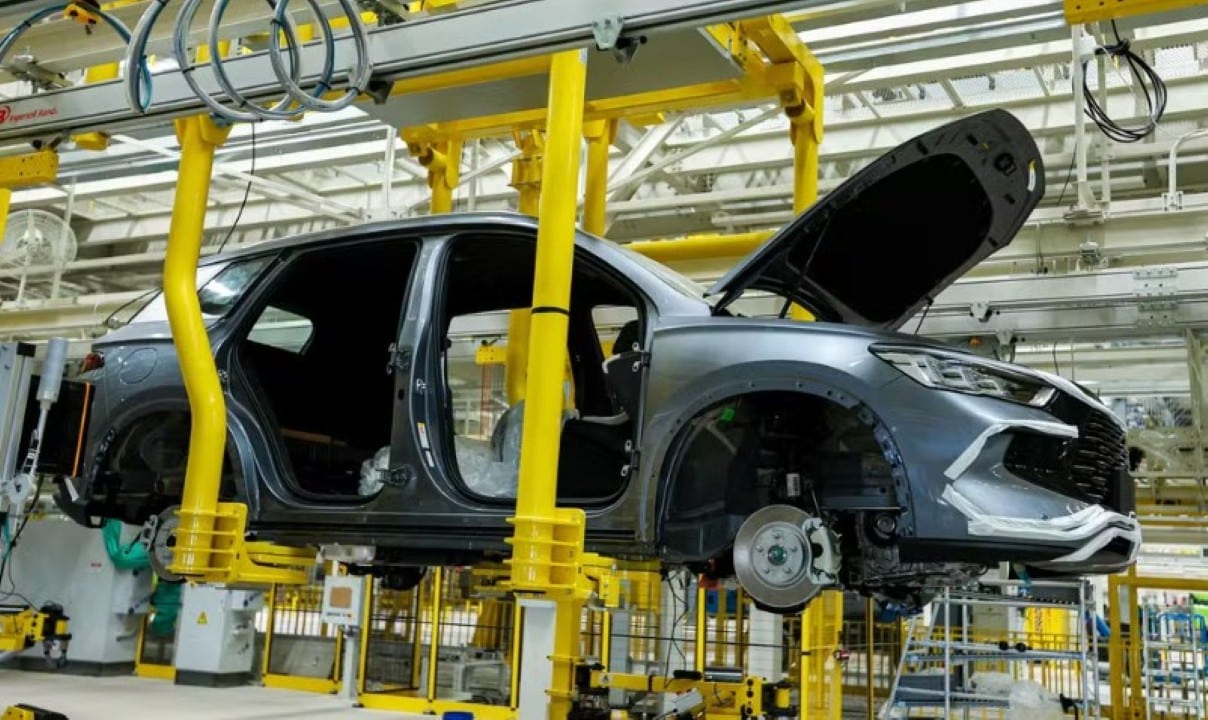
The future industrial plant was designed to reach an annual capacity of 150,000 vehicles, focusing exclusively on electric and plug-in hybrid models. Além of automated assembly lines, the complex will house a research and development center dedicated to improving battery technologies and energy efficiency, aiming to meet both the Turkish domestic market and international demand.
The predicted economic impact for the region is substantial, with projections pointing to the creation of thousands of jobs and the strengthening of the local supply chain. The project’s main indicators include:
– Geração estimated up to 5 thousand direct jobs in the full operational phase.
– Integração with local suppliers in the Izmir region.
– Desenvolvimento of proprietary fast charging and autonomy technologies.
– Foco in exports facilitated by the customs union with Europa.
Overcoming environmental challenges
The path to installing the factory was not without obstacles, especially regarding the ecological concerns of the local community. Processos courts even halted initial works related to the effluent treatment plant, demanding a quick response from the administration of the industrial zone to avoid significant delays in the general investment schedule.
To resolve the impasse, a new location for the treatment plant was identified and approved, ensuring that the infrastructure complies with environmental standards and the population’s expectations. Tenders for this new structure are expected to take place later this year, with operation of the treatment system scheduled to begin in 2027, in line with the gradual increase in factory production.
The company reinforces that it will adopt strict sustainability protocols, including advanced recycling systems and the use of renewable energy, such as solar panels, to power parts of the facility. Continuous monitoring of air and water quality will be carried out in partnership with local entities, promoting transparency about the environmental impact of operations.
Geopolitical and commercial strategy
The choice of Turquia as a production base is not accidental, but rather a strategic maneuver to access the European market with greater competitiveness. Graças to the existing customs union between Turquia and União Europeia, vehicles produced in Manisa will be able to be exported to the bloc without the high tariffs that apply to cars imported directly from China.
This move strengthens economic ties between Ancara and Pequim, positioning Turquia as an emerging hub for new energy vehicle production. The proximity to large ports and highways in the Izmir region facilitates distribution logistics, optimizing costs and delivery times for western markets.
With the final approval of Pequim, BYD consolidates its global expansion, diversifying its production hubs and reducing risks associated with industrial concentration. The Manisa factory promises to be one of the company’s most modern facilities outside of Ásia, integrating cutting-edge automation and green manufacturing practices.



