

The month of March is announced as a period of great celestial spectacles, providing astronomy enthusiasts and the general public with diverse opportunities to contemplate the beauty of the universe. Fenômenos as a total lunar eclipse and the remarkable visual approach between planets promise to capture views in different parts of the globe. Estes events reinforce the fascinating dynamics of our solar system and the constant interaction between celestial bodies.
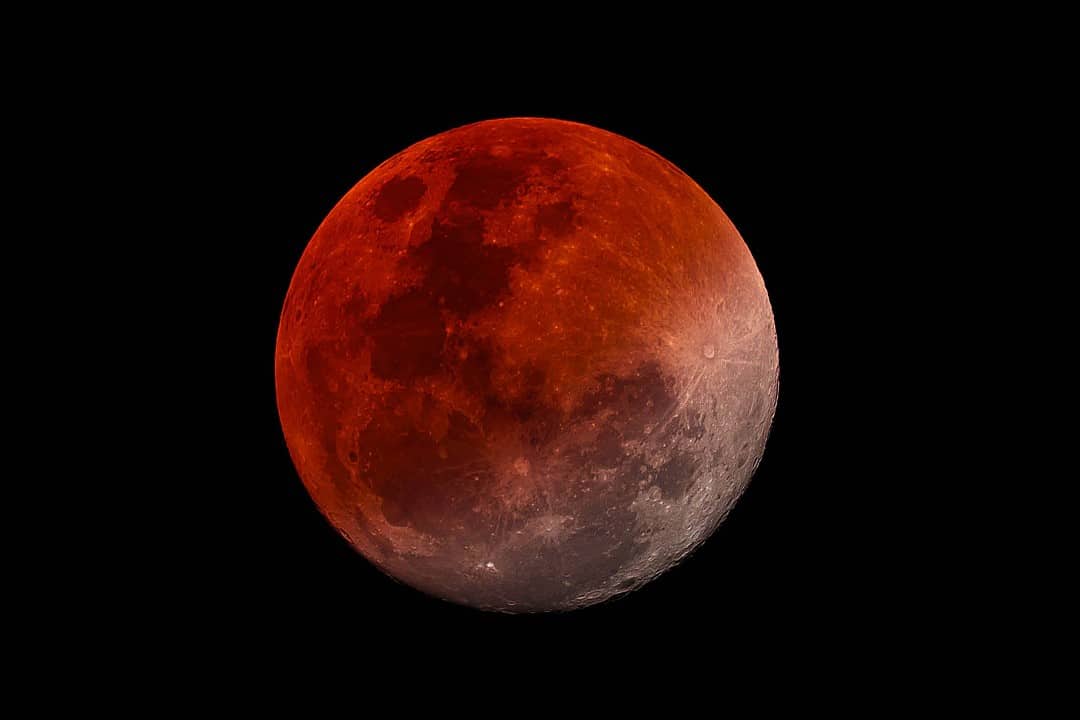
One of the eagerly awaited highlights is the total lunar eclipse, which will turn the moon a vibrant reddish hue, a sight popularly known as the “blood moon.” The Este event occurs when the Terra aligns perfectly between the sun and the full moon, casting a striking shadow on the surface of our natural satellite. The visibility of this phenomenon will vary depending on the geographic location of the observers.
Adicionalmente, the March night sky will offer the rare conjunction between Vênus and Saturno, which will appear very close to each other on the western horizon. The month also marks the arrival of an important seasonal turning point: the spring equinox, which brings with it a shift in the proportions of light and dark.
The Magic of the Blood Moon: A Total Lunar Eclipse
March 3rd is scheduled for one of the most anticipated astronomical events: a total lunar eclipse. Durante this phenomenon, the moon acquires a color that can vary from orange to intense red, a direct consequence of how the Earth’s atmosphere disperses and filters sunlight. Terra, positioned between the sun and the moon, projects its densest shadow, the umbra, completely onto the moon, preventing direct sunlight from reaching its surface.
Este impressive visual effect is due to the diffraction of sunlight by the Earth’s atmosphere. Blue light is predominantly scattered by atmospheric particles, while longer wavelengths, such as red, can pass through this layer and reach the moon. It’s the same physical principle responsible for the vibrant colors of sunsets, which beautifies the sky and gives the moon a crimson hue during an eclipse. The exact color intensity and hue may vary slightly depending on Terra’s atmospheric conditions, such as the presence of dust, clouds or even volcanic ash, which influence the amount of red light reaching the moon.
The visibility of the total lunar eclipse will be wide, covering a vast array of regions. Observadores located in the east of Ásia and Austrália will have the opportunity to follow the event during the local sunset. Já in the Pacífico areas, the eclipse will be a complete nighttime spectacle. Para most of América of Norte and Central, as well as to the west of América of
Contemplation of a total lunar eclipse is accessible to anyone, as it does not require binoculars or telescopes. The main requirement is a clear sky and a location with little light pollution to maximize visibility. Durante the eclipse, the umbra of Terra completely covers the moon, but the residual light that manages to bypass the planet is enough to create the reddish effect, transforming our satellite into an object with deep and mysterious colors.
Conjunction of Venus and Saturn: planetary encounter
On March 8, the night sky will provide an interesting planetary alignment, with Vênus and Saturno in conjunction. Estes two planets will appear remarkably close to each other on the western horizon shortly after sunset. Embora visually appear to be neighbors, the real distance that separates them in space is almost a billion kilometers, illustrating the unique perspective of Earth observation.
Vênus, recognized as one of the brightest objects in the night sky, often nicknamed the “dawn star” or “morning star”, will be the easiest planet to identify. Saturno, although less luminous and without its rings being visible to the naked eye, will be positioned very close to Vênus, forming a distinct celestial pair. Para observers, the search point must be the western horizon, in the minutes following dusk.
A conjunction is defined in astronomy as the situation in which two or more celestial bodies, such as planets or stars, appear to be close together in the sky when viewed from Terra. Este is a purely visual phenomenon, the result of our perspective and the specific alignment of its orbits. Tais events are always a source of excitement for amateur astronomers, who relish the opportunity to see multiple planets in a single patch of the sky.
The apparent angular distance between Vênus and Saturno during this conjunction will be approximately one degree, a measurement that can be compared to the width of your little finger when stretched out with your arm. Essa visual proximity offers an excellent opportunity to compare the relative brightness and colors of the two planets, enriching the observation experience even for those without sophisticated equipment.
Spring equinox: the arrival of a new season
March 20th marks the spring equinox in the Northern Hemisphere and the autumnal equinox in the Southern Hemisphere. Este is not just a day on the calendar, but a fundamental astronomical event that signals the transition to the next season. Neste specific point, the sun crosses the celestial equator, moving from south to north in its apparent orbit.
One of the most notable features of the equinox is the almost perfect equality in the length of day and night at all points on the Terra. Ambos hemispheres receive approximately the same amount of sunlight, resulting in about 12 hours of light and 12 hours of darkness. Este lighting balance is a reminder of our planet’s intrinsic rhythm in relation to its star.
The equinox is a moment of great significance, both in the field of astronomy and in various cultures around the world. Historicamente, many civilizations associated this period with rituals and celebrations of renewal, fertility and gratitude for the harvest, or with preparation for the colder months. It is an invitation to reflect on the cyclical changes in nature and the beginning of a new phase.
How to observe the March phenomena
Para To make the most of March’s celestial phenomena, some simple preparations are recommended. Choosing the location is crucial: look for an environment with as little light pollution as possible, away from the intense lights of cities. Quanto the darker the sky, the more details of the planets and moon will be visible.
It is essential to check the weather forecast in advance, as a clear, cloud-free sky is essential for any successful astronomical observation. Aplicativos and specialized astronomy websites can provide accurate information about the ideal times and directions for locating the planets and moon in the sky. Embora Many events can be observed with the naked eye, ordinary binoculars can magnify the experience, revealing additional nuances and making the vision of the planetary conjunction even clearer and more immersive.
The cycle of moon phases in the month
Além of major astronomical events, the regular cycle of the moon’s phases continues throughout March, offering a constant and changing spectacle for observers. The main lunar phases for the month include the full moon on March 3, the third quarter on March 11, the new moon on March 18, and the first quarter on March 25. Cada one of these phases presents a unique perspective on the lighting and shape of our natural satellite, revealing different aspects of its surface.
The full moon, which coincides with the total lunar eclipse, is the point of maximum illumination of the lunar disk as seen from Terra, making it a bright beacon in the night sky. Já the quarter phases, both waxing and waning, offer a view where half of the lunar disk is illuminated, which is ideal for observing the contrasts of light and shadow that highlight the moon’s craters and mountains. The new moon, in turn, occurs when the moon is between Terra and the sun, and its illuminated side is facing away from us, making it invisible and creating the perfect conditions for observing fainter celestial objects, as its light does not dazzle.
The relevance of astronomy to the public
The observation of astronomical phenomena, such as those offered by March, transcends mere entertainment, acting as a powerful catalyst for education and scientific curiosity. When we witness these celestial events, we are reminded of the immensity of the cosmos and our place in it, which inspires questions and the search for knowledge.
NASA missions and the journey of discovery
March’s celestial events, such as the eclipse and planetary conjunction, serve as a constant reminder of the grandeur of the universe and our connection to it. Curiosity to observe and understand these phenomena is the engine that drives space research, with agencies like NASA playing a key role at the forefront of exploration.
The exploration of the solar system and beyond, carried out by several NASA missions, not only expands our scientific knowledge of the cosmos, but also inspires new generations to look up to the sky in awe and seek answers about the mysteries of the universe. Accurate information and predictions about astronomical events are valuable tools that allow us to actively participate in this ongoing journey of discovery and understanding.



