March total lunar eclipse may be hidden by clouds in Indiana

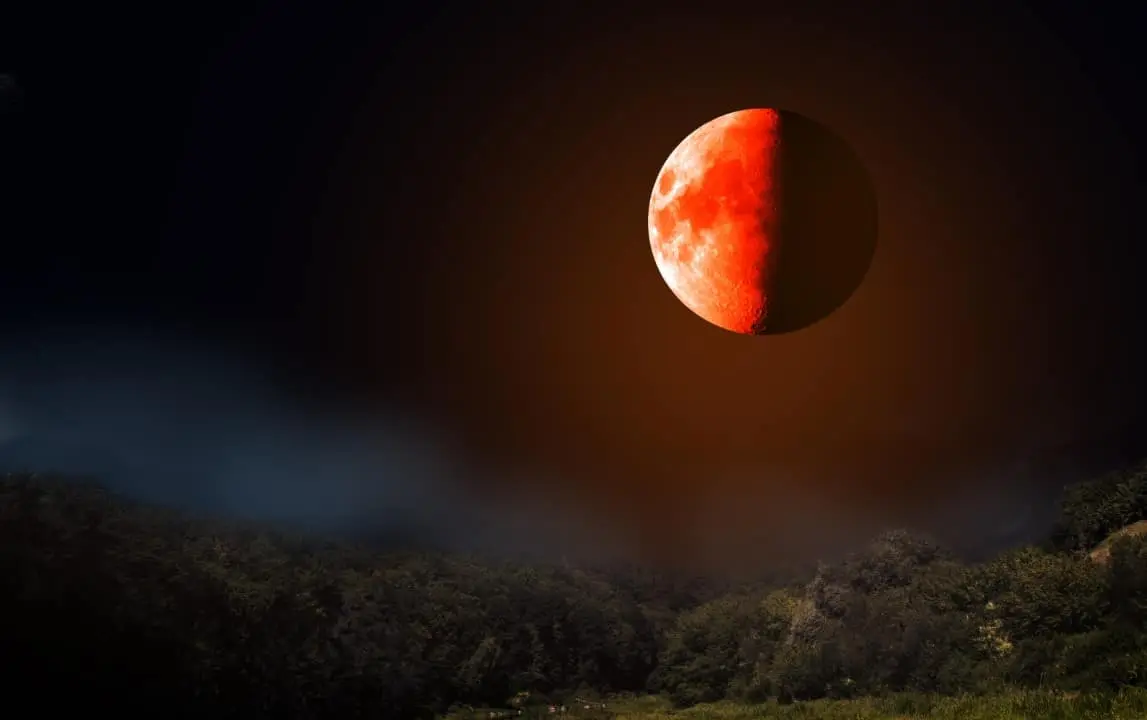
A total lunar eclipse occurs in the early hours of Tuesday, March 3, 2026, and will be visible across much of Indiana, including the Lafayette region. The phenomenon turns Lua into a characteristic red hue, popularly known as the blood moon. Especialistas warn that the weather forecast indicates predominantly cloudy skies in the area of Condado and Tippecanoe during the event period, which could compromise observation for many local residents.
The eclipse begins with the penumbral phase at around 3:44 am ET, when the penumbra from Terra touches Lua. The partial phase begins at 4:50 am, and totality, the moment when Lua completely enters the Earth’s umbra, occurs between 6:04 am and 7:02 am. The peak of the eclipse, when Lua reaches its most intense color, occurs at 6:33 am. The entire event lasts about 3 hours and 33 minutes in Indiana.
Scientific explanation of the phenomenon
The full Lua aligns perfectly with the Sol and Terra during the eclipse. Terra’s shadow casts itself over the satellite, blocking direct sunlight. Sunlight that passes through the Earth’s atmosphere is refracted, and longer wavelengths, such as red, predominate, giving Lua its reddish appearance.
More on this story: Total lunar eclipse colors Coachella Valley sky with Blood Moon at dawn
Experts emphasize that Lua does not disappear completely, unlike a solar eclipse. The red color results from atmospheric filtering, similar to the tone of the sky at sunset. The event allows you to observe shadows slowly moving across the lunar surface during totality.
Abigail Polin, of Departamento of Física and Astronomia of Sarah Popp, from Universidade from Indiana, reinforces that the total phase does not erase the
Learn more: Collector’s Cove gets a March 12 release date for PS5 Switch and PC
Weather forecast impacts visibility
The Serviço Nacional of Meteorologia points to mostly cloudy conditions in the Condado of Tippecanoe during the main phases of the eclipse. Essa cloud cover can reduce visibility, making the phenomenon appear attenuated or partially hidden to observers in and around Lafayette.
In other regions of the Estados Unidos, conditions vary, with some areas of the country having better prospects for clear skies. However, in Indiana, the probability of dense clouds is high, especially in the central and northern part of the state. Observadores need to monitor local updates close to the event time.
See Also



Tips for observing the eclipse
Binoculars are recommended for a closer look at Lua during the eclipse. Using telescopes can cause eye discomfort if there are no suitable filters, so experts advise caution. Observation with the naked eye is safe, as lunar eclipses do not involve risks like solar eclipses.
On the same topic: Blood moon delights observers in the Americas, Asia and Oceania in total eclipse
Total lunar eclipses are more frequent than solar eclipses, occurring several times a decade in different parts of the world. Este March 2026 represents an affordable opportunity for those with clear skies, with a significant duration in the total phase.
Additional Celestial Alignment Details
The orbit of Lua is positioned opposite to Sol monthly, generating the full moon. Perfect alignment with the Terra in the middle creates the eclipse. The umbral magnitude of 1.150 indicates complete and intense shadow coverage.
Visibility covers much of América to Norte in the early morning, with Lua low on the western horizon at the end of the event. Em Lafayette, the end coincides with the approaching sunrise, which can lighten the sky and make late observation even more difficult.
Full coverage: News (EN)
Final recommendations for viewers
Interested residents should look for locations with an unobstructed western horizon. Atualizações of the weather forecast close to dawn helps decide the best observation point. Transmissões online astronomical sources offer alternative if clouds prevail locally.
The phenomenon reinforces interest in astronomy in Indiana, with universities such as Purdue and Indiana contributing to explanations accessible to the public.